JSTOR Global Plants Home
  • Home
  • Browse
  • About
  • Access
  • Account
    • Saved Items
    • Profile
  • Log in

Global Plants

Skip to Main Content
  • JSTOR Global Plants Home
  • Global Plants

    • Browse
    • About
    • Access
    • Account
      • Saved Items
      • Profile
Log in
  • Browse
  • About
  • Access
  • Account
    • Saved Items
    • Profile
Advanced Search

Compilation
Sisyrinchium septentrionale

6 Images see all

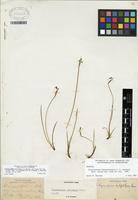
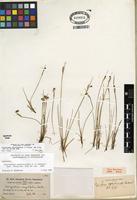
Syntype of Sisyrinchium idahoense E.P. Bicknell [family IRIDACEAE]
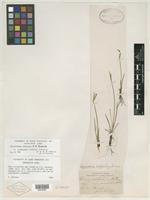
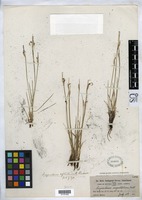
Syntype of Sisyrinchium septentrionale E. P. Bicknell [family IRIDACEAE]
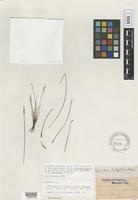
Syntype of Sisyrinchium septentrionale E.P. Bicknell [family IRIDACEAE]
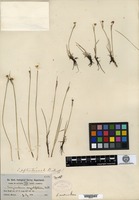
Type of Sisyrinchium septentrionale E. P. Bicknell [family IRIDACEAE]
Syntype of Sisyrinchium septentrionale Bicknell, E. P. 1899 [family IRIDACEAE]
Lectotype of Sisyrinchium septentrionale E.P. Bicknell [family IRIDACEAE]
Previous
Next

Name

Identification
Sisyrinchium septentrionale E.P. Bicknell [family IRIDACEAE ] (stored under name); Verified by A.F. Cholewa, 1987 Sisyrinchium septentrionale E.P. Bicknell [family IRIDACEAE ] Verified by Not on sheet,
Related name
  • Sisyrinchium septentrionale
  • Sisyrinchium idahoense
  • Sisyrinchium halophilum
  • Sisyrinchium angustifolium

Flora

Entry for Sisyrinchium septentrionale E. P. Bicknell [family IRIDACEAE]
Herbarium
Flora of North America (FNA)
Collection
Flora of North America
Resource Type
Reference Sources
Entry From
Flora of North America, Vol 26,
Names
Sisyrinchium septentrionale E. P. Bicknell [family IRIDACEAE], Bull. Torrey Bot. Club, 26: 452. 1899
Treatment Author(s)
Anita F. Cholewa
Douglass M. Henderson†
Information
Herbs, perennial, cespitose, green to pale olive when dry, to 4.3 dm, not glaucous; rhizomes scarcely discernable. Stems simple, 0.8–2 mm wide, glabrous, margins usually entire to denticulate apically, similar in color and texture to stem body. Leaf blades glabrous, bases not persistent in fibrous tufts. Inflorescences borne singly; spathes usually green, glabrous, keels entire to slightly denticulate; outer 20–63 mm, 17–42 mm longer than inner, tapering evenly towards apex, basally connate 1.5–2.5 mm; inner with keel evenly curved, hyaline margins 0.1–0.3 mm wide, apex acute to acuminate, ending 0.4–2.3 mm proximal to green apex. Flowers: tepals pale blue to light bluish violet, rarely white, bases yellow; outer 8–9.1 mm, apex usually rounded, aristate; filaments connate ± entirely, stipitate-glandular basally; ovary similar in color to foliage. Capsules beige to light brown, ± globose, 3–5 mm; pedicel spreading to erect. Seeds globose to obconic, lacking obvious depression, 0.5–1.2 mm, rugulose. 2n = 32.
Altitude range
500–1600 m;
Distribution
USA Wash.Canada Alta.Canada B.C.Canada N.W.T.Canada Sask.
Discussion
Sisyrinchium septentrionale is widespread but apparently not common in western Canada. In central Canada it intergrades with S. mucronatum, to which it appears closely related (see discussion, p. 367). It is confused also with S. montanum but can be distinguished by its very slender, very long outer spathe and nongibbous inner spathe. Fresh material will show lighter blue flowers and outer tepals with rounded apices.

Related Materials

  • Terms and Conditions
  • Privacy Policy
  • Cookie Policy
  • Cookie Settings
  • Accessibility
  • Help
  • Contact Us
  • Facebook
  • Twitter
ITHAKA

JSTOR is part of ITHAKA, a not-for-profit organization helping the academic community use digital technologies to preserve the scholarly record and to advance research and teaching in sustainable ways.

©2000-2026 ITHAKA. All Rights Reserved. JSTOR®, the JSTOR logo, JPASS®, Aluka®, and ITHAKA® are registered trademarks of ITHAKA.

╳