JSTOR Global Plants Home
  • Home
  • Browse
  • About
  • Access
  • Account
    • Saved Items
    • Profile
  • Log in

Global Plants

Skip to Main Content
  • JSTOR Global Plants Home
  • Global Plants

    • Browse
    • About
    • Access
    • Account
      • Saved Items
      • Profile
Log in
  • Browse
  • About
  • Access
  • Account
    • Saved Items
    • Profile
Advanced Search

Compilation
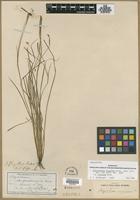
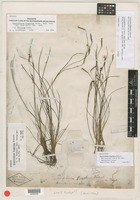
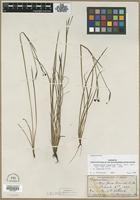
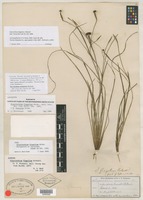
Sisyrinchium flagellum

4 Images see all

Filed as Sisyrinchium flagellum E.P.Bicknell [family IRIDACEAE]
Syntype of Sisyrinchium flagellum E.P.Bicknell [family IRIDACEAE]
Lectotype of Sisyrinchium flagellum E.P.Bicknell [family IRIDACEAE]
Isolectotype of Sisyrinchium flagellum E.P.Bicknell [family IRIDACEAE]
Previous
Next

Name

Identification
Sisyrinchium flagellum E.P.Bicknell [family IRIDACEAE ] (stored under name); Verified by Not on Sheet, Sisyrinchium sp. Not on sheet [family IRIDACEAE ] Verified by Not on Sheet, Sisyrinchium flagellum E.P.Bicknell [family IRIDACEAE ] Verified by Hornberger, K.L., 1986
Related name
  • Sisyrinchium sp.
  • Sisyrinchium mucronatum
  • Sisyrinchium flagellum

Flora

Entry for Sisyrinchium miamiense E. P. Bicknell [family IRIDACEAE]
Herbarium
Flora of North America (FNA)
Collection
Flora of North America
Resource Type
Reference Sources
Entry From
Flora of North America, Vol 26,
Names
Sisyrinchium miamiense E. P. Bicknell [family IRIDACEAE], Bull. Torrey Bot. Club, 26: 226. 1899
Sisyrinchium flagellum E. P. Bicknell [family IRIDACEAE]
Sisyrinchium recurvatum E. P. Bicknell [family IRIDACEAE]
Treatment Author(s)
Anita F. Cholewa
Douglass M. Henderson†
Information
Herbs, perennial, brownish or bronze-olive when dry, to 4 dm, not glaucous; rhizomes slightly elongated. Stems branched, with 1 or 2 nodes, 1.3–2(–2.5) mm wide, glabrous, margins usually entire, similar in color and texture to stem body; first internode 9–30 cm, equaling or shorter than leaves; distalmost node with 1–3 branches. Leaf blades glabrous, bases not persistent in fibrous tufts. Inflorescences borne singly; spathes green to occasionally purplish, obviously wider than supporting branch, glabrous, keels usually entire; outer 12.5–23 mm, 2.3 mm shorter to 3.7 mm longer than inner, tapering evenly towards apex, margins basally connate 3.9–6.5 mm; inner with keel straight to evenly curved, hyaline margins 0.1–0.3 mm wide, apex acute or obtuse, ending at or to 1 mm proximal to aristate green apex. Flowers: tepals pale blue to deep bluish violet, bases yellow; outer tepals 8.3–12.8 mm, apex rounded to emarginate or truncate, aristate; filaments connate ± entirely, stipitate-glandular basally or glabrous; ovary similar in color to foliage. Capsules dark brown or nearly black, ± globose to obovoid, 3.7–4.5 mm; pedicel ascending to spreading. Seeds globose to obconic, lacking obvious depression, 1–1.2 mm, rugulose. 2n = 32.
Phenology
dec-feb (winter), mar-may (spring), jun-aug (summer)
Altitude range
0–50 m;
Distribution
USA Ala.USA Fla.USA Ga.USA Miss.

Related Materials

  • Terms and Conditions
  • Privacy Policy
  • Cookie Policy
  • Cookie Settings
  • Accessibility
  • Help
  • Contact Us
  • Facebook
  • Twitter
ITHAKA

JSTOR is part of ITHAKA, a not-for-profit organization helping the academic community use digital technologies to preserve the scholarly record and to advance research and teaching in sustainable ways.

©2000-2026 ITHAKA. All Rights Reserved. JSTOR®, the JSTOR logo, JPASS®, Aluka®, and ITHAKA® are registered trademarks of ITHAKA.

╳