JSTOR Global Plants Home
  • Home
  • Browse
  • About
  • Access
  • Account
    • Saved Items
    • Profile
  • Log in

Global Plants

Skip to Main Content
  • JSTOR Global Plants Home
  • Global Plants

    • Browse
    • About
    • Access
    • Account
      • Saved Items
      • Profile
Log in
  • Browse
  • About
  • Access
  • Account
    • Saved Items
    • Profile
Advanced Search

Compilation
Sisymbrium thellungii

9 Images see all

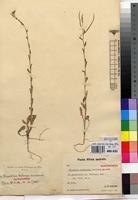
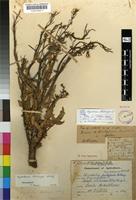
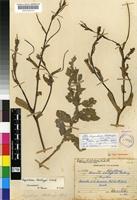
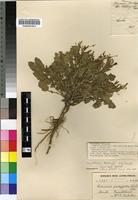
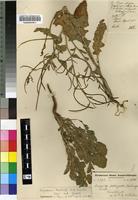
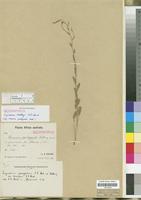
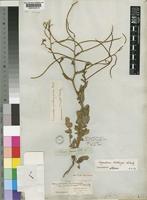
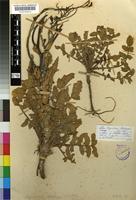
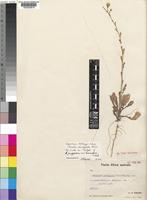
Isosyntype of Brassica pachypoda Thell. [family BRASSICACEAE]
Type? of Sisymbrium thellungii O.E.Schulz [family BRASSICACEAE]
Syntype of Sisymbrium thellungii O.E.Schulz [family BRASSICACEAE]
Isotype of Sisymbrium thellungii O.E.Schulz [family BRASSICACEAE]
Isosyntype of Sisymbrium thellungii O.E. Schulz [family CRUCIFERAE/BRASSICACEAE]
Sisymbrium thellungii O.E.Schulz [family CRUCIFERAE]
Syntype of Sisymbrium thellungii O.E.Schulz [family BRASSICACEAE]
Syntype of Brassica pachypoda Thell. var. leiocarpum Schulz [family CRUCIFERAE]
Previous
Next

Name

Identification
Brassica pachypoda Thell. [family BRASSICACEAE ] Verified by Not on sheet, Sisymbrium thellungii O.E. Schulz [family BRASSICACEAE ] (stored under name); Verified by Not on sheet,
Related name
  • Sinapis pendula
  • Sisymbrium pachypodum
  • Sisymbrium thellungii
  • Brassica pachypoda

Flora

Entry for Sisymbrium thellungii [family BRASSICACEAE]
Herbarium
South African National Biodiversity Institute, Compton Herbarium, Cape Town (SAM)
Collection
Flora of Southern Africa
Resource Type
Reference Sources
Entry From
Flora of South Africa, (2003) Author: Dr J.P. Roux
Names
Sisymbrium thellungii [family BRASSICACEAE]
Common names
Brassica pachypoda Thell. in Vjschr. Naturf. Ges. Zurich 56 : 257 (1911); Burtt Davy, FI. Transv. 1 :128 (1926). Types as above. Sisymbrium thellungii var. pendulum O. E. Schulz, I.e. 136 (1919). Type : Drege 3622. S. pachypodum (Thell.) O. E. Schulz & Thell. in Pflanzenr. IV, 105 : 48 (1924), non Chiov. —var. pendulum (O. E. Schulz) O. E. Schulz in Pflanzenr. IV, 105 : 49 (1924). —var. leiocarpum O. E. Schulz, I.e. (1924). Type : Schlechter 3146.
Information
Annual herbs, erect, up to 60 cm tall small and simple or robust and much-branched. Stem and branches densely re-trorsely scabro-hispid. Basal leaves up to 30 cm long and 10 cm broad, but in the smaller plants as little as 5 cm long, petiolate, lyrate-pinnatifid, 3-7-jugate with the upper lobes ± confluent with the large, ovate, oblong or ± obovate, up to 8 x 9 cm, |_- obtusely denticulate terminal lobe; lateral lobes short and broad, obtuse, up to 6 X 4 cm, frequently pointing backwards. Stem leaves similar but gradually reduced in size, in number of lobes and in length of petiole till the uppermost leaves are sessile, amplexi-caul, oblong to broadly lanceolate, the margin dentate or serrate-denticulate; all leaves thinly to densely scabro-hispid, some­what glabrescent. Racemes 5-12-flowered, dense in flower, in fruit lax, elongate; rhachis scabro-hispid; pedicels all or only the lower ones subtended by a bract, sparsely hispid or puberulous; in fruit stout, wide-spreading, very unequal; lower fruiting pedicels 1-3 cm long, upper ones 2-7 mm long. Sepals 4-5-6 mm long, linear-oblong, puberulous or sparsely hispid. Petals 6-8 mm long, oblan-ceolate. Ovary linear, glabrous, but young developing fruit soon becoming puberulous; ovules 40-60, Siliquae 7-12-5 cm long, 1-9-2-2 mm broad, linear, subcompressed; valves strongly 3-nerved, rounded on the back, puberulous or rarely glabrous; style 2-5-4 mm long, stout, clavate. Seeds in 1 row, 1-1-1 X 0-7-0-8 mm, ovoid-oblong, light brown, finely reticulate; cotyledons folded longitudinally, emarginate. Fig. 14:3.
Use
4. Sisymbrium thellungii O. E. Schulz in Pflanzenr. IV, 105 : 83 (192 ?)? Syntypes : Phoenix, Schlechter 3146; Pretoria. Leendertz 416; Leribe, Dieterlen 165 (1903 and 1906).
Range
Widespread in the eastern part of South Africa. The flowers are yellow and the flowering time is from August to December.

Related Materials

  • Terms and Conditions
  • Privacy Policy
  • Cookie Policy
  • Cookie Settings
  • Accessibility
  • Help
  • Contact Us
  • Facebook
  • Twitter
ITHAKA

JSTOR is part of ITHAKA, a not-for-profit organization helping the academic community use digital technologies to preserve the scholarly record and to advance research and teaching in sustainable ways.

©2000-2026 ITHAKA. All Rights Reserved. JSTOR®, the JSTOR logo, JPASS®, Aluka®, and ITHAKA® are registered trademarks of ITHAKA.

╳