JSTOR Global Plants Home
  • Home
  • Browse
  • About
  • Access
  • Account
    • Saved Items
    • Profile
  • Log in

Global Plants

Skip to Main Content
  • JSTOR Global Plants Home
  • Global Plants

    • Browse
    • About
    • Access
    • Account
      • Saved Items
      • Profile
Log in
  • Browse
  • About
  • Access
  • Account
    • Saved Items
    • Profile
Advanced Search

Compilation
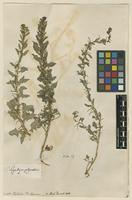
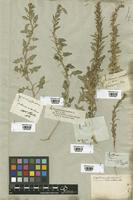
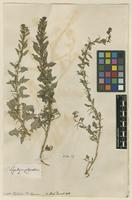
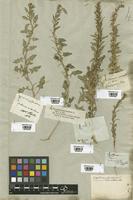
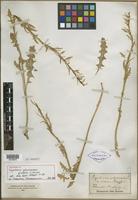
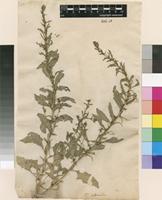
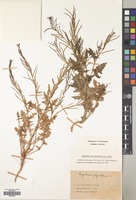
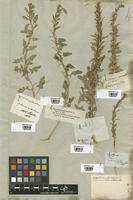
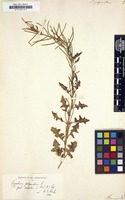
Sisymbrium polyceratium

17 Images see all

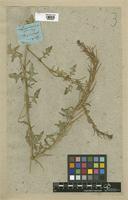
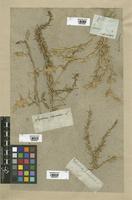
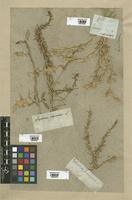
Filed as Sisymbrium polyceratium L. [family BRASSICACEAE]
[family ]
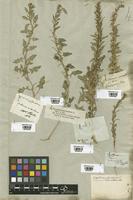
Filed as Sisymbrium polyceratium L. [family BRASSICACEAE]
[family ]
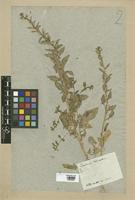
Holotype of Sisymbrium polyceratium var. hirsutum Kuntze [family BRASSICACEAE]
Lectotype of Sisymbrium polyceratium L. [family BRASSICACEAE]
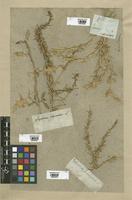
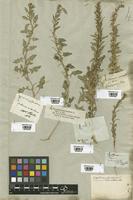
Filed as Sisymbrium polyceratium L. [family CRUCIFERAE]
[family ]
[family ]
[family ]
Filed as Sisymbrium polyceratium L. [family CRUCIFERAE]
[family ]
[family ]
[family ]
[family ]
[family ]
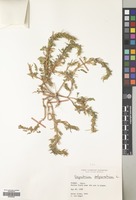
Filed as Sisymbrium polyceratium [family CRUCIFERAE]
Previous
Next

Name

Identification
Sisymbrium polyceratium L. [family BRASSICACEAE ] (stored under name); Verified by Data not digitized, null Verified by Data not digitized,
Related name
  • `
  • Sisymbrium polyceratium

Flora

Entry for Sisymbrium polyceratium Linnaeus [family CRUCIFERAE]
Herbarium
Flora of North America (FNA)
Collection
Flora of North America
Resource Type
Reference Sources
Entry From
Flora of North America, Vol 7,
Names
Sisymbrium polyceratium Linnaeus [family CRUCIFERAE], Sp. Pl., 2: 658. 1753
Chamaeplium polyceratium (Linnaeus) Wallroth [family ]
Treatment Author(s)
Ihsan A. Al-Shehbaz
Information
Annuals; (densely leafy through-out); often glabrous. Stems (simple or few to several from base), erect or ascending to subprostrate, branched distally, 1–5(–7) dm, glabrous. Basal leaves (soon withered); initially rosulate; petiole (1–)2–5(–6.5) cm; blade oblanceolate to lanceolate (in outline), 2–7(–10) cm × 10–30(–45) mm, margins sinuate- or runcinate-pinnatifid to coarsely dentate; lobes 3–6 on each side, often triangular, slightly smaller than terminal lobe, margins dentate or subentire. Cauline leaves (sometimes bracts, several), similar to basal, (shortly petiolate); blade margins dentate or subentire, (surfaces glabrous or sparsely puberulent at and near margin). (Inflorescences 2–4(–6)-fasciculate, or flowers solitary and axillary, bracteate throughout.) Fruiting pedicels ascending to erect, stout, narrower than fruit base, 0.5–1(–2) mm. Flowers: sepals erect, oblong, 1–1.5 × 0.3–0.5 mm; petals spatulate, 1.5–2 × 0.4–0.6 mm, claw 0.6–1 mm; filaments (erect, yellowish), 1.2–1.7mm; anthers ovate, 0.3–0.5 mm. Fruits (erect to ascending), subulate-linear, recurved, straight, slightly torulose, stout (widest at base), 1–2(–2.3) cm × 0.9–1.7 mm; valves usually glabrous, rarely puberulent; ovules 20–44(–54) per ovary; style 0.5–1 mm; stigma slightly 2-lobed. Seeds 0.7–1 × 0.4–0.5 mm. 2n = 28.
Phenology
mar-may (spring), jun (summer)
Altitude range
0–200 m;
Distribution
Europewc Asianw Africa.USA Pa.USA Tex.
Native/Introduced
introduced;

Related Materials

  • Terms and Conditions
  • Privacy Policy
  • Cookie Policy
  • Cookie Settings
  • Accessibility
  • Help
  • Contact Us
  • Facebook
  • Twitter
ITHAKA

JSTOR is part of ITHAKA, a not-for-profit organization helping the academic community use digital technologies to preserve the scholarly record and to advance research and teaching in sustainable ways.

©2000-2026 ITHAKA. All Rights Reserved. JSTOR®, the JSTOR logo, JPASS®, Aluka®, and ITHAKA® are registered trademarks of ITHAKA.

╳