JSTOR Global Plants Home
  • Home
  • Browse
  • About
  • Access
  • Account
    • Saved Items
    • Profile
  • Log in

Global Plants

Skip to Main Content
  • JSTOR Global Plants Home
  • Global Plants

    • Browse
    • About
    • Access
    • Account
      • Saved Items
      • Profile
Log in
  • Browse
  • About
  • Access
  • Account
    • Saved Items
    • Profile
Advanced Search

Compilation
Sisymbrium perplexum

4 Images see all

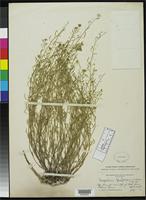
Holotype of Sisymbrium perplexum Henderson, L.F. 1900 [family BRASSICACEAE]
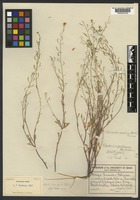
Isotype of Sisymbrium perplexum L. F. Hend. [family BRASSICACEAE]
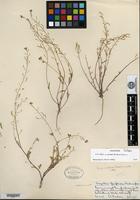
Isotype of Sisymbrium perplexum L. F. Henderson [family BRASSICACEAE]
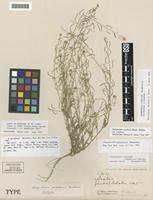
Isotype of Sisymbrium perplexum Hend. [family BRASSICACEAE]
Previous
Next

Name

Identification
Isotype of Sisymbrium perplexum L. F. Henderson [family BRASSICACEAE ] (stored under name); Verified by L. F. Hend., 1900 Halimolobos perplexa (Henderson) Rollins [family BRASSICACEAE ] Verified by R. C. Rollins,
Related name
  • Halimolobos perplexa
  • Sisymbrium perplexum

Flora

Entry for Sandbergia perplexa (L. F. Henderson) Al-Shehbaz [family CRUCIFERAE]
Herbarium
Flora of North America (FNA)
Collection
Flora of North America
Resource Type
Reference Sources
Entry From
Flora of North America, Vol 7,
Names
Sandbergia perplexa (L. F. Henderson) Al-Shehbaz [family CRUCIFERAE], Harvard Pap. Bot., 12: 426. 2007
Sisymbrium perplexum L. F. Henderson [family CRUCIFERAE], Bull. Torrey Bot. Club, 27: 342. 1900
Halimolobos perplexus (L. F. Henderson) Rollins [family CRUCIFERAE]
Halimolobos perplexus var. lemhiensis C. L. Hitchcock [family CRUCIFERAE]
Sophia perplexa (L. F. Henderson) Rydberg [family ]
Treatment Author(s)
Ihsan A. Al-Shehbaz
Information
Biennials or perennials; densely to sparsely pubescent, trichomes subsessile, minute, Y-shaped or cruciform, mixed with simple or forked ones. Stems usually several from caudex, rarely simple, erect to decumbent, unbranched or branched distally, (1–)1.3–4(–5) dm, densely pubescent throughout or glabrescent distally. Basal leaves rosulate; petiole 0.5–2.5 cm; blade narrowly to broadly oblanceolate, 2–5 cm × 5–15 mm, margins lyrate-pinnatifid to coarsely dentate, apex obtuse to acute, surfaces densely pubescent. Cauline leaves 4–12; blade oblong to oblanceolate, 0.6–2 cm × 2–6 mm (base attenuate, not auriculate), margins coarsely dentate to pinnatifid, or (distal) subentire or dentate, apex obtuse to subacute, surfaces densely to sparsely pubescent. Fruiting pedicels 4–15 mm, densely pubescent to glabrescent. Flowers: sepals 1.5–2 × 0.8–1.2 mm; petals (3–)4–7 × 1.2–2 mm; filaments 2–3 mm; anthers ovate, 0.5–0.6 mm. Fruits ascending to suberect, straight to slightly tortuous, strongly torulose, strongly latiseptate, (1–)1.5–2(–2.5) cm × 0.8–1 mm; valves each with obscure midvein, densely pubescent to glabrescent; ovules 12–20 per ovary; style 0.2–1.3 mm. Seeds 1–1.3 × 0.5–0.6 mm. 2n = 14.
Phenology
apr-may (spring), jun-jul (summer)
Altitude range
300–1500 m;
Distribution
USA IdahoUSA Mont.USA Wash.
Discussion
I have seen limited material of var. lemhiensis, and all the differences given by R. C. Rollins (1993) to separate it from var. perplexa (e.g., style and pedicel length, density of indumentum) are quantitative characters that show continuous, uncorrelated variation. Sandbergia perplexa is known from counties in Idaho (Adams, Butte, Custer, Idaho, Lemhi, Valley), Montana (Beaverhead), and Washington (Douglas).

Related Materials

  • Terms and Conditions
  • Privacy Policy
  • Cookie Policy
  • Cookie Settings
  • Accessibility
  • Help
  • Contact Us
  • Facebook
  • Twitter
ITHAKA

JSTOR is part of ITHAKA, a not-for-profit organization helping the academic community use digital technologies to preserve the scholarly record and to advance research and teaching in sustainable ways.

©2000-2026 ITHAKA. All Rights Reserved. JSTOR®, the JSTOR logo, JPASS®, Aluka®, and ITHAKA® are registered trademarks of ITHAKA.

╳