JSTOR Global Plants Home
  • Home
  • Browse
  • About
  • Access
  • Account
    • Saved Items
    • Profile
  • Log in

Global Plants

Skip to Main Content
  • JSTOR Global Plants Home
  • Global Plants

    • Browse
    • About
    • Access
    • Account
      • Saved Items
      • Profile
Log in
  • Browse
  • About
  • Access
  • Account
    • Saved Items
    • Profile
Advanced Search

Compilation
Sisymbrium murale

6 Images see all

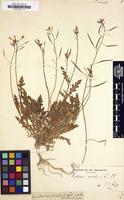
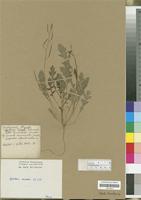
Filed as Sisymbrium murale [family CRUCIFERAE]
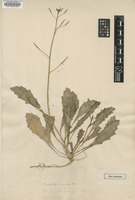
Type of Arabis canadensis Mill. [family BRASSICACEAE]
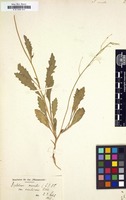
Filed as Sisymbrium murale [family CRUCIFERAE]
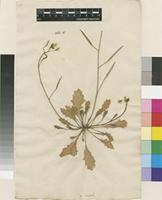
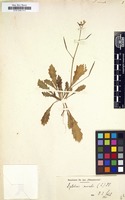
Lectotype of Sisymbrium murale L. [family BRASSICACEAE]
Filed as Diplotaxis muralis (L.) DC. [family CRUCIFERAE/BRASSICACEAE]
Filed as Sisymbrium murale [family CRUCIFERAE]
Previous
Next

Name

Identification
Diplotaxis muralis (L.) DC. [family CRUCIFERAE/BRASSICACEAE ] (stored under name); Verified by HBG-formal name change, 2008 Sisymbrium murale L. [family CRUCIFERAE/BRASSICACEAE ] Verified by Not on sheet,
Related name
  • Diplotaxis muralis
  • Sisymbrium murale
Common name
  • Annual or stinking wall-rocket, Flora of North America Vol. 7
  • cross-weed, Flora of North America Vol. 7
  • stink-weed, Flora of North America Vol. 7
  • wall-mustard, Flora of North America Vol. 7
  • sand-rocket, Flora of North America Vol. 7

Flora

Entry for Diplotaxis muralis (Linnaeus) de Candolle [family CRUCIFERAE]
Herbarium
Flora of North America (FNA)
Collection
Flora of North America
Resource Type
Reference Sources
Entry From
Flora of North America, Vol 7,
Names
Diplotaxis muralis (Linnaeus) de Candolle [family CRUCIFERAE], Syst. Nat., 2: 634. 1821
Sisymbrium murale Linnaeus [family CRUCIFERAE], Sp. Pl., 2: 658. 1753
Sinapis muralis (Linnaeus) W. T. Aiton [family CRUCIFERAE]
Treatment Author(s)
Juan B. Martínez-Laborde
Information
Annuals or perennials, (short-lived, frequently scapose or subscapose, taprooted), strongly scented (with glucosinolates). Stems ascending to suberect, (0.5–)2–5(–6) dm, moderately pubescent (trichomes predominantly patent basally, retrorse distally to near racemes). Basal leaves (rosulate); blade elliptic to obovate, 2–9 cm × 10–35 mm, margins sinuate to pinnatifid, lyrate, [2–4(–6) lobes each side], (margins and veins glabrescent to sparsely pubescent). Cauline leaves shortly petiolate to sessile; blade margins entire or dentate. Fruiting pedicels (3–)8–20(–37) mm. Flowers: sepals 3–5.5 mm, pubescent or glabrous, trichomes straight; petals yellow, 5–8(–10) × 3–5 mm; filaments 3.5–6 mm; anthers 1.5–2 mm; gynophore obsolete or to 0.5 mm. Fruits erect-patent, (1.5–)2–4 cm × 1.5–2.5 mm; terminal segment beaklike, (1–)1.5–3 mm, seedless; (ovules 20–36 per ovary). Seeds 0.9–1.3 × 0.6–0.9 mm. 2n = 42.
Phenology
mar-may (spring), jun-aug (summer), sep-nov (fall)
Altitude range
80–2000 m;
Distribution
EurasiaAfricaintroduced also in Mexico (Coahuila)introduced also in Mexico (Nuevo León)West Indies (Bahamas)BermudaSouth AmericaPacific Islands (New Zealand)Australia.USA Ala.USA Ariz.USA Ark.USA Calif.USA Conn.USA Fla.USA Ill.USA Ind.USA IowaUSA Kans.USA Mass.USA Mich.USA Minn.USA Mont.USA Nebr.USA N.J.USA N.Mex.USA N.Y.USA OhioUSA Oreg.USA Pa.USA Tex.USA UtahUSA Wis.Canada Alta.Canada N.B.Canada N.S.Canada Ont.Canada P.E.I.Canada Que.Canada Sask.
Discussion
Diplotaxis muralis was introduced from Europe as a ballast plant in the last century and may have failed to persist in some of the recorded provinces and states. It is an allopolyploid arisen from D. tenuifolia and the Eurasian D. viminea (Linnaeus) de Candolle with 2n = 20 (M. D. Sánchez-Yélamo and J. B. Martínez-Laborde 1991; K. Mummenhoff et al. 1993; G. Eschmann-Grupe et al. 2003). There does not seem to be a sound basis for attributing D. viminea to the flora area, as done by V. I. Dorofeev (1998), because most specimens cited by him belong, in fact, to D. muralis.
Native/Introduced
introduced;

Related Materials

  • Terms and Conditions
  • Privacy Policy
  • Cookie Policy
  • Cookie Settings
  • Accessibility
  • Help
  • Contact Us
  • Facebook
  • Twitter
ITHAKA

JSTOR is part of ITHAKA, a not-for-profit organization helping the academic community use digital technologies to preserve the scholarly record and to advance research and teaching in sustainable ways.

©2000-2026 ITHAKA. All Rights Reserved. JSTOR®, the JSTOR logo, JPASS®, Aluka®, and ITHAKA® are registered trademarks of ITHAKA.

╳