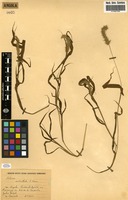
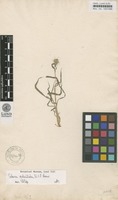
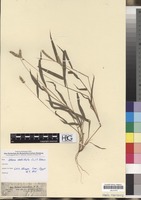
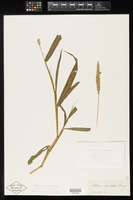
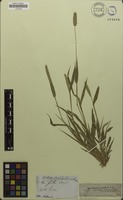
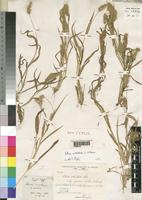
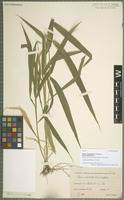
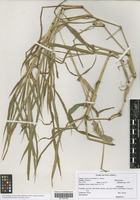
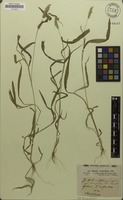
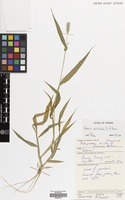
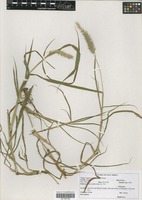
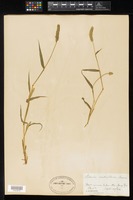
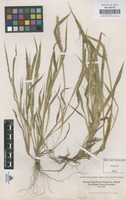
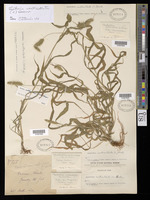
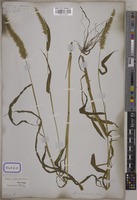
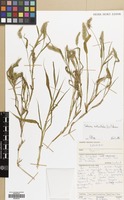
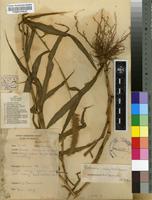
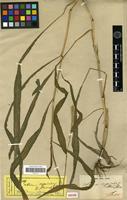
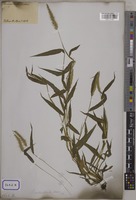
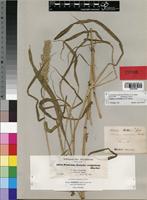
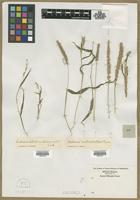
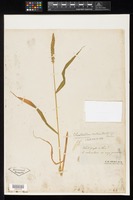
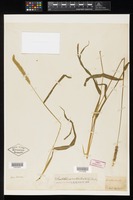
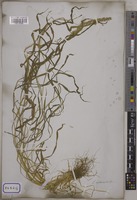
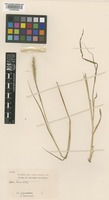
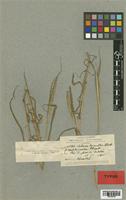
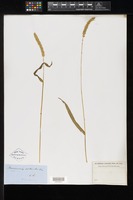
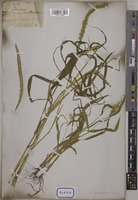
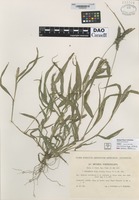
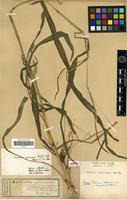
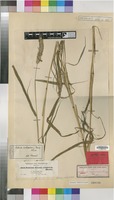
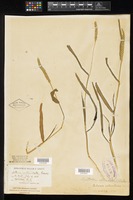
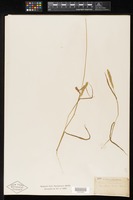
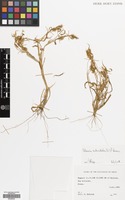
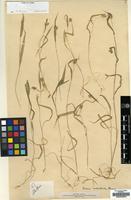
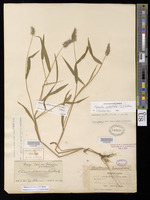
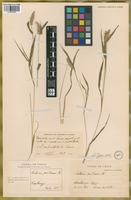
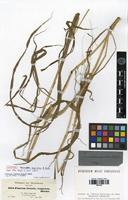
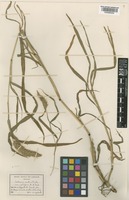
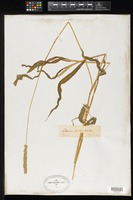
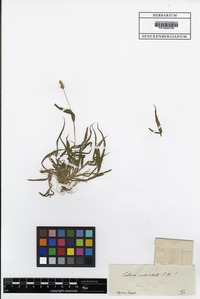
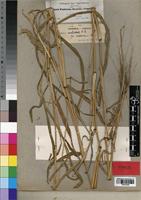
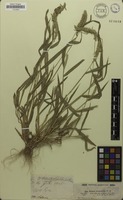
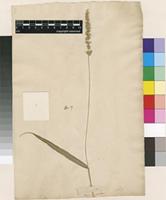
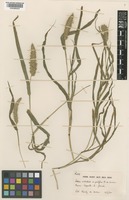
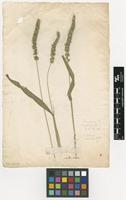
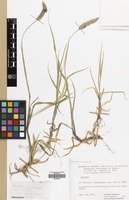
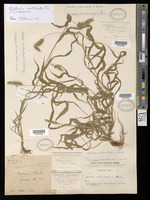
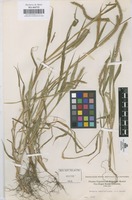
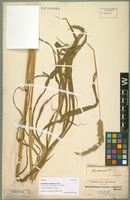
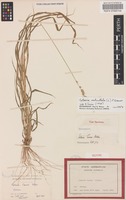
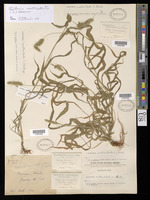
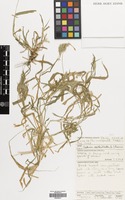
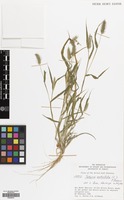
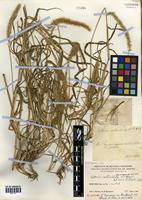
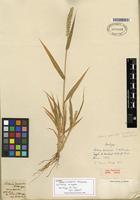
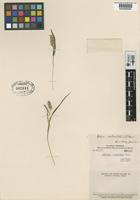
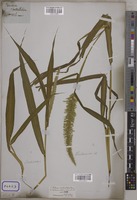
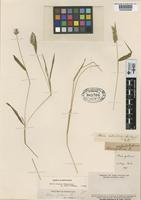
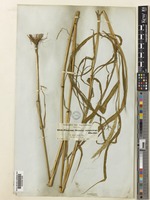
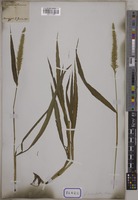
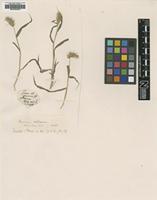
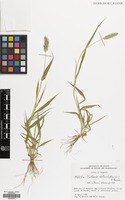
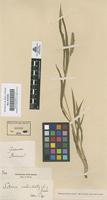
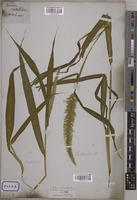
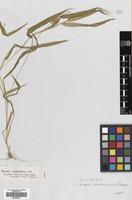
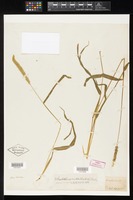
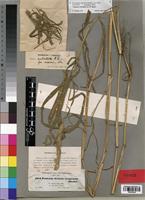
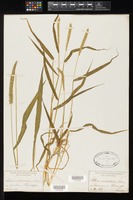
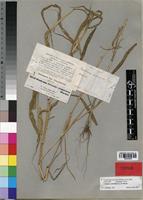
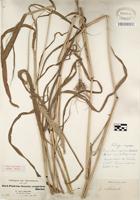
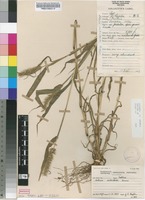
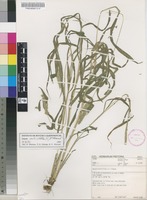
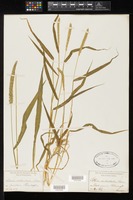
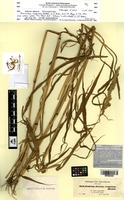
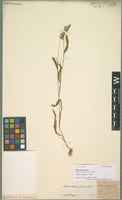
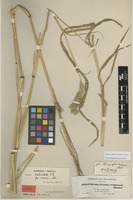
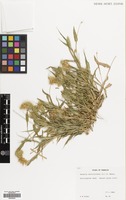
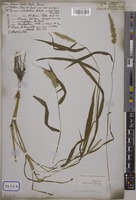
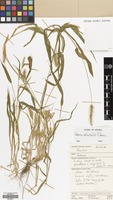
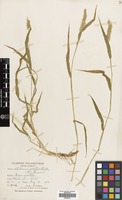
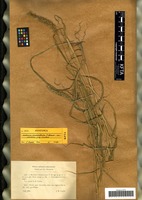
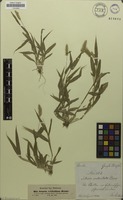
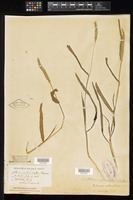
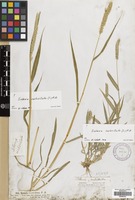
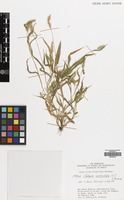
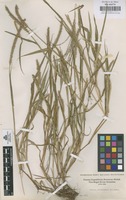
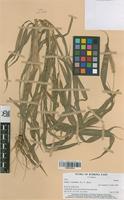
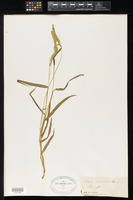
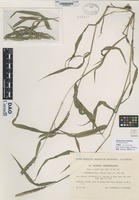
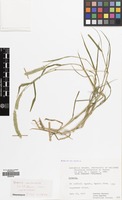
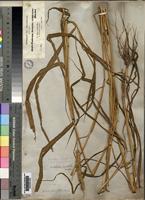
annual; culms erect or ascending from a geniculate base, 1/2–5 ft. long, usually compressed below, more or less branched, glabrous, smooth, or scabrid below the panicle, 4–9-noded, internodes mostly at length exserted; sheaths thin, rather lax, usually compressed, striate, glabrous or finely hairy upwards; ligules short, truncate, densely ciliate; blades linear or lanceolate-linear from a broad and rounded, or from a narrow base, long tapering to an acute or subsetaceous point, 2–12 in. by 2–6 (rarely up to 12) lin., thin, flat, flaccid, scaberulous, usually finely and scantily hairy; panicle erect or curved, spike-like, cylindric or oblong, dense or rather lax, 1–5 in. long, coarsely bristly; axis scabrid and often pubescent; branches spirally arranged, close, in robust specimens the lower up to 4 lin. long with a distinct scabrid angular rhachis and 2-nate spikelets, otherwise very short or reduced to sessile clusters, each spikelet subtended by a coarse reversely scabrid bristle 2–7 lin. long; spikelets ellipsoid, obtuse, about 1 lin. long, light green, glabrous; lower glume hyaline, broad, ovate, acute, 1- to sub-3-nerved, 1/3– 2/5 as long as the spikelet, upper membranous, elliptic, concave, 5–7-nerved, equal to the spikelet or almost so; lower floret barren; valve similar to the upper glume, dorsally flattened, 5–7-nerved; pale hyaline, more or less arrested or 0; hermaphrodite floret elliptic-oblong, plano-convex, subapiculate or obtuse, almost 1 lin. long, greenish or straw-coloured; valve subcoriaceous, very obscurely wrinkled, 5-nerved; anthers 3/8 lin. long; grain broadly ellipsoid, over 3/4 lin. long, white, subtranslucent. null