JSTOR Global Plants Home
  • Home
  • Browse
  • About
  • Access
  • Account
    • Saved Items
    • Profile
  • Log in

Global Plants

Skip to Main Content
  • JSTOR Global Plants Home
  • Global Plants

    • Browse
    • About
    • Access
    • Account
      • Saved Items
      • Profile
Log in
  • Browse
  • About
  • Access
  • Account
    • Saved Items
    • Profile
Advanced Search

Compilation
Setaria trinervia

4 Images see all

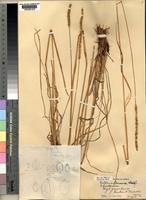
Setaria sphacelata (Schumach.) Stapf & C.E.Hubb. ex M.B.Moss [family POACEAE]
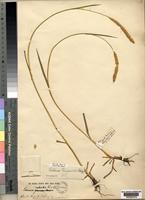
Syntype of Setaria trinervia Stapf [family POACEAE]
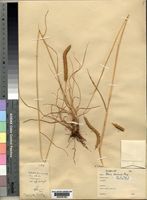
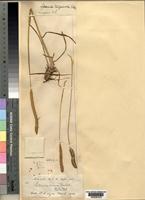
Setaria sphacelata (Schumach.) Stapf & C.E.Hubb. ex M.B.Moss [family POACEAE]
Previous
Next

Name

Identification
Setaria trinervia Stapf [family POACEAE ] Verified by Stapf, O., Setaria sphacelata (Schumach.) Stapf & C.E.Hubb. ex M.B.Moss [family POACEAE ] (stored under name); Setaria aurea Hochst. [family POACEAE ] Setaria sphacelata (Schumach.) Stapf & C.E.Hubb. ex M.B.Moss [family POACEAE ]
Related name
  • Setaria imberbis
  • Setaria aurea
  • Setaria trinervia
  • Setaria glauca
  • Setaria sphacelata

Flora

Entry for SETARIA trinervia Stapf [family POACEAE]
Herbarium
Royal Botanic Gardens, Kew (K)
Collection
Flora of Tropical Africa
Resource Type
Reference Sources
Entry From
Flora of Tropical Africa, Vol 9, page 1, (1917) Author: (By O. STAPF.)
Names
SETARIA trinervia Stapf [family POACEAE]
Information
Perennial, densely tufted, up to over 3 ft. high, densely coated at the base with the remains of the basal sheaths which at length break up into fibres, sometimes sending out short stolons or runners. Culms erect or more often geniculately ascending, slender, 2–3-noded, the upper node up to 3–6 in. or more from the base, simple, glabrous and smooth except at the upper end of the peduncle which is more or less rough along the sharply projecting ribs and villous close to the base of the inflorescence. Leaf-sheaths rather tight, the basal firm, more or less compressed and keeled all along or at least upwards, loosely and stiffly hairy or quite glabrous, eciliate, rarely more densely hairy towards the mouth and there bearded, the lower short, the uppermost 3–6 (rarely more) in. long; ligule very short, ciliate; blade linear from an equally wide base, tapering to an acute slightly callous point, mostly 2 1/2–6 in. long by 1 1/2–2 1/2 lin. wide, rarely the upper up to over 9 in. long by 1 1/2 lin. wide, green, with long fine hairs above the ligule or all over on the upper surface, rarely quite glabrous, more or less rough upwards and along the margins, midrib very slender, prominent below, primary lateral nerves 3–4 on each side, fine. Inflorescence a very dense continuous cylindric false spike, 2–8 in. long by 2 lin. wide (exclusive of the bristles), mostly fulvous, rarely purplish-brown; axis slender, subterete, minutely tomentellous; branches reduced to sessile involucres, supporting solitary (rarely 2–3) spikelets; bristles 8–12, fine, finely scaberulous, 2–3 lin. long, concolorous, brightly fulvous to purplish-brown; pedicels reduced to short stumps with minute discoid tips. Spikelets elliptic-oblong, subacute or almost obtuse in back view, semi-elliptic or semi-ovate in profile, about 1 lin. long by 2/3– 3/4 lin. wide (in back view, slightly less wide in profile), glabrous, pale or variously tinged with greyish-purple. Glumes very thinly membranous, somewhat rigid and tight; lower rotundate-ovate, obtuse, up to half the length of the spikelet, 1–3-nerved; upper broadly ovate, acute, up to two-thirds the length of the spikelet, 3-nerved, rarely sub-5-nerved. Lower floret ♂: valve very thin and corresponding in size and outline to the spikelet, rather flat and slightly depressed along the midnerve, 5-nerved; valvule almost as long as the valve, keels marginate; anthers 1/2 lin. long. Upper floret hermaphrodite, oblong or elliptic-oblong, acute or subacute, slightly over 1 lin. long by 2/3 lin. wide, very pale or slightly greenish and livid purplish upwards: valve and valvule thinly crustaceous, both, or at least the former, finely transversely rugose.
Distribution
Tanganyika Mozamb. Dist. Amboni, Kässner, 4! Usambara, Kwa Mshuze, Holst, 8944! Moshi, 3000 ft., Haarer, 395! Shantz, 796! Rombo, Rau, c. 4000 ft., Haarer, 1709! Mbugwe, Rift Valley, 3000 ft., Haarer, 3A! Upari District; Usangi, 4500 ft., Haarer, 863!Uganda Nile Land Mbale, near Mt. Elgon, 4000 ft., savannah, Snowden, 1103!Kenya Nile Land Schimba Mountains, Kässner, 382! Nairobi, Linton, 2! Lyne, 155! Dowson, 200! Embu to Nairobi, high grassland, Shantz, 986! 987! near Embu, Shantz, 993! Lingom, 7000 ft., Dummer, 1579! South Kavirondo; Kaniamkago, 4300 ft., Spranger, 23! without precise locality, McDonald, 930!
Notes
Holst's specimen (No. 8944) was distributed as S. atrata, Hochst., and is evidently the one quoted under that name by K. Schumann in Engl. Pflanzenw. Ost-Afr. C. 104.

Related Materials

  • Terms and Conditions
  • Privacy Policy
  • Cookie Policy
  • Cookie Settings
  • Accessibility
  • Help
  • Contact Us
  • Facebook
  • Twitter
ITHAKA

JSTOR is part of ITHAKA, a not-for-profit organization helping the academic community use digital technologies to preserve the scholarly record and to advance research and teaching in sustainable ways.

©2000-2026 ITHAKA. All Rights Reserved. JSTOR®, the JSTOR logo, JPASS®, Aluka®, and ITHAKA® are registered trademarks of ITHAKA.

╳