JSTOR Global Plants Home
  • Home
  • Browse
  • About
  • Access
  • Account
    • Saved Items
    • Profile
  • Log in

Global Plants

Skip to Main Content
  • JSTOR Global Plants Home
  • Global Plants

    • Browse
    • About
    • Access
    • Account
      • Saved Items
      • Profile
Log in
  • Browse
  • About
  • Access
  • Account
    • Saved Items
    • Profile
Advanced Search

Compilation
Setaria subsetosa

2 Images see all

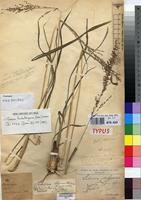
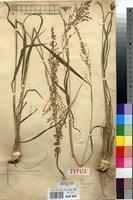
Isotype of Setaria subsetosa Stapf [family POACEAE]
Previous
Next

Name

Identification
Isotype of Setaria subsetosa Stapf [family POACEAE ] Verified by Not on sheet, Setaria lindenbergiana (Nees) Stapf [family POACEAE ] (stored under name); Verified by Not on sheet,
Related name
  • Setaria lindenbergiana
  • Setaria subsetosa

Flora

Entry for SETARIA lindenbergiana (Nees) Stapf [family POACEAE]
Herbarium
Royal Botanic Gardens, Kew (K)
Collection
Flora of Tropical East Africa
Resource Type
Reference Sources
Entry From
Flora of Tropical East Africa, page 451, (1982) Author: W. D. CLAYTON and S.A. RENVOIZE
Names
SETARIA lindenbergiana (Nees) Stapf [family POACEAE], in Fl. Cap. 7: 422 (1899); F.T.A. 9: 848 (1930); Fl. Agrost. Congo Belge 2: 288 (1934); F.P.N.A. 3: 116 (1955); G.T.: 86 (1965). Types: South Africa, Grahamstown to Mt. Bothas, Ecklon (whereabouts uncertain) & Swart Kei [Zwarte-Key] R., Ecklon (whereabouts uncertain) & Glenfilling, Drège (K, isosyn.!) & Katriviers Poort, Drège (K, isosyn.!)
Panicum lindenbergianum Nees [family POACEAE], Fl. Afr. Austr.: 47 (1841)
Panicum lindenbergianum Nees var. pallidum [family POACEAE], Fl. Afr. Austr.: 47 (1841). Type: South Africa, Enon, Drège (K, iso.!)
Setaria mauritiana Rendle var. angustifolia [family POACEAE], Cat. Afr. Pl. Welw. 2: 188 (1899). Types: Angola, Caminho de Quipunga, Welwitsch 2628 (LISU, syn.) & Catumba, Welwitsch 7497 (K, isosyn.!)
Setaria thermitaria [family POACEAE], in Nuov. Giorn. Bot. Ital., n.s., 29: 112 (1923); Fl. Agrost. Congo Belge 2: 275 (1934). Type: Zaire, Lubumbashi [Elisabethville], Bovone (whereabouts uncertain, not TO)
Setaria angustissima [family POACEAE], in F.T.A. 9: 835 (1930). Type: Angola, without precise locality, Gossweiler 2509 (K, holo.!)
Setaria subsetosa Stapf [family POACEAE], in F.T.A. 9: 837 (1930). Type: Zaire, Shaba, Homblé 15 (K, holo.!)
Setaria phillipsii de Wit [family POACEAE], in Bull. Bot. Gard. Buitenz., ser. 3, 17: 21 (1941). Type: South Africa, Umzimkulu Gorge, McClean 425 (NH, holo.!)
Setaria phillipsii de Wit var. lanata [family POACEAE], in Bull. Bot. Gard. Buitenz., ser. 3, 17: 21 (1941). Type: South Africa, Durban, Rogers 527 (GRA, holo.!)
Information
Densely tufted perennial, the base invested in tightly packed dead sheaths; culms 30–120 cm. high, the nodes glabrous or pubescent. Leaf-blades linear, often narrow, 10–30 cm. long, 1–10(–15) mm. wide, harsh, plicate when young but soon flattening, often falsely petiolate, attenuate to a filiform tip. Panicle contracted, linear to narrowly lanceolate (or open and narrowly ovate), 5–20 cm. long, the branches pubescent or sometimes pilose; bristles 2–10 mm. long, often inconspicuous. Spikelets narrowly ovate to elliptic; 2–3 mm. long; lower glume 1/4–1/2, the upper 1/2 to as long as the spikelet; lower floret ♂, its lemma not sulcate; upper lemma rugose, pallid.
Range
DISTR. T2, 5, 7 Zaire to South Africa
Altitude range
1200–2200 m.
Distribution
TANZANIA Chunya District Rungwa Game Reserve, 28 Jan. 1969, Ole Sayalel in C.A. W.M. 3752!TANZANIA Iringa District Emson 413! & Sao Hill, Nov. 1962, Procter 2155!
Notes
A variable species characterized by its densely caespitose habit and rugose upper lemma. The main sources of variation are:—(a) The harsh narrow leaves tend to lose their plicate venation, which must be carefully sought at the base of young blades. In the narrowest leaved forms (S. angustissima) it may be quite lacking, leading to confusion with S. longiseta. (b) The upper glume commonly covers most of the upper lemma and is a useful diagnostic character, though rather unreliable for it can sometimes be much shorter.(c) The panicle is usually contracted, but specimens from Zambia and Zaire mostly have the branches spreading (S. thermitaria); such plants do not seem to merit separation at species level.(d) The base may be loosely caespitose and the leaf-blades up to 15 mm. wide (S. phillipsii); the rugose upper lemma distinguishes such plants from S. plicatilis.

Related Materials

  • Terms and Conditions
  • Privacy Policy
  • Cookie Policy
  • Cookie Settings
  • Accessibility
  • Help
  • Contact Us
  • Facebook
  • Twitter
ITHAKA

JSTOR is part of ITHAKA, a not-for-profit organization helping the academic community use digital technologies to preserve the scholarly record and to advance research and teaching in sustainable ways.

©2000-2026 ITHAKA. All Rights Reserved. JSTOR®, the JSTOR logo, JPASS®, Aluka®, and ITHAKA® are registered trademarks of ITHAKA.

╳