JSTOR Global Plants Home
  • Home
  • Browse
  • About
  • Access
  • Account
    • Saved Items
    • Profile
  • Log in

Global Plants

Skip to Main Content
  • JSTOR Global Plants Home
  • Global Plants

    • Browse
    • About
    • Access
    • Account
      • Saved Items
      • Profile
Log in
  • Browse
  • About
  • Access
  • Account
    • Saved Items
    • Profile
Advanced Search

Compilation
Setaria homblei

5 Images see all

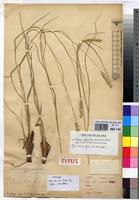
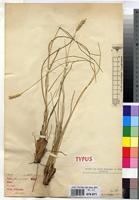
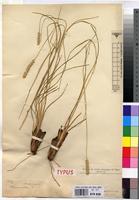
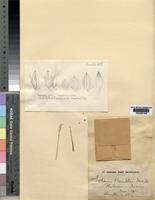
Type of Setaria homblei De Wild. [family POACEAE]
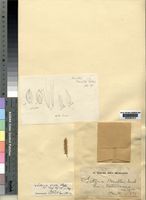
Setaria sphacelata (Schumach.) Stapf & C.E.Hubb. ex M.B.Moss [family POACEAE]
Previous
Next

Name

Identification
Setaria homblei De Wild. [family POACEAE ] Verified by Not on sheet, Setaria sphacelata (Schumach.) Moss [family POACEAE ] (stored under name); Verified by Not on sheet,
Related name
  • Setaria torta
  • Setaria homblei
  • Setaria sphacelata

Flora

Entry for SETARIA Homblei De Wild. [family POACEAE]
Herbarium
Royal Botanic Gardens, Kew (K)
Collection
Flora of Tropical Africa
Resource Type
Reference Sources
Entry From
Flora of Tropical Africa, Vol 9, page 1, (1917) Author: (By O. STAPF.)
Names
SETARIA Homblei De Wild. [family POACEAE], Notes Fl. Katanga, v. 12 in Ann. Soc. Sci. Brux. xxxix. Mém. 134 (in part).
Information
Perennial, up to 2 1/2 ft. high, with intravaginal innovations. Culms erect from a short rhizome, densely coated at the base with the firm persistent basal leaf-sheaths, very slender, simple, 3–4-noded, more or less compressed downwards, glabrous and smooth except close to the inflorescence where it is slightly rough and prominently striate, lowest internode short, the uppermost (peduncle) up to 1 ft. long. Leaf-sheaths firm, closely striate, intermediate and upper shorter than the internodes, keeled, glabrous, usually slightly rough; ligule very short, ciliolate; blade linear from a base as wide as the sheath, tapering to a long fine setaceous point, firm, slightly flexuous, up to 8 in. long and 2 lin. wide, flat or folded, glaucous, glabrous except for a few hairs behind the ligule, scaberulous, midrib fine, sharply prominent below, primary lateral nerves about 3 on each side. Inflorescence a straight somewhat loose continuous cylindric false spike, 1–1 1/2 (rarely to 4) in. long, 3–3 1/2 lin. wide (exclusive of the bristles), pale straw-coloured or pale purplish; axis coarsely striate, minutely tomentellous; branches reduced to sessile involucres each supporting 1 or 2 spikelets (if 2 then only one perfect); bristles fine, 4–10 to each involucre, pale with purplish tips, the longer up to 3 1/2 lin. long; pedicels reduced to short stumps with discoid tips. Spikelets elliptic-oblong and acutely acuminate in back view, broadly semi-ovate in profile, 1 3/4–2 in. long by 1 lin. wide (in profile), glabrous, pallid or pale purplish. Glumes membranous; lower rotundate-ovate, subacute and mucronate, slightly more than half the length of the spikelet, 3–5-nerved; upper broadly elliptic-oblong, subacute and mucronate, about three-quarters the length of the spikelet, 5- (rarely 7-) nerved. Lower floret ♂: valve as long as the spikelet and corresponding to it in outline as seen in front view, depressed or flat on the back, 5-nerved; valvule almost as long as the valve, keels narrowly marginate. Upper floret hermaphrodite, elliptic-oblong, acute and mucronate in back view, obliquely lanceolate-oblong in profile: valve pale throughout or with a pale purplish tip, very finely transversely rugose; valvule delicately punctate.
Distribution
Southern Rhodesia Mozamb. Dist. Charter, 4000 ft., Herb. Eyles, 4568!Congo South Central Katanga; Shinsenda, Berdal in Herb. Homblé, 557! Biano plateau (Manika); Esschen, Homblé, 883!
Notes
De Wildeman cites several specimens communicated by Homblé (Nos. 557, 747, 883) and Hock. Of these Homblé No. 557 has been selected as the type as it corresponds best with the author's description; of the remainder, Homblé 747 and Hock (without number) have been transferred to S. torta, as they appear to represent a somewhat different type characterised by denser spikes with smaller spikelets such as are common in S. torta .

Related Materials

  • Terms and Conditions
  • Privacy Policy
  • Cookie Policy
  • Cookie Settings
  • Accessibility
  • Help
  • Contact Us
  • Facebook
  • Twitter
ITHAKA

JSTOR is part of ITHAKA, a not-for-profit organization helping the academic community use digital technologies to preserve the scholarly record and to advance research and teaching in sustainable ways.

©2000-2026 ITHAKA. All Rights Reserved. JSTOR®, the JSTOR logo, JPASS®, Aluka®, and ITHAKA® are registered trademarks of ITHAKA.

╳