JSTOR Global Plants Home
  • Home
  • Browse
  • About
  • Access
  • Account
    • Saved Items
    • Profile
  • Log in

Global Plants

Skip to Main Content
  • JSTOR Global Plants Home
  • Global Plants

    • Browse
    • About
    • Access
    • Account
      • Saved Items
      • Profile
Log in
  • Browse
  • About
  • Access
  • Account
    • Saved Items
    • Profile
Advanced Search

Compilation
Setaria acromelaena

4 Images see all

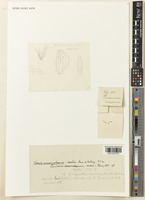
Setaria acromelaena (Hochst.) T.Durand & Schinz [family POACEAE]
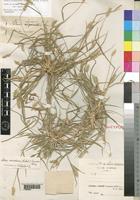
Holotype of Setaria abyssinica Hack. var. annua Chiov. [family GRAMINEAE]
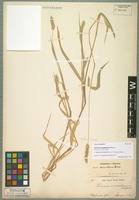
Type? of Setaria acromelaena (Hochst.) T. Durand & Schinz [family POACEAE]
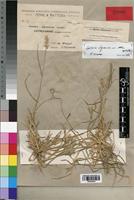
Type of Setaria abyssinica var. annua Chiov. [family POACEAE]
Previous
Next

Name

Identification
Setaria acromelaena (Hochst.) T.Durand & Schinz [family GRAMINEAE ] (stored under name); Verified by Data not digitized, Setaria abyssinica Hack. [family GRAMINEAE ] Verified by Data not digitized,
Related name
  • Setaria abyssinica
  • Setaria acromelaena

Flora

Entry for SETARIA acromelaena (Hochst.) T. Durand & Schinz [family POACEAE]
Herbarium
Royal Botanic Gardens, Kew (K)
Collection
Flora Somalia
Resource Type
Reference Sources
Entry From
Flora Somalia, Vol 4, (1995) Author: by T. A. Cope [updated by M. Thulin 2008]
Names
SETARIA acromelaena (Hochst.) T. Durand & Schinz [family POACEAE], (1895).
Information
Annual up to 150 cm high, pubescent at the nodes; leaves broadly linear. Panicle contracted, spike-like, cylindrical, 1–20 cm long, the bristles pallid, often with purple tips, the rhachis pubescent to sparsely hirsute; bristles 3–10 mm long. Spikelets broadly elliptic, strongly gibbous, 2–3 mm long; lower glume 1/2 the length of the spikelet; upper glume 2/3 as long to as long as the spikelet, 7-nerved; lower floret male or barren; upper lemma punctate to finely rugose.
Range
N1; S1
Distribution
SOMALIA Hansen & Heemstra 6143; Terry 3471.
Distribution (external)
Sudan
Ethiopia
Uganda
Kenya
Tanzania
Notes
The annual counterpart of S. incrassata.

Related Materials

  • Terms and Conditions
  • Privacy Policy
  • Cookie Policy
  • Cookie Settings
  • Accessibility
  • Help
  • Contact Us
  • Facebook
  • Twitter
ITHAKA

JSTOR is part of ITHAKA, a not-for-profit organization helping the academic community use digital technologies to preserve the scholarly record and to advance research and teaching in sustainable ways.

©2000-2026 ITHAKA. All Rights Reserved. JSTOR®, the JSTOR logo, JPASS®, Aluka®, and ITHAKA® are registered trademarks of ITHAKA.

╳