JSTOR Global Plants Home
  • Home
  • Browse
  • About
  • Access
  • Account
    • Saved Items
    • Profile
  • Log in

Global Plants

Skip to Main Content
  • JSTOR Global Plants Home
  • Global Plants

    • Browse
    • About
    • Access
    • Account
      • Saved Items
      • Profile
Log in
  • Browse
  • About
  • Access
  • Account
    • Saved Items
    • Profile
Advanced Search

Compilation
Sesamum gibbosum

4 Images see all

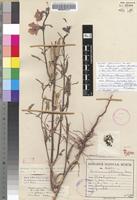
Lectotype of Sesamum gibbosum Bremek. & Oberm. [family PEDALIACEAE]
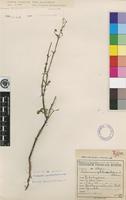
Isotype of Sesamum gibbosum Bremek. & Oberm. [family PEDALIACEAE]
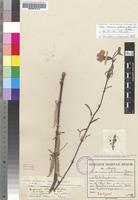
Syntype of Sesamum gibbosum Bremek. & Oberm. [family PEDALIACEAE]
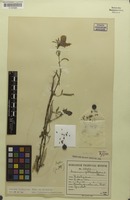
Isotype of Sesamum gibbosum Bremek. & Oberm. [family PEDALIACEAE]
Previous
Next

Name

Identification
Sesamum gibbosum Bremek. & Oberm. [family PEDALIACEAE ] Verified by Not on sheet, Sesamum triphyllum Welw. ex Asch. [family PEDALIACEAE ] (stored under name); Verified by Not on sheet,
Related name
  • Sesamum triphyllum
  • Sesamum gibbosum

Flora

Entry for Sesamum triphyllum Welw. ex Aschers. [family PEDALIACEAE]
Herbarium
Royal Botanic Gardens, Kew (K)
Collection
Flora Zambesiaca
Resource Type
Reference Sources
Entry From
FZ, Vol 8, Part 3, page 86, (1988) Author: H. D. Ihlenfeldt
Names
Sesamum triphyllum Welw. ex Aschers. [family PEDALIACEAE], in Verh. Bot. Ver. Prov. Brand. 30: 185 (1888).—Merxm. in Mitt. Bot. Staatss. München 3: 11 (1959).—Merxm. & Schreiber in Merxm., Prodr. Fl. SW. Afr. 131 (1968). TAB. 23 fig. F & TAB.25 fig. F. Type from Angola.
Sesamum gibbosum Bremek. & Oberm. [family PEDALIACEAE], in Ann. Transv. Mus. 16: 434 (1935). Lectotype: Botswana, Gemsbok, van Son T.M. 28963 (M, isotype; PRE, holotype; SRGH, isotype).
Information
Erect annual herb, 0.25–2 m. high, bushy or simple-stemmed; glabrous except for the mucilage glands. Leaves heteromorphic; the inferior 3–foliate or 3–partite, sometimes with 1–2 additional irregular lateral segments, central lobe longest, 2–10 cm. long, with the leaflets or segments up to 2 cm. broad; superior leaves simple. Extra-floral nectaries (in the Flora Zambesiaca area) usually single. Calyx deciduous. Corolla 2.5–4 cm. long, more or less funnel-shaped, mauve. Capsules oblong in lateral view, abaxially gibbous at the base, c. 40 x 5–7 mm.; beak 6–8 mm. long, distinctly bent outwards (TAB. 23 fig. F); loculi sometimes with inconspicuous ribs. Seeds more or less horizontal in the loculi, about 2.5 mm. x 1.7 mm.; wings, especially the two basal ones, inconspicuous; testa faveolate (TAB. 25. fig. F2).
Habitat
Frequent in grassland, by roadsides, growing in limestone gravel and calcareous soil.
Distribution
Zimbabwe S Beitbridge, fl. & fr. 10.i.1961, Leach 10666 (SRGH).Botswana SW 27 km. N. of Kang, fr. 18.ii.1960, Wild 5032 (SRGH; PRE).Mozambique M Bay of Maputo, maize field, fr. vii.1884, Wilms 1070a (M).Zimbabwe W Bulawayo Distr., fr. ii.1939, Hopkins s.n. (SRGH).Botswana N Ngamiland, fr. xii.1930, Curson 325 (M).
Distribution (external)
Namibia
S. Angola
S. Africa
Notes
A very variable species. Typical specimens have extra-floral nectaries occurring in groups of 3–5, large flowers (up to 5 cm. long), capsules with prominent ribs on the loculi, and seeds with conspicuous wings at both ends. In the Flora Zambesiaca area S. triphyllum is very similar to S. alatum: extra-floral nectaries usually occurring singly, flowers smaller, and capsules without prominent ribs. For correct determination it is necessary to study the seeds.

Related Materials

  • Terms and Conditions
  • Privacy Policy
  • Cookie Policy
  • Cookie Settings
  • Accessibility
  • Help
  • Contact Us
  • Facebook
  • Twitter
ITHAKA

JSTOR is part of ITHAKA, a not-for-profit organization helping the academic community use digital technologies to preserve the scholarly record and to advance research and teaching in sustainable ways.

©2000-2026 ITHAKA. All Rights Reserved. JSTOR®, the JSTOR logo, JPASS®, Aluka®, and ITHAKA® are registered trademarks of ITHAKA.

╳