JSTOR Global Plants Home
  • Home
  • Browse
  • About
  • Access
  • Account
    • Saved Items
    • Profile
  • Log in

Global Plants

Skip to Main Content
  • JSTOR Global Plants Home
  • Global Plants

    • Browse
    • About
    • Access
    • Account
      • Saved Items
      • Profile
Log in
  • Browse
  • About
  • Access
  • Account
    • Saved Items
    • Profile
Advanced Search

Compilation
Sesamum calycinum

16 Images see all

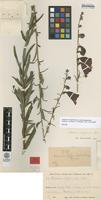
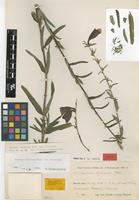
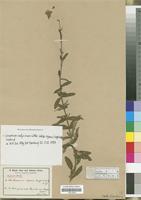
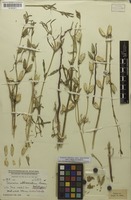
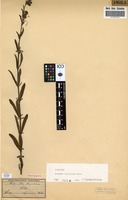
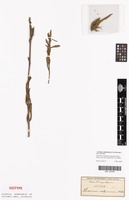
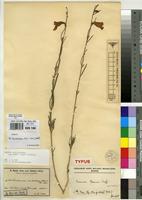
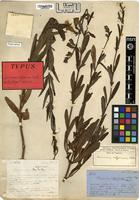
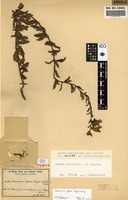
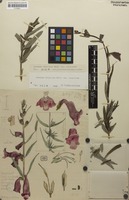
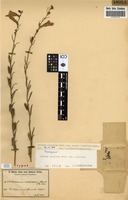
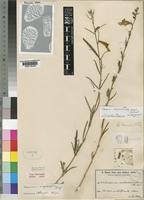
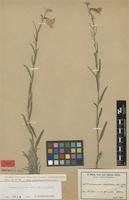
Isotype of Sesamum calycinum Welw. ssp. pseudoangolense Seidenst. ex Ihlenf. [family PEDALIACEAE]
Isotype of Sesamum calycinum Welw. subsp. pseudoangolense Seidenst. [family PEDALIACEAE]
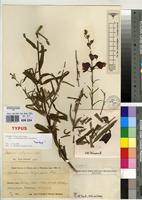
Type of Sesamum calycinum Welw. [family PEDALIACEAE]
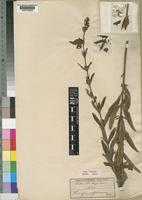
Isotype of Sesamum baumii Stapf [family PEDALIACEAE]
Isotype of Sesamum calycinum Welw. subsp. pseudoangolense Seidenst. ex Ihlenf. [family PEDALIACEAE]
Isotype of Sesamum repens Engl. & Gilg [family PEDALIACEAE]
Holotype of Sesamum abbreviatum Merxm. [family PEDALIACEAE]
Isotype of Sesamum calycinum Welw. [family PEDALIACEAE]
Isotype of Sesamum baumii Stapf [family PEDALIACEAE]
Type of Sesamum calycinum Welw. [family PEDALIACEAE]
Type of Sesamum repens Engl. & Gilg [family PEDALIACEAE]
Filed as Sesamum calycinum subsp. calycinum Welw. [family PEDALIACEAE]
Isotype of Sesamum calycinum Welw. [family PEDALIACEAE]
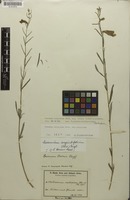
Sesamum angustifolium (Oliv.) Engl. [family PEDALIACEAE]
Type of Sesamum baumii Stapf [family PEDALIACEAE]
Previous
Next

Name

Identification
Isotype of Sesamum baumii Stapf [family PEDALIACEAE ] Verified by Not on sheet, Sesamum calycinum Welw. [family PEDALIACEAE ] (stored under name); Verified by Grabow-Seidensticker U., 1986
Related name
  • Sesamum repens
  • Sesamum calycinum
  • Sesamum angustifolium
  • Sesamum baumii
  • Sesamum radiatum

Flora

Entry for SESAMUM calycinum Welw. [family PEDALIACEAE]
Herbarium
Royal Botanic Gardens, Kew (K)
Collection
Flora of Tropical Africa
Resource Type
Reference Sources
Entry From
Flora of Tropical Africa, Vol IV, Part 2, page 538, (1905) Author: (By O. Stapf.)
Names
SESAMUM calycinum Welw. [family PEDALIACEAE], in Trans. Linn. Soc. xxvii. 52.
Information
Stem 2–3 ft. high, erect, simple or sparingly branched upwards, with arrested branchlets forming small tufts of leaves in the lower leaf-axils, obtusely quadrangular, sparingly rufo-subhirsute or pubescent and mealy-glandular. Leaves subsessile, lanceolate to linear, obtuse to acute at the apex, cuneate at the base, 2 1/2–1 in. long, 6–2 lin. wide, entire, rarely with 1–2 irregular teeth, finely hirsute above and on the nerves below, at length more or less glabrescent, glaucous from sessile glands below, at least when young; nerves rather prominent below, 4–5 on each side, very oblique, transverse veins distinct. Pedicels 1 1/2–2 (at length over 2) lin. long, ebracteolate; nectaries sessile. Calyx 3–3 1/2 lin. long, pubescent and mealy-glandular; segments subulate-lanceolate, finely acuminate. Corolla rose-coloured, obliquely campanulate, 1–1 1/3 in. long, rufo-pubescent; lowest lobe orbicular, subapiculate, 1/4 in. in diam. Capsule acuminate-rostrate, almost 1 in. long, 2 lin. wide, pubescent, 4-sulcate, obtusely quadrangular. Seeds not quite 1 lin. long, margins acute, faces like the broad sides finely or quite obscurely rugose. —Hiern in Cat. Afr. Pl. Welw. i. 797 (excl. Oliver's syn.).
Distribution
Angola Lower Guinea Pungo Andongo; in dry sandy thickets between Caghuy and Sansamanda, Welwitsch, 1644!Mashonaland Mozamb. Dist. Six Mile Spruit, near Salisbury, Hon. Mrs. Evelyn Cecil, 142!
Notes
I find the nectaries to be sessile, not “evidently stipitate,” as Welwitsch says. De Wildeman and Durand (Reliq. Dewèvr. 173) indicate this species also from the Upper Congo, at Kasongo, where Dewèvre (919) collected it, who describes the corolla as violet with a white tube and a yellow, violet-streaked lip, and states that the natives on the shore of Lake Tanganyika eat it.

Related Materials

  • Terms and Conditions
  • Privacy Policy
  • Cookie Policy
  • Cookie Settings
  • Accessibility
  • Help
  • Contact Us
  • Facebook
  • Twitter
ITHAKA

JSTOR is part of ITHAKA, a not-for-profit organization helping the academic community use digital technologies to preserve the scholarly record and to advance research and teaching in sustainable ways.

©2000-2026 ITHAKA. All Rights Reserved. JSTOR®, the JSTOR logo, JPASS®, Aluka®, and ITHAKA® are registered trademarks of ITHAKA.

╳