JSTOR Global Plants Home
  • Home
  • Browse
  • About
  • Access
  • Account
    • Saved Items
    • Profile
  • Log in

Global Plants

Skip to Main Content
  • JSTOR Global Plants Home
  • Global Plants

    • Browse
    • About
    • Access
    • Account
      • Saved Items
      • Profile
Log in
  • Browse
  • About
  • Access
  • Account
    • Saved Items
    • Profile
Advanced Search

Compilation
Serenoa repens

13 Images see all

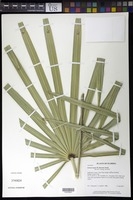
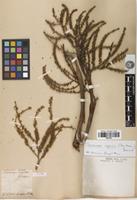
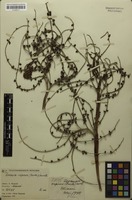
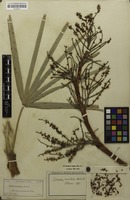
Serenoa repens (W. Bartram) Small [family ARECACEAE]
Filed as Serenoa repens (W. Bartram) Small [family ARECACEAE]
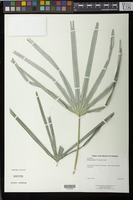
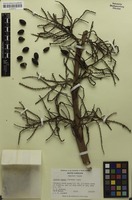
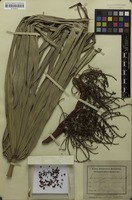
Serenoa repens (W. Bartram) Small [family ARECACEAE]
Filed as Serenoa repens (W.Bartram) Small [family ARECACEAE]
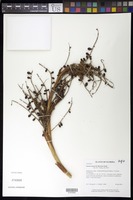
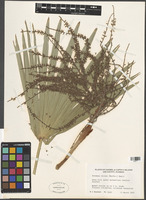
Type of Chamaerops serrulata Michx. [family ARECACEAE]
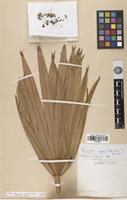
Filed as Serenoa repens (W.Bartram) Small [family ARECACEAE]
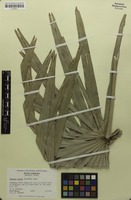
Type of Chamaerops serrulata Michx. [family ARECACEAE]
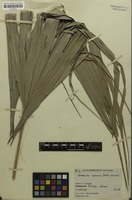
Serenoa repens (W. Bartram) Small [family ARECACEAE]
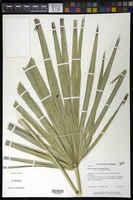
Filed as Serenoa repens (W.Bartram) Small [family ARECACEAE]
Filed as Serenoa repens (W. Bartram) Small [family ARACEAE]
Filed as Serenoa repens (W.Bartram) Small [family ARECACEAE]
Previous
Next

Name

Identification
Serenoa repens (Bartram) Small [family ARECACEAE ] (stored under name); Verified by Not on sheet, Chamaerops serrulata Michx. [family ARECACEAE ] Verified by Not on sheet,
Related name
  • Serenoa repens
  • Chamaerops serrulata
Common name
  • Saw palmetto, Flora of North America Vol. 22

Flora

Entry for Serenoa repens (W. Bartram) Small [family PALMAE]
Herbarium
Flora of North America (FNA)
Collection
Flora of North America
Resource Type
Reference Sources
Entry From
Flora of North America, Vol 22,
Names
Serenoa repens (W. Bartram) Small [family PALMAE], Journal of the New York Botanical Garden, 27: 197. 1926
Corypha repens W. Bartram [family PALMAE], Travels Carolina, 61. 1791
Brahea serrulata (Michaux) H. Wendland [family PALMAE]
Chamaerops serrulata Michaux [family PALMAE]
Corypha obliqua W. Bartram [family PALMAE]
Sabal serrulata (Michaux) Nuttall ex Schultes & Schultes f. [family PALMAE]
Serenoa serrulata (Michaux) G. Nicholson [family PALMAE]
Information
Stems usually creeping, branched, sometimes ascending, to 1--3 m. Leaves yellow-green, green, or silvery green, stiff; petioles finely to strongly serrate; hastula present on both sides of leafabaxially and adaxially. Flowers creamy white, fragrant, 4--5 mm. Fruits ripening from green through orange to black, length ca. 2 cm, diam. 1 cm. 2n = 36.
Phenology
Flowering spring
Altitude range
0--50 m
Distribution
USA Ala.USA Fla.USA Ga.USA La.USA Miss.USA S.C.
Discussion
The range of this species extends from Beaufort, Jasper, Colletin, and Charleston counties, South Carolina to St. Tammany Parish, Louisiana. Reports of it from Arkansas, North Carolina, and Texas are in error.
Two or three leaf-color morphs are found in Serenoa (A. D. Hawkes 1950). The green type is more widespread, and the glaucous or blue-gray type seems to be more abundant in coastal sites of southeastern Florida. Serenoa repens forma glauca Moldenke was described as differing from the typical form of the species in having glaucous leaf blades (H. N. Moldenke 1967). Since a type specimen for S. repens is lacking, it is impossible to know if Moldenke’s form differs from the type. The genetic basis for these color differences is not understood.
Serenoa repens apparently is pollinated by bees. Flowering and fruiting are not necessarily annual events, and some years see more abundant flowering than others (J. B. Hilmon 1968). Even when flowering is abundant, fruit production is erratic (D. Smith 1972); the causes are quite unknown. When fruits are present, they are eagerly sought by black bears (D. S. Maehr 1984; D. S. Maehr and J. R. Brady 1984), white-tailed deer (R. F. Harlow 1961), raccoons, foxes, opossums, and various birds (J. B. Hilmon 1968).
Serenoa fruits are the source of a steroidal drug that inhibits the conversion of testosterone to dihydrotestosterone, which binds to receptors in the prostate gland and in hair follicles (B. C. Bennett and J. R. Hicklin, in press1998). This inhibition is the biochemical basis for the use of Serenoa extracts in treating benign prostrate swelling and baldness. Bennett and Hicklin provided a complete review of the uses of Serenoa in traditional and modern medicine, as well as its use as a fiber and thatch plant.

Related Materials

  • Terms and Conditions
  • Privacy Policy
  • Cookie Policy
  • Cookie Settings
  • Accessibility
  • Help
  • Contact Us
  • Facebook
  • Twitter
ITHAKA

JSTOR is part of ITHAKA, a not-for-profit organization helping the academic community use digital technologies to preserve the scholarly record and to advance research and teaching in sustainable ways.

©2000-2026 ITHAKA. All Rights Reserved. JSTOR®, the JSTOR logo, JPASS®, Aluka®, and ITHAKA® are registered trademarks of ITHAKA.

╳