JSTOR Global Plants Home
  • Home
  • Browse
  • About
  • Access
  • Account
    • Saved Items
    • Profile
  • Log in

Global Plants

Skip to Main Content
  • JSTOR Global Plants Home
  • Global Plants

    • Browse
    • About
    • Access
    • Account
      • Saved Items
      • Profile
Log in
  • Browse
  • About
  • Access
  • Account
    • Saved Items
    • Profile
Advanced Search

Compilation
Senecio quercetorum

9 Images see all

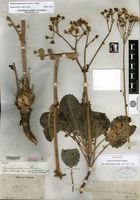
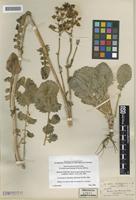
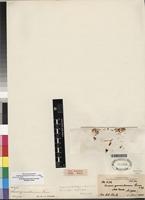
Lectotype of Senecio quercetorum Greene, E.L. 1909 [family ASTERACEAE]
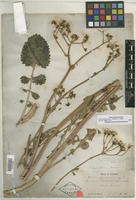
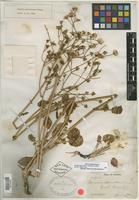
Isolectotype of Senecio quercetorum Greene [family ASTERACEAE]
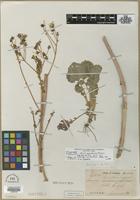
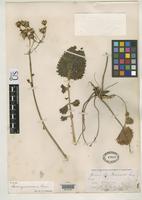
Holotype of Senecio macropus Greenman [family ASTERACEAE]
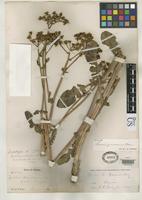
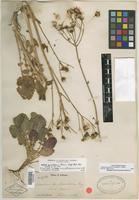
Isotype of Senecio quercetorum Greene [family ASTERACEAE]
Isotype of Senecio quercetorum Greene, E.L. 1909 [family ASTERACEAE]
Isotype of Senecio quercetorum Greene [family ASTERACEAE]
Type of Packera quercetorum (Greene) C. Jeffrey [family ASTERACEAE]
Previous
Next

Name

Identification
Packera quercetorum (Greene) C. Jeffrey [family ASTERACEAE ] (stored under name); Verified by D.K. Trock,, Senecio quercetorum Greene [family ASTERACEAE ] Verified by J.M. Greenman, Senecio quercetorum Greene [family ASTERACEAE ] Verified by Not on sheet,
Related name
  • Senecio quercetorum
  • Senecio neomexicanus
  • Packera quercetorum
Common name
  • Oak Creek ragwort, Flora of North America Vol. 20

Flora

Entry for Packera quercetorum (Greene) C. Jeffrey [family COMPOSITAE]
Herbarium
Flora of North America (FNA)
Collection
Flora of North America
Resource Type
Reference Sources
Entry From
Flora of North America, Vol 20,
Names
Packera quercetorum (Greene) C. Jeffrey [family COMPOSITAE], Kew Bull., 47: 101. 1992
Senecio quercetorum Greene [family COMPOSITAE], Leafl. Bot. Observ. Crit., 2: 20. 1909
Senecio macropus Greenman [family COMPOSITAE]
Treatment Author(s)
Debra K. Trock
Information
Perennials, 60–100+ cm; taprooted (caudices subligneous, ascending to erect). Stems 1 or 2–4, clustered (proximally deeply purple-tinged, distally lightly tinged), glabrous or tomentose at bases and in leaf axils. Basal leaves (and proximal cauline) petiolate; blades obovate or lyrate (pinnately lobed, lateral lobes 2–6+ pairs, their bases petioluliform, terminal lobes larger than laterals, midribs narrowly winged), 60–160+ × 20–40+ mm, bases wide, ultimate margins sharply dentate, crenate-dentate, or irregularly incised. Cauline leaves gradually reduced (petiolate or sessile; shallowly lobed, midribs ± winged, distals bractlike, dentate to incised). Heads 15–40+ in open, cymiform arrays. Peduncles ebracteate, glabrous. Calyculi inconspicuous. Phyllaries (13–)21, green (tips yellow), 5–7 mm, glabrous (tips sometimes hairy). Ray florets (8–)13; corolla laminae 6–10+ mm. Disc florets 60–70+; corolla tubes 2–3 mm, limbs 3.5–4.5 mm. Cypselae 1.5–2 mm, glabrous or ± scabrellous; pappi 5.5–6.5 mm. 2n = 92.
Phenology
apr-may (spring), jun (summer)
Altitude range
800–2200 m;
Distribution
USA Ariz.USA N.Mex.
Discussion
Packera quercetorum is found only infrequently and in relatively small populations in central and southern Arizona and west-central New Mexico. The plants are robust and have probable affinities to P. multilobata. The plants have a bluish tinge when freshly collected and are distinctive in the field.

Related Materials

  • Terms and Conditions
  • Privacy Policy
  • Cookie Policy
  • Cookie Settings
  • Accessibility
  • Help
  • Contact Us
  • Facebook
  • Twitter
ITHAKA

JSTOR is part of ITHAKA, a not-for-profit organization helping the academic community use digital technologies to preserve the scholarly record and to advance research and teaching in sustainable ways.

©2000-2026 ITHAKA. All Rights Reserved. JSTOR®, the JSTOR logo, JPASS®, Aluka®, and ITHAKA® are registered trademarks of ITHAKA.

╳