JSTOR Global Plants Home
  • Home
  • Browse
  • About
  • Access
  • Account
    • Saved Items
    • Profile
  • Log in

Global Plants

Skip to Main Content
  • JSTOR Global Plants Home
  • Global Plants

    • Browse
    • About
    • Access
    • Account
      • Saved Items
      • Profile
Log in
  • Browse
  • About
  • Access
  • Account
    • Saved Items
    • Profile
Advanced Search

Compilation
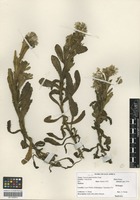
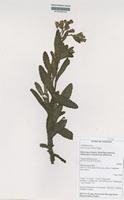
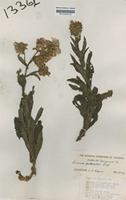
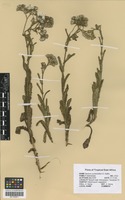
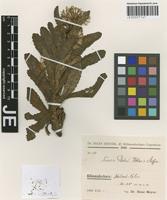
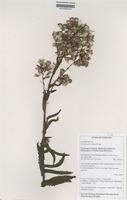
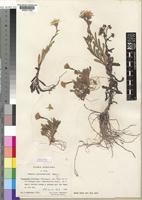
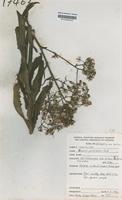
Senecio purtschelleri

9 Images see all

Filed as Senecio purtschelleri Engl. [family ASTERACEAE]
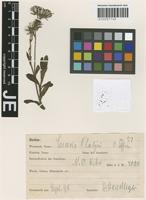
Syntype of Senecio platzii Volkens & Muschl. [family ASTERACEAE]
[family ]
[family ]
[family ]
Filed as Senecio purtschelleri Engl. [family ASTERACEAE]
Senecio purtschelleri Engl. [family COMPOSITAE]
[family ]
Syntype of Senecio platzii Volkens & Muschl. [family ASTERACEAE]
Previous
Next

Name

Identification
Senecio purtschelleri Engl. [family ASTERACEAE ] (stored under name); Verified by J. Müller (JE), Senecio platzii Volkens & Muschl. [family ASTERACEAE ] Verified by J. Müller (JE),
Related name
  • Senecio meyeri-johannis
  • `
  • Senecio purtschelleri
  • Senecio platzii

Flora

Entry for Senecio purtschelleri Engl. [family COMPOSITAE]
Herbarium
Royal Botanic Gardens, Kew (K)
Collection
Flora of Tropical East Africa
Resource Type
Reference Sources
Entry From
Flora of Tropical East Africa, Part Part 3, page 547, (2005) Author: H. Beentje, C. Jeffrey & D.J.N. Hind
Names
Senecio purtschelleri Engl. [family COMPOSITAE], in Abh. Preuss. Akad. Wiss. 1891, 2: 443 (1892); A.V.P.: 237, 360 (1957); C. Jeffrey in K.B. 41: 901 (1986); U.K.W.F. ed. 2: 222 (1994). Type: Tanzania, Kilimanjaro, Meyer 213 & 262 (B†, SYN.), neotype: Kilimanjaro, Hedberg 1314 (UPS, neo., EA!, K!, isoneo., chosen by Hedberg)
Senecio platzii Muschl. [family COMPOSITAE], in E.J. 43: 67 (1909). Type: Tanzania, Kilimanjaro, Meyer 51 (B†, SYN.) & Meru, Uhlig 604 (B†, EA!, SYN.)
Information
Perennial herb 7–60(?–90?) cm high, rhizomatous; stems erect, branched, ± glandular-pubescent, sometimes also arachnoid-glabrescent, leafy. Leaves sessile, oblong to oblanceolate, 2–13.5 cm long, 0.4–2.7 cm wide, tapered to an auriculate or subauriculate somewhat expanded base, margins sinuate-crenate or obscurely to coarsely sinuate-dentate or bidentate with rounded apiculate teeth, apex obtuse to rounded, minutely apiculate, dark green, sticky, glandular-pubescent and sometimes also thinly arachnoid-glabrescent above, glandular-pubescent beneath especially on midrib and veins and sometimes also thinly arachnoid, marcescent when old. Capitula radiate, subradiate with irregularly enlarged outer disc florets, or discoid, erect, 2–12 in usually congested terminal cymes; stalks of the individual capitula glandular, rarely also slightly arachnoid; involucre cylindrical, 8–11.5 mm long, 4–5 mm in diameter; bracts of calyculus 4–8, lax, lanceolate, 3–7 mm long, dark-tipped, ± glandular, at least on margins; phyllaries 10–14, 7–11 mm long, thinly finely glandular-pubescent and sometimes also very thinly arachnoid. Ray florets 5–7 or 0, variable within populations, when present yellow, tube 3–4 mm long, sparsely hairy, rays 4–6 x 1.5–2.2 mm; disc florets yellow, corolla 5–6.7 mm long, tube expanded above the middle, glabrous, lobes 0.5–0.8 mm long. Achenes 2.5–3.5 mm long, ribbed, glabrous or almost so; pappus 5.5–6.5 mm long, white.
Range
DISTR. K 4; T 2 restricted to Mt Kenya, Kilimanjaro and Mt Meru
Altitude range
(3350–)3700–4800(–5000) m
Distribution
KENYA Mt Kenya, above head of Nithi Valley, Aug. 1944, Le Pelley in Bally 3445! & head of Sirimon Valley, Nov. 1970, Mabberley 417! & N slope near Kami Hut, June 1986, Linder 3672!TANZANIA Kilimanjaro, saddle, June 1948, Hedberg 1193! & Mawenzi hut, Mar. 1956, Trump s.n.!: Mt Meru, summit, Mar. 1946, Fuggles Couchman in AH 9817!
Notes
USES. None recorded on specimens from our areaCONSERVATION Limited distribution area but habitat not threatened; least concern (LC)

Related Materials

  • Terms and Conditions
  • Privacy Policy
  • Cookie Policy
  • Cookie Settings
  • Accessibility
  • Help
  • Contact Us
  • Facebook
  • Twitter
ITHAKA

JSTOR is part of ITHAKA, a not-for-profit organization helping the academic community use digital technologies to preserve the scholarly record and to advance research and teaching in sustainable ways.

©2000-2026 ITHAKA. All Rights Reserved. JSTOR®, the JSTOR logo, JPASS®, Aluka®, and ITHAKA® are registered trademarks of ITHAKA.

╳