JSTOR Global Plants Home
  • Home
  • Browse
  • About
  • Access
  • Account
    • Saved Items
    • Profile
  • Log in

Global Plants

Skip to Main Content
  • JSTOR Global Plants Home
  • Global Plants

    • Browse
    • About
    • Access
    • Account
      • Saved Items
      • Profile
Log in
  • Browse
  • About
  • Access
  • Account
    • Saved Items
    • Profile
Advanced Search

Compilation
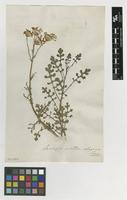
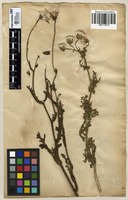
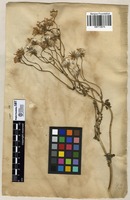
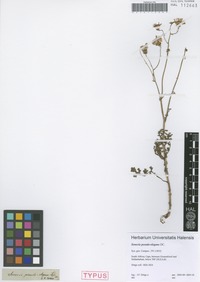
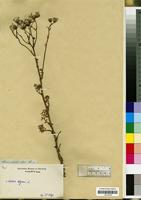
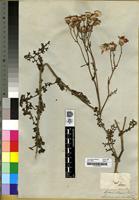
Senecio pseudo-elegans

6 Images see all

Filed as Senecio elegans L. [family ASTERACEAE]
Filed as Senecio pseudo-elegans Less. [family ASTERACEAE]
Syntype of Senecio pseudo-elegans Less. [family ASTERACEAE]
Filed as Senecio elegans L. [family COMPOSITAE/ASTERACEAE]
Filed as Senecio elegans L. [family ASTERACEAE]
Previous
Next

Name

Identification
Senecio pseudo-elegans Less. [family ASTERACEAE ] (stored under name); Verified by C.F. Lessing,
Related name
  • Senecio pseudo-elegans
  • Senecio elegans

Flora

Entry for SENECIO elegans Linn [family COMPOSITAE]
Herbarium
Royal Botanic Gardens, Kew (K)
Collection
Flora Capensis
Resource Type
Reference Sources
Entry From
Flora Capensis, Vol 3, page 44, (1894) Author: (By W. H. HARVEY).
Names
SENECIO elegans Linn [family COMPOSITAE], ! Sp. 1218;—Willd. Sp. 3. 1990. Bot. Mag. t. 238.
SENECIO pseudo-elegans Less. [family COMPOSITAE], ! DC. l.c. 407.
Information
annual, viscoso-pubescent, erect or diffuse, paniculately branched; leaves ear-clasping at base, petioled, polymorphous (either oblong subentire or toothed, lyrate, pinnatifid, pinnati-partite or bipinnati-partite, with cuneate, toothed or incise lobes or lobules); corymb laxly several headed, the pedicels long and scaly; heads radiate, many-fl., the disc yellow, rays purple; inv. calycled with many broad ciliate black-tipped bracteoles, of 12–15 broadly linear, flat, glabrous, or pilose, black-tipped scales; achenes striate, puberulous. Stems 1–2 ft. high, the larger specimens much branched. Leaves 1 1/2–3 inches long, extremely varied in shape and degree of incision. Inv. truncate at base; the numerous bracteoles of the calycle 1–2 lines long; the scales 5–6 lines long. Rays showy.
Distribution
SOUTH AFRICA Sandy ground round Capetown and in the Western Districts, Drege! Eckl.! Zey.! W. H. H., C. Wright 312, 317. Cultivated in Europe. Var. β. near the sea shore, Thunb.! Drege! (Herb. Th., D., Hk., Sd.)
Notes
A var. with double flowers is the well-known “American Grounsel,” of Engl. gardens; why called “American” I know not. The wild plant seems constantly annual; the cultivated variety may be kept for 2 or more years. Mr. Kippist has kindly furnished me with the following , as the result of his examination of the Linnæan specimens of “ Senecio elegans: ” it seems to establish the incorrectness of Lessing's change of name to “ pseudo-elegans .” “I find [in the Linnæan Cabinets] two plants pinned together, both marked S. elegans in Linnæus's own hand. There is no habitat to either, nor any information as to the history of the specimens. The first sheet, however, having the No. ‘13’ (corresponding with the 1st Ed. of the Sp. Pl.) prefixed to the name elegans must be taken as the type specimen, and this is assuredly the pseudo-elegans of Less., the calyx being most distinctly bicalyculate, glabrous, with the outer scales serrulato-ciliate, and each of the pedicels bearing 4–5 squamæ. Why Lessing should have changed the name, I know not, especially as, in all three of the figures quoted by Linnæus, and even in Commelin's wretched plate, the invol. is clearly bicalyculate. * * * Linnæus sub-sequently introduced into his herbarium, with the name ‘ S. elegans ,’ a totally different plant, with the aphyllous pedicels and a uniseriate, hairy involucre; apparently agreeing with S. elegans, γ. viscosissimus, DC. ”—The error perhaps originated with Thunberg who gave the name carnosus to the plant with bicalyculate involucres; and the names S. elegans, S. arenarius and S. myrrhifolius to that with uniseriate involucres.

Related Materials

  • Terms and Conditions
  • Privacy Policy
  • Cookie Policy
  • Cookie Settings
  • Accessibility
  • Help
  • Contact Us
  • Facebook
  • Twitter
ITHAKA

JSTOR is part of ITHAKA, a not-for-profit organization helping the academic community use digital technologies to preserve the scholarly record and to advance research and teaching in sustainable ways.

©2000-2026 ITHAKA. All Rights Reserved. JSTOR®, the JSTOR logo, JPASS®, Aluka®, and ITHAKA® are registered trademarks of ITHAKA.

╳