JSTOR Global Plants Home
  • Home
  • Browse
  • About
  • Access
  • Account
    • Saved Items
    • Profile
  • Log in

Global Plants

Skip to Main Content
  • JSTOR Global Plants Home
  • Global Plants

    • Browse
    • About
    • Access
    • Account
      • Saved Items
      • Profile
Log in
  • Browse
  • About
  • Access
  • Account
    • Saved Items
    • Profile
Advanced Search

Compilation
Selaginella humifusa

11 Images see all

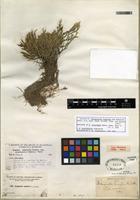
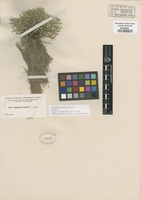
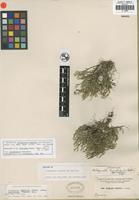
Isotype of Selaginella acanthonota Underw. [family SELAGINELLACEAE]
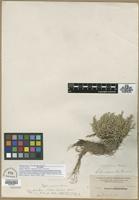
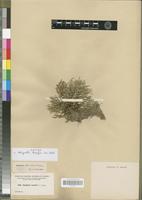
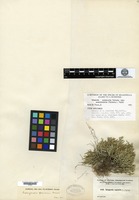
Isotype of Selaginella humifusa Van Eselt. [family SELAGINELLACEAE]
Isotype of Selaginella humifusa Van Eselt. [family PTERIDOPHYTE]
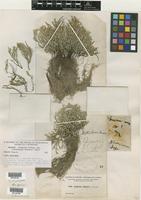
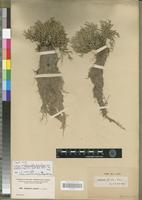
Isotype of Selaginella humifusa Van Eselt. [family SELAGINELLACEAE]
Isotype of Selaginella humifusa Van Eselt. [family PTERIDOPHYTA]
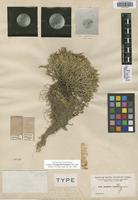
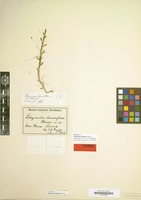
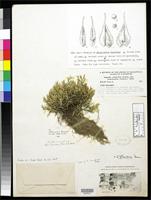
Holotype of Selaginella humifusa Hieron. [family SELAGINELLACEAE]
Isotype of Selaginella humifusa Van Eselt. [family SELAGINELLACEAE]
Isotype of Selaginella humifusa Van Eseltine [family SELAGINELLACEAE]
Holotype of Selaginella humifusa Van Eseltine, G.P. 1918 [family SELAGINELLACEAE]
Previous
Next

Name

Identification
Isotype of Selaginella humifusa Van Eselt. [family SELAGINELLACEAE ] (stored under name); Verified by Not on sheet,
Related name
  • Selaginella humifusa
  • Selaginella acanthonota
  • Selaginella arenicola
Common name
  • sandy spike-moss, Flora of North America Vol. 2
  • Spiny spike-moss, Flora of North America Vol. 2

Flora

Entry for Selaginella acanthonota L. Underwood [family SELAGINELLACEAE]
Herbarium
Flora of North America (FNA)
Collection
Flora of North America
Resource Type
Reference Sources
Entry From
Flora of North America, Vol 2,
Names
Selaginella acanthonota L. Underwood [family SELAGINELLACEAE], Torreya, 2: 172. 1902
Selaginella arenicola L. Underwood subsp. acanthonota (L. Underwood) R. M. Tryon [family SELAGINELLACEAE]
Selaginella floridana Maxon [family SELAGINELLACEAE]
Selaginella funiformis Van Eseltine [family SELAGINELLACEAE]
Selaginella humifusa Van Eseltine [family SELAGINELLACEAE]
Selaginella rupestris (Linnaeus) Spring var. acanthonota (L. Underwood) Clute [family SELAGINELLACEAE]
Treatment Author(s)
Iván A. Valdespino
Information
Plants terrestrial, less often on rock, forming close clumps. Stems radially symmetric, underground (rhizomatous) and aerial, not readily fragmenting, irregularly forked; rhizomatous and aerial stems often with 1 branch arrested, budlike, tips straight; rhizomatous stems with budlike branches, these sometimes inconspicuous; aerial stems erect or ascending, lateral branches conspicuously determinate. Rhizophores borne on upperside of stems, restricted to rhizomatous stems or lowermost base of aerial stems (seldom on distal 2/3, if so, short), mostly aerial, 0.25--0.43 mm diam. Leaves monomorphic, in pseudowhorls of 4 or 5, tightly appressed, ascending, green, narrowly triangular-lanceolate or narrowly lanceolate, 2--3.25 X 0.4--0.6(--0.7) mm; abaxial ridges present; base rounded to cuneate, slightly decurrent to adnate, pubescent; margins ciliate, cilia transparent, spreading at base, dentiform, ascending toward apex, 0.02--0.1 mm; apex plane, attenuate or seldom slightly keeled; bristle white or whitish to transparent, sometimes with brownish to reddish band at base marking breaking point (in old leaves), straight, puberulent, (0.35--)0.5--1.4 mm. Strobili solitary, (0.5--)1--3(--3.5) cm; sporophylls ovate-lanceolate to lanceolate, abaxial ridges not prominent, base pubescent, margins ciliate, apex bristled.
Altitude range
0 m
Distribution
USA Fla.USA Ga.USA N.C.USA S.C.
Discussion
Selaginella acanthonota is a member of the S . arenicola complex, a taxonomically difficult group. Specimens of S . acanthonota from the northern part of its range (e.g., North Carolina, South Carolina, and Georgia) tend to have rather prostrate underground (rhizomatous) stems, with ascending to erect, short aerial stems. Those from Florida have rather ascending underground (rhizomatous) stems and more slender aerial stems. Selaginella acanthonota , in addition to features given in the description, is characterized by having hairs running lengthwise along or at least to the proximal half of the ridges bordering the abaxial groove of the leaves and sporophylls, and, usually, puberulent leaves and sporophyll apices. The hairs on the ridges sometimes break off easily or are somewhat enclosed within the abaxial groove (when the ridges close as a response to dryness), but they can be seen under a microscope. More systematic studies are needed within S . acanthonota and the entire S . arenicola complex.

Related Materials

  • Terms and Conditions
  • Privacy Policy
  • Cookie Policy
  • Cookie Settings
  • Accessibility
  • Help
  • Contact Us
  • Facebook
  • Twitter
ITHAKA

JSTOR is part of ITHAKA, a not-for-profit organization helping the academic community use digital technologies to preserve the scholarly record and to advance research and teaching in sustainable ways.

©2000-2026 ITHAKA. All Rights Reserved. JSTOR®, the JSTOR logo, JPASS®, Aluka®, and ITHAKA® are registered trademarks of ITHAKA.

╳