JSTOR Global Plants Home
  • Home
  • Browse
  • About
  • Access
  • Account
    • Saved Items
    • Profile
  • Log in

Global Plants

Skip to Main Content
  • JSTOR Global Plants Home
  • Global Plants

    • Browse
    • About
    • Access
    • Account
      • Saved Items
      • Profile
Log in
  • Browse
  • About
  • Access
  • Account
    • Saved Items
    • Profile
Advanced Search

Compilation
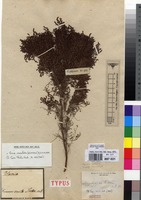
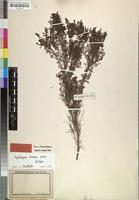
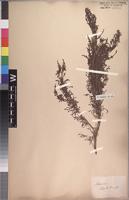
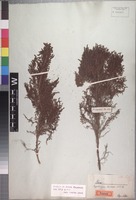
Scyphogyne trimera

8 Images see all

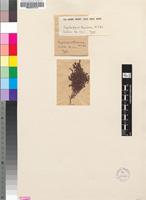
Isotype of Scyphogyne trimera N.E.Br. [family ERICACEAE]
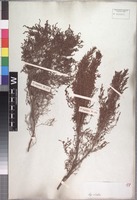
Syntype of Scyphogyne trimera N. E. Br. [family ERICACEAE]
Scyphogyne trimera N.E.Br. [family ERICACEAE]
Type of Scyphogyne trimera N.E.Br. [family ERICACEAE]
Isosyntype of Scyphogyne trimera N.E.Br. [family ERICACEAE]
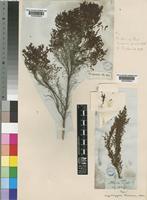
Syntype of Scyphogyne trimera N.E.Br. [family ERICACEAE]
Erica urceolata (Klotzsch) E. G. H. Oliv. [family ERICACEAE]
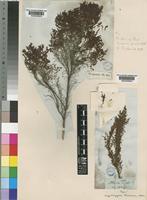
Syntype of Scyphogyne trimera N. E. Br. [family ERICACEAE]
Previous
Next

Name

Identification
Scyphogyne trimera N.E.Br. [family ERICACEAE ] Verified by Not on sheet, Erica urceolata (Klotzsch) E.G.H.Oliv. [family ERICACEAE ] (stored under name); Verified by Not on sheet,
Related name
  • Erica urceolata
  • Blaeria unrecorded
  • Salaxis unrecorded
  • Scyphogyne trimera

Flora

Entry for SCYPHOGYNE trimera N. E. Br. [family ERICACEAE]
Herbarium
Royal Botanic Gardens, Kew (K)
Collection
Flora Capensis
Resource Type
Reference Sources
Entry From
Flora Capensis, Vol 4, page 2, (1909) Author: By H. BOLUS, F. GUTHRIE, and N. E. BROWN.
Names
SCYPHOGYNE trimera N. E. Br. [family ERICACEAE]
Information
a densely much-branched shrublet 1–1 1/2 ft. high; branchlets puberulous; leaves 3-nate, erect or ascending, 1/2–1 lin. long with the petiole, linear, subacute or obtuse, glabrous or minutely puberulous, often at first tipped with a few fine hairs; flowers axillary or terminating exceedingly short axillary branchlets, 1–3 together, sessile or subsessile; calyx obconic, 3-angled and unequally 3-lobed, rarely imperfectly 4-lobed, glabrous or puberulous on the angles, ciliate on the lobes; tube 1/8– 1/4 lin. long, transparent between the angles, lobes 1/8– 1/4 lin. long, linear, obtuse; corolla 1/2– 2/3 lin. long, urceolate, 3-lobed, ovoid-inflated, broadest (1/4 lin. in diam.) slightly above the middle, contracted at the base, but scarcely so or not at all below the lobes, varying from nearly or quite glabrous to puberulous nearly all over; lobes 1/5– 1/4 lin. long, oblong or ovate-oblong, very obtuse, erect or slightly connivent; stamens 3, included; filaments free, slender; anthers connate, less than 1/4 lin. long, subquadrate, shortly and obtusely bifid; ovary narrowly ovoid, tapering into the style which is puberulous at the apex; stigma just exserted from the corolla, broadly funnel-shaped. null
Distribution
COAST REGION Cape Div.; eastern slopes of Devils Mountain, 1500 ft., Bolus, 4496!SOUTH AFRICA without locality, Sieber, 175!
Notes
The variation in the size of the corolla is probably due to different stages of maturity of the flower.

Related Materials

  • Terms and Conditions
  • Privacy Policy
  • Cookie Policy
  • Cookie Settings
  • Accessibility
  • Help
  • Contact Us
  • Facebook
  • Twitter
ITHAKA

JSTOR is part of ITHAKA, a not-for-profit organization helping the academic community use digital technologies to preserve the scholarly record and to advance research and teaching in sustainable ways.

©2000-2026 ITHAKA. All Rights Reserved. JSTOR®, the JSTOR logo, JPASS®, Aluka®, and ITHAKA® are registered trademarks of ITHAKA.

╳