JSTOR Global Plants Home
  • Home
  • Browse
  • About
  • Access
  • Account
    • Saved Items
    • Profile
  • Log in

Global Plants

Skip to Main Content
  • JSTOR Global Plants Home
  • Global Plants

    • Browse
    • About
    • Access
    • Account
      • Saved Items
      • Profile
Log in
  • Browse
  • About
  • Access
  • Account
    • Saved Items
    • Profile
Advanced Search

Compilation
Sclerochiton tanzaniensis

3 Images see all

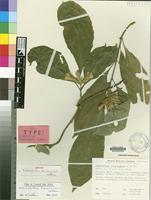
Isotype of Sclerochiton tanzaniensis Vollesen [family ACANTHACEAE]
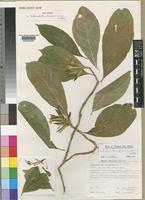
Holotype of Sclerochiton tanzaniensis Vollesen [family ACANTHACEAE]
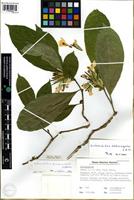
Isotype of Sclerochiton tanzaniensis Vollesen [family ACANTHACEAE]
Previous
Next

Name

Identification
Isotype of Sclerochiton tanzaniensis Vollesen [family ACANTHACEAE ] (stored under name); Verified by K. Vollesen, 1990 Sclerochiton obtusisepalus C.B. Clarke [family ACANTHACEAE ] Verified by K. Vollesen, 1980
Related name
  • Sclerochiton tanzaniensis
  • Sclerochiton obtusisepalus

Flora

Entry for Sclerochiton tanzaniensis Vollesen [family ACANTHACEAE]
Herbarium
Royal Botanic Gardens, Kew (K)
Collection
Flora of Tropical East Africa
Resource Type
Reference Sources
Entry From
Flora of Tropical East Africa, page 1, (2008) Author: Kaj Vollesen
Names
Sclerochiton tanzaniensis Vollesen [family ACANTHACEAE], in K.B. 46: 33 (1991); Lebrun & Stork, Enum. Pl. Afr. Trop. 4: 503 (1997). Type: Tanzania, Ulanga/Iringa District: Udzungwa Mts, Mwanihana Forest Reserve, Sanje Waterfall Camp, Rodgers & Vollesen 754 (K!, holo.; C!, DSM!, WAG!, iso.)
Information
Spindly erect shrub (? rarely small tree) to 3 m tall; young branches glabrous (rarely densely pubescent). Leaves slightly anisophyllous; petiole up to 1.5(–4) cm long; lamina elliptic to slightly obovate (rarely broadly so), largest 10–19(–22)≈4–7.5(–14) cm, apex blunt or with an obtuse tip up to 1 cm long, glabrous or sparsely hairy on midrib above (rarely uniformly pubescent). Cyme up to 6 cm long; peduncle up to 5 mm long, glabrous; rachis glabrous or sparsely pubescent; bracts and bracteoles green or brownish, ovate to elliptic or oblong, acute to acuminate with straight tip, glabrous to sparsely pubescent or finely puberulous; bracts 9–20 mm long; pedicels 1–2 mm long, glabrous or sparsely puberulous; bracteoles 15–26 mm long. Sepals straw-coloured to greenish, tinged purplish in apical part, subglabrous to finely puberulous, midrib thickened at base; dorsal oblong, 26–38 mm long, 2–5-toothed at apex; ventral and lateral lanceolate to narrowly oblong, acute to cuspidate (rarely 2-toothed), ventral 23–32 mm long, lateral 19–26 mm long. Corolla limb white with red to purple guide lines; tube 11–13 mm long, band of hairs 3–4 mm below insertion of stamens; limb 18–23 mm long; lobes 5–6 mm long. Filaments 8–12 mm long, glabrous or finely glandular; anthers 5–6 mm long, lower half bearded, also with tuft of longer hairs at base. Capsule 17–21 mm long, finely glandular. Seed 6–7 mm long, with large distinct scales. Fig. 14: 1–11, p. 85.
Range
DISTR. T 6–8 not known elsewhere
Altitude range
200–950(–1200) m
Distribution
TANZANIA Morogoro District Kimboza Forest Reserve, 31 Mar. 1983, Mwasumbi, Rodgers & Hall 12433!TANZANIA Ulanga/Iringa District Udzungwa Mts, Mwanihana Forest Reserve, Sanje Waterfall Camp, 23 July 1983, Polhill & Lovett 5114!TANZANIA Lindi District 50 km W of Lindi, 4 May 1935, Schlieben 6479!
Notes
Bridson 618 differs from the rest of the material in having pubescent stems and leaves, and also – quite extraordinarly – in having a long narrow spathulate upper lip to the corolla. I have not seen this phenomenon in any other of the numerous collections studied in this genus. Technically it puts the specimen out of Sclerochiton altogether, but I have considered it merely to be a monstrosity and have not considered it worthy of any taxonomic recognition. Bridson 591 – which was collected from the same locality –is perfectly normal S. tanzaniensis. Carmichael 568 differs in having dentate leaves and many axillary cymes scattered along the stems. It has been collected from a seemingly unbranched juvenile plant which probably explains its abnormal leaves and inflorescences.

Related Materials

  • Terms and Conditions
  • Privacy Policy
  • Cookie Policy
  • Cookie Settings
  • Accessibility
  • Help
  • Contact Us
  • Facebook
  • Twitter
ITHAKA

JSTOR is part of ITHAKA, a not-for-profit organization helping the academic community use digital technologies to preserve the scholarly record and to advance research and teaching in sustainable ways.

©2000-2026 ITHAKA. All Rights Reserved. JSTOR®, the JSTOR logo, JPASS®, Aluka®, and ITHAKA® are registered trademarks of ITHAKA.

╳