JSTOR Global Plants Home
  • Home
  • Browse
  • About
  • Access
  • Account
    • Saved Items
    • Profile
  • Log in

Global Plants

Skip to Main Content
  • JSTOR Global Plants Home
  • Global Plants

    • Browse
    • About
    • Access
    • Account
      • Saved Items
      • Profile
Log in
  • Browse
  • About
  • Access
  • Account
    • Saved Items
    • Profile
Advanced Search

Compilation
Scirpus erismanae

3 Images see all

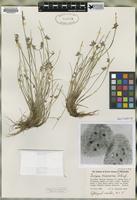
Isotype of Scirpus erismanae Schuyl. [family CYPERACEAE]
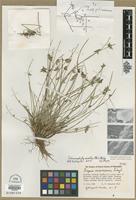
Type? of Scirpus erismanae Schuyler [family CYPERACEAE]
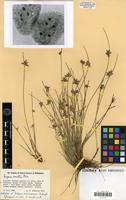
Isotype of Scirpus erismanae Schuyler [family CYPERACEAE]
Previous
Next

Name

Identification
Schoenoplectus erismanae ined. [family CYPERACEAE ] (stored under name); Verified by Not on sheet, Isotype of Scirpus erismanae Schuyler [family CYPERACEAE ] Verified by Not on sheet,
Related name
  • Schoenoplectus erismanae
  • Scirpus erismanae
  • Schoenoplectus erectus

Flora

Entry for Schoenoplectus erectus (Poiret) Palla ex J. Raynel subsp. raynalii (Schuyler) Lye [family CYPERACEAE]
Herbarium
Flora of North America (FNA)
Collection
Flora of North America
Resource Type
Reference Sources
Entry From
Flora of North America, Vol 23,
Names
Schoenoplectus erectus (Poiret) Palla ex J. Raynel subsp. raynalii (Schuyler) Lye [family CYPERACEAE], Nordic J. Bot., 3: 243. 1983
Scirpus raynalii Schuyler [family CYPERACEAE], Notul. Nat. Acad. Nat. Sci. Philadelphia, 438: 1, figs. 1, 3, 6. 1971
Scirpus erismanae Schuyler [family CYPERACEAE]
Scirpus wilkensii Schuyler [family CYPERACEAE]
Treatment Author(s)
S. Galen Smith
Information
Plants annual; rhizomes 1 mm diam. Culms cylindric, ridged when dry, 0.05–0.5 m × 0.5–1 mm. Leaves 3–4, 1 cauline, nearly equaling culm; sheaths disintegrating to fibers; blades 1–2, thickly C-shaped in cross section, distally flat, from much shorter to ca. 1/2 as long as sheath, 0–200 × 0.2–1 mm, smooth or margins distally spinulose. Inflorescences capitate or of 1 spikelet or rarely with 1 or 2 branches to 3 cm; proximal bract erect, resembling leaf blades, 5–200 mm. Spikelets 1–10, 5–13 × 2–3 mm; scales straw-colored or often flanks distally bright orange-brown, central region often greenish, ovate, 2.5–3.4(–5) × 1.5 mm, smooth or awn sparsely spinulose, margins ciliolate, midrib keeled distally, apex acute, awn 0.2–0.3 mm or to 2 mm on proximal scale. Flowers: perianth absent; anthers 0.5 mm; styles 2-fid or rarely few 3-fid. Spikelet achenes blackish brown when ripe, unequally biconvex to obscurely trigonous, adaxial surface longitudinally convex and horizontally concave with a convex center, ovoid to obovoid, 1–1.6 × 1–1.5 mm, with 12–15 sharp to blunt ridges; beak 0.1 mm. Amphicarpic achenes thickly trigonous with rounded abaxial faces, ellipsoid, prominently beaked, 2.2–3.2 mm, rugose. 2n = 10.
Phenology Fruiting
summer
jun
jul
aug
fall
sep
oct
nov
Altitude range
0–100 m;
Distribution
Mexico (Quintana Roo)Mexico (Tamaulipas)South America (Argentina)South America (Paraguay)Asia (Vietnam)AfricaAustralia.USA Ala.USA Fla.USA Ga.USA S.C.USA Tex.
Discussion
Many specimens of Schoenoplectus erectus subsp. raynalii are misidentified as Schoenoplectus hallii or S. saximontanus. North American Scirpus erismanae and S. wilkensii (A. E. Schuyler 1969) were placed in synonymy under Schoenoplectus erectus (J. Raynal 1976). North American plants are indistinguishable from eastern and southern African plants. Schoenoplectus erectus subsp. erectus differs in its “wrinkled” achenes with faint ridges and is reported only from Mauritius (the type locality), Madagascar, and associated islands. The name Scirpus erectus has long been misapplied in the Old World to Scirpus juncoides Roxburgh in the broad sense, which is related to S. purshianus and S. smithii in 7c. Schoenoplectus sect. Actaeogeton.

Related Materials

  • Terms and Conditions
  • Privacy Policy
  • Cookie Policy
  • Cookie Settings
  • Accessibility
  • Help
  • Contact Us
  • Facebook
  • Twitter
ITHAKA

JSTOR is part of ITHAKA, a not-for-profit organization helping the academic community use digital technologies to preserve the scholarly record and to advance research and teaching in sustainable ways.

©2000-2026 ITHAKA. All Rights Reserved. JSTOR®, the JSTOR logo, JPASS®, Aluka®, and ITHAKA® are registered trademarks of ITHAKA.

╳