JSTOR Global Plants Home
  • Home
  • Browse
  • About
  • Access
  • Account
    • Saved Items
    • Profile
  • Log in

Global Plants

Skip to Main Content
  • JSTOR Global Plants Home
  • Global Plants

    • Browse
    • About
    • Access
    • Account
      • Saved Items
      • Profile
Log in
  • Browse
  • About
  • Access
  • Account
    • Saved Items
    • Profile
Advanced Search

Compilation
Schrebera koiloneura

4 Images see all

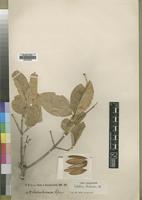
Type of Schrebera koiloneura Gilg [family OLEACEAE]
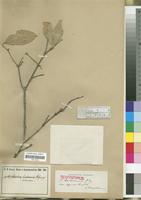
Isosyntype of Schrebera koiloneura Gilg var. typica Lingelsh. [family OLEACEAE]
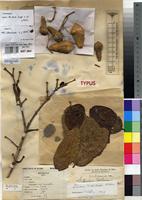
Type of Schrebera koiloneura Gilg var. delevoyi De Wild. [family OLEACEAE]
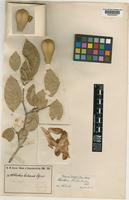
Schrebera trichoclada Welw. [family OLEACEAE]
Previous
Next

Name

Identification
Schrebera koiloneura Gilg [family OLEACEAE ] Schrebera trichoclada Welw. [family OLEACEAE ] (stored under name);
Related name
  • Schrebera trichoclada
  • Schrebera koiloneura

Flora

Entry for SCHREBERA trichoclada Welw. [family ]
Herbarium
Royal Botanic Gardens, Kew (K)
Collection
Flora of Tropical East Africa
Resource Type
Reference Sources
Entry From
Flora of Tropical East Africa, page 1, (1952) Author: W. B. TURRILL
Names
SCHREBERA trichoclada Welw. [family ], in Trans. Linn. Soc. Bot. 27: 41 (1869); F.T.A. 4: 15 (1902); E.P. IV. 243 II: 100 (1920); T.T.C.L. 394 (1949). Type: Angola, Pungo Andongo, Welwitsch 936 (K, lecto.!)
Nathusia trichoclada (Welw.) O. Ktze. [family OLEACEAE], Rev. Gen. Pl. 2: 412 (1891); Gilg, P.O.A. C: 308 (1895); Hiern, Cat. Afr. Pl. Welw. 1: 657 (1896–8)
SCHREBERA buchananii Baker [family ], in K.B. 1895: 95; F.T.A. 4: 14 (1902). Type: Nyasaland, Shire Highlands, Buchanan 418 (K, holo.!)
SCHREBERA koiloneura Gilg [family ], in E. J. 51: 65 (1913); E.P. IV .243 II.: 98 (1920); T.T.C.L. 394 (1949). Type: Tanganyika, Ilindi (Ugogo), Busse 237 (K, iso-lecto.!)
Information
A small deciduous tree or shrub, up to 6 m. tall. Leaves simple, with blades elliptic or oblong-elliptic, rarely obovate-elliptic, apex subacute to rounded or even slightly emarginate, base rounded to shortly cuneate, 3.5–10.5 cm. long, 2–6.5 cm. broad, subcoriaceous, rugose-reticulate, indumentum very variable, petioles 5–7 mm. long. Inflorescences axillary or terminal to longer or shorter branches, 2–9-flowered, the branches and the calyx densely and shortly white-tomentose. Corollas white or yellow-green with brown hairs, tube 1.1–1.8 cm. long. Fruits pear-shaped, 6 cm. long, 3 cm. in broadest diameter, with thick woody valves. Seeds (including the unilateral membranaceous wing) flattened, narrowly elongate-ovate, 5 cm. long, 1.5 cm. broad.
Range
DISTR. T1, 4—6
Altitude range
810–1350 m.
Distribution
TANGANYIKA Shinyanga District Shinyanga, Koritschoner 1647!;TANGANYIKA Ufipa District Kipili, April 1936 (fr.), Burtt 6294!
Distribution (external)
Angola
Belgian Congo
Northern
Southern Rhodesia
Portuguese East Africa
Nyasaland
Notes
VARIATION. After repeated attempts it has not been found possible to draw any taxonomic line between the large series of available specimens placed in this species as here understood. Morphological variations in leaf characters are partly due to differences in seasonal age. Under S. koiloneura two varieties have been described: var. koiloneura (var. typica Lingelsh.) a low tree with grey branches, branchlets with petioles and upper surface of the leaves pubescent, with few lenticels, leaves rather broad, subrounded at the base; and var. kakomensis Lingelsh. (E.J. 51: 66: 1913; type: near Kakoma, Böhm 86a, B, holo. †) a low shrub with branches ochraceous-yellow, branchlets, like the petioles and leaves, completely glabrous but densely covered with lenticels, leaves narrower, gradually attenuated at the base. No material corresponding entirely to the description of var. kakomersis has been seen. There is, however, considerable variation in leaf shape and size and in the density of the indumentum.

Related Materials

  • Terms and Conditions
  • Privacy Policy
  • Cookie Policy
  • Cookie Settings
  • Accessibility
  • Help
  • Contact Us
  • Facebook
  • Twitter
ITHAKA

JSTOR is part of ITHAKA, a not-for-profit organization helping the academic community use digital technologies to preserve the scholarly record and to advance research and teaching in sustainable ways.

©2000-2026 ITHAKA. All Rights Reserved. JSTOR®, the JSTOR logo, JPASS®, Aluka®, and ITHAKA® are registered trademarks of ITHAKA.

╳