JSTOR Global Plants Home
  • Home
  • Browse
  • About
  • Access
  • Account
    • Saved Items
    • Profile
  • Log in

Global Plants

Skip to Main Content
  • JSTOR Global Plants Home
  • Global Plants

    • Browse
    • About
    • Access
    • Account
      • Saved Items
      • Profile
Log in
  • Browse
  • About
  • Access
  • Account
    • Saved Items
    • Profile
Advanced Search

Compilation
Schotia capitata

6 Images see all

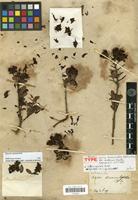
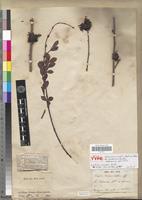
Holotype of Schotia capitata Bolle [family FABACEAE-CAESALPINIOIDEAE]
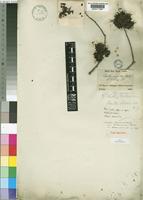
Filed as Schotia capitata Bolle [family CAESALPINIACEAE]
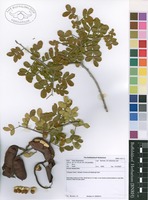
Schotia capitata Bolle [family LEGUMINOSAE-CAESALPINIOIDEAE]
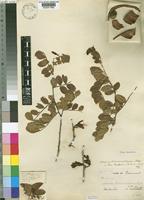
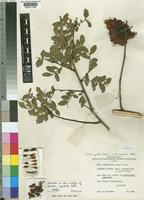
Type of Schotia transvaalensis Rolfe [family LEGUMINOSAE-CAESALPINIOIDEAE]
Holotype of Schotia tamarindifolia Sims var. forbesiana Baill. [family FABACEAE-CAESALPINIOIDEAE]
Neotype of Schotia capitata Bolle [family LEGUMINOSAE-CAESALPINIOIDEAE]
Previous
Next

Name

Identification
Schotia transvaalensis Rolfe [family LEGUMINOSAE-CAESALPINIOIDEAE ] Schotia capitata Bolle [family LEGUMINOSAE-CAESALPINIOIDEAE ] (stored under name);
Related name
  • Schotia tamarindifolia
  • Schotia capitata
  • Schotia transvaalensis
  • Schotia forbesiana

Flora

Entry for Schotia capitata [family FABACEAE]
Herbarium
South African National Biodiversity Institute, Compton Herbarium, Cape Town (SAM)
Collection
Flora of Southern Africa
Resource Type
Reference Sources
Entry From
Flora of South Africa, (2003) Author: Dr J.P. Roux
Names
Schotia capitata [family FABACEAE]
Common names
S. tamarindifolia Afzel. ex Sims var. forbesiana Bail), in Adansonia 6 : 197 (1866). Type: Mozam­bique, Delagoa Bay, Forbes 32 (K, iso.!). S. trans-vaalensis Rolfe in Kew Bull. 1906 : 248 (1906); Burtt Davy, Fl. Transv. 2 : 326 (1932); Henkel, Woody PI. Natal 219 (1934); Phillips in Flow. PI. Afr. 15 : t.574 (1935) excl. descr. "up to 30 ft high"; Codd, Trees & Shrubs Kruger Nat. Park 68, fig. 63 b, c (1951). Type: Transvaal, Barberton Distr., Barberton, P. Orange s.n. (K, holo.!). Theodora capitata (Bolle) Taub. in Pflanzenw. Ost. Afr. C : 198 (1895). Type as for Schotia capitata.
Information
Many-stemmed shrub or slender tree up to 7 m high, often sub-scandent or scandent, sometimes forming a large spreading bush. Bark pale grey and smooth when young, but rough and dark brown when old; young branchlets glabrous to ± densely pubescent. Leaves glabrous to ± densely pubescent: petiole 1-6 mm long; rhachis 3-8 cm long, narrowly winged especially apically; leaflets 3-5(6) pairs, opposite or subopposite, sessile, elliptic, sub-rotund or obovate, (1)1,5-3,5 cm long, (0,6)1-1,8(2) cm wide, obtuse or acute basally, often oblique, obtuse or acute and usually mucronate apically. Stipules obliquely ovate, up to 6 mm long and 3 mm wide, deciduous. Inflorescence a con­gested subglobose panicle, borne on short lateral branchlets or sometimes terminal; inflorescence branches much abbreviated, semi-woody, glabrous or pubescent. Flowers scarlet, sessile or on pedicels up to 1,5 mm long; bracts scale-like, less than 1 mm long, deciduous. Calyx leathery, tube obconical, 3-6 mm long, persistent; lobes 4, subequal, obovate to elliptic, 6-9 mm long, 3-4 mm wide. Petals 5, oblanceolate, clawed, 10-14 mm long, 3-4 mm wide, veined. Stamens 10, united basally for 2-4,5 mm and forming a sheath around the stipe of the ovary, sheath split open on the side to which the stipe of the ovary is attached to the calyx receptacle, projecting as a narrow irregular rim ± 1 mm above the junction of the stamen-filaments; one or two filaments often free to the base on the split side; filaments linear, 12-16 mm long, exceeding the corolla by 3-5 mm; anthers elliptic, 1,5-2 mm long. Ovary oblong, 4-5 mm long, ± 2 mm wide, com­pressed, on a stipe 4-5 mm long and ± 1 mm thick, adnate to one side of the calyx recep­tacle; style 13-15 mm long. Pod as in generic description, 4-16 cm long, 2,5-3,9 cm wide. Seeds pale brown, ovoid, 8—12 mm long, 8-12 mm wide, 5-6 mm thick, with a large com­pressed yellow basal aril.
Habitat
S. capitata is a fairly variable species and, in the absence of flowers, it is sometimes difficult to separate some forms of it from S. brachypetala as the size of the leaflets in the two species overlaps. However, in the field the two species can be distinguished by the diffe­rence in habit.
Use
2. Schotia capitata Bolle in Peters, Reise Mossamb. Bot.l : 18 (1861); Oliv. in F.T.A. 2 : 310 (1871); Sim, For. Fl. P.E. Afr. 51 (1909); Bak.f., Leg. Trop. Afr. 3 : 710 (1930); Codd in Bothalia 6,3 : 521, fig. 3 (1956); Letty, Wild Flow. Transv. 164, t.82 : 3 (1962); Von Breitenbach, Indig. Trees S. Afr. 3 : 330 (1965); Compton in J. S. Afr. Bot. Suppl. 6 : 46 (1966); Palmer & Pitman, Trees S. Afr. 2 : 853 (1973); Ross, Fl. Natal 194 (1973); in Bothalia 11 : 285 (1974). Type: Mozambique, Inhambane, Peters s.n. (B, holo.f; BM, sketch!); Mozambique, Lou-renco Marques Prov., Goba, rio Maivavo, Balsinhas 204 (K, neo.!).
Range
Found in Mozambique, the eastern Transvaal, Swaziland and Natal (Zululand). Occurs in dry thornveld and bushveld.

Related Materials

  • Terms and Conditions
  • Privacy Policy
  • Cookie Policy
  • Cookie Settings
  • Accessibility
  • Help
  • Contact Us
  • Facebook
  • Twitter
ITHAKA

JSTOR is part of ITHAKA, a not-for-profit organization helping the academic community use digital technologies to preserve the scholarly record and to advance research and teaching in sustainable ways.

©2000-2026 ITHAKA. All Rights Reserved. JSTOR®, the JSTOR logo, JPASS®, Aluka®, and ITHAKA® are registered trademarks of ITHAKA.

╳