JSTOR Global Plants Home
  • Home
  • Browse
  • About
  • Access
  • Account
    • Saved Items
    • Profile
  • Log in

Global Plants

Skip to Main Content
  • JSTOR Global Plants Home
  • Global Plants

    • Browse
    • About
    • Access
    • Account
      • Saved Items
      • Profile
Log in
  • Browse
  • About
  • Access
  • Account
    • Saved Items
    • Profile
Advanced Search

Compilation
Schoenoplectus smithii

5 Images see all

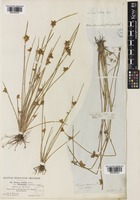
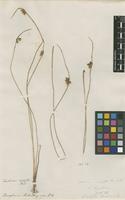
Type of Scirpus erectus Poir. [family CYPERACEAE]
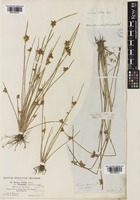
Schoenoplectus smithii (A.Gray) Soják var. williamsii [family CYPERACEAE]
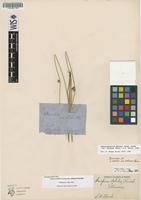
Type ? of Scirpus smithii A.Gray var. setosus Fernald [family CYPERACEAE]
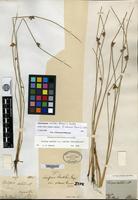
Type of Scirpus smithii A. Gray var. setosus Fernald [family CYPERACEAE]
Filed as Scirpus debilis Lam. [family CYPERACEAE]
Previous
Next

Name

Identification
Schoenoplectus smithii (A. Gray) Soják [family CYPERACEAE ] (stored under name); Verified by Flora North America Project, Univ. of Wisconsin-Whitewater, 1995 Scirpus smithii A. Gray [family CYPERACEAE ] Verified by Fernald, 1901
Related name
  • Scirpus smithii
  • Scirpus lupulinus
  • Schoenoplectus smithii
  • Scirpus debilis
Common name
  • Scirpe à soies longues, Flora of North America Vol. 23
  • Scirpe à soies lisses, Flora of North America Vol. 23
  • Smith’s bulrush, Flora of North America Vol. 23
  • Scirpe de Smith, Flora of North America Vol. 23

Flora

Entry for Schoenoplectus smithii (A. Gray) Soják [family CYPERACEAE]
Herbarium
Flora of North America (FNA)
Collection
Flora of North America
Resource Type
Reference Sources
Entry From
Flora of North America, Vol 23,
Names
Schoenoplectus smithii (A. Gray) Soják [family CYPERACEAE], Cas. Nár. Mus., Odd. Prír., 141: 62. 1972
Scirpus smithii A. Gray [family CYPERACEAE], Manual ed., 5, 563. 1867
Treatment Author(s)
S. Galen Smith
Information
Plants annual; rhizomes 1 mm diam. Culms often arching (to decumbent), terete, 0.02–0.5 m × 0.5–1.5 mm. Leaves 1, to equaling culm; sheath fronts not pinnate-fimbrillose; blades 0–1, cross section C-shaped, from a mucro to longer than a sheath by 0.5 mm, smooth. Inflorescences capitate or 1 spikelet; proximal bract erect, very rarely divergent, on longer culms of plants 5–150 mm and 1/5–2/3 culm length. Spikelets 1–15, 5–12 × 3(–4) mm; scales straw-colored to orange-brown, often lineolate-spotted, midrib region usually green becoming straw-colored, obovate, 2.5–3 × 1.5–2 mm, smooth, margins distally ciliolate at 20X, flanks in proximal part of spikelet each with 2–10 distinct ribs, apex rounded, entire, mucronate. Flowers: perianth bristles 0 or 4–6, rarely 1–3, brown, ± equaling to 2 times longer than achene, rarely much shorter, slender throughout, densely to sparsely retrorsely-spreading spinulose; anthers 0.4–0.6 mm; styles 2-fid or 2-fid and 3-fid. Achenes brown, turning blackish, thinly to thickly plano-convex or unequally biconvex, sometimes clearly trigonous with distinct, narrow abaxial angle, adaxial face without central bulge, cuneate-obovoid, proximally evenly tapered and usually without stipelike constriction, 1.5–2 × 1.2–1.5 mm, base 0.2–0.3 mm wide; beak 0.1–0.2 mm, very finely longitudinally ridged at 20–30X.
Distribution
e North America.
Discussion
Plants of Schoenoplectus smithii with perianth bristles are easily disinguished from S. purshianus by the uniformly slender bristles in S. smithii; plants without bristles may be identified using the achene characters as indicated in the key. In addition, in S. smithii the receptacle collar is relatively small, the achenes are usually widest distal to the middle, the summit is often subtruncate, the adaxial face is often plane, the abaxial face is without a central bulge and sometimes has a distinct narrow angle, and when mature the surface has fine longitudinal ridges. In contrast, in S. purshianus the receptacle collar is relatively large, the achenes are usually widest at the middle, the summit is usually rounded, the adaxial face is nearly always convex, the abaxial face has a distinct central bulge and never a narrow angle, and the surface lacks fine longitudinal ridges.
The eastern Asian Scirpus komarovii Roshevitz [= Schoenoplectus komarovii (Roshevitz) Soják] was treated as Scirpus smithii var. leiocarpus (Komarov) T. Koyama (= Schoenoplectus smithii subsp. leiocarpus Soják) by T. Koyama (1962b); it is better to treat S. komarovii as a distinct Asian species and S. smithii as restricted to North America pending further research (S. G. Smith and E. Hayasaka 2002).
The varieties of Scirpus smithii were reduced to S. smithii forma setosus (Fernald) Fernald and S. smithii A. Gray forma levisetus (Fassett) Fernald (M. L. Fernald 1942). It seems better to treat those taxa as ecotypic varieties following W. R. Ferren Jr. and A. E. Schuyler (1980) because they reportedly grow in different habitats (S. G. Smith and E. Hayasaka 2002) and thus may be valuable as ecologic indicators. The varieties are undoubtedly more widely distributed than given here; distributions were based on specimens I have seen and reports by A. E. Schuyler (1972) and W. R. Ferren Jr. and A. E. Schuyler (1980).

Related Materials

  • Terms and Conditions
  • Privacy Policy
  • Cookie Policy
  • Cookie Settings
  • Accessibility
  • Help
  • Contact Us
  • Facebook
  • Twitter
ITHAKA

JSTOR is part of ITHAKA, a not-for-profit organization helping the academic community use digital technologies to preserve the scholarly record and to advance research and teaching in sustainable ways.

©2000-2026 ITHAKA. All Rights Reserved. JSTOR®, the JSTOR logo, JPASS®, Aluka®, and ITHAKA® are registered trademarks of ITHAKA.

╳