JSTOR Global Plants Home
  • Home
  • Browse
  • About
  • Access
  • Account
    • Saved Items
    • Profile
  • Log in

Global Plants

Skip to Main Content
  • JSTOR Global Plants Home
  • Global Plants

    • Browse
    • About
    • Access
    • Account
      • Saved Items
      • Profile
Log in
  • Browse
  • About
  • Access
  • Account
    • Saved Items
    • Profile
Advanced Search

Compilation
Schmidelia abyssinica

20 Images see all

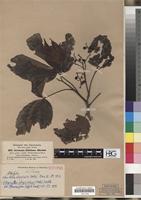
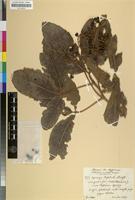
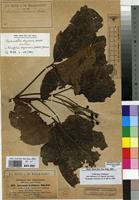
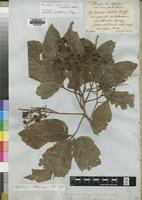
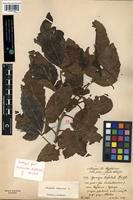
Isotype of Schmidelia abyssinica Hochst. [family SAPINDACEAE]
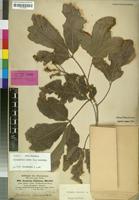
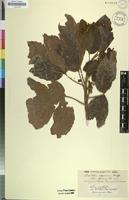
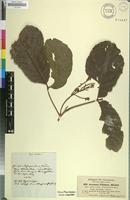
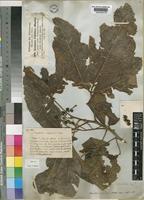
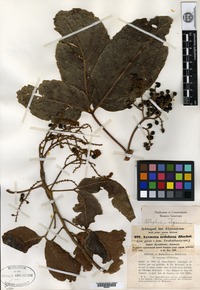
Allophylus bullatus Radlk. [family SAPINDACEAE]
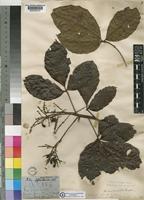
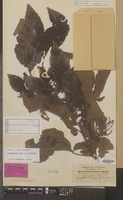
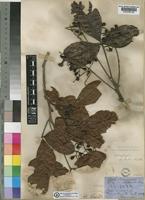
Isotype of Schmidelia abyssinica Hochst. [family SAPINDACEAE]
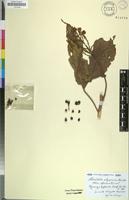
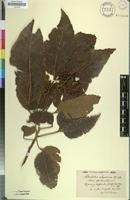
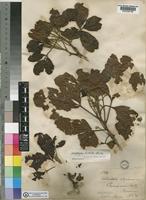
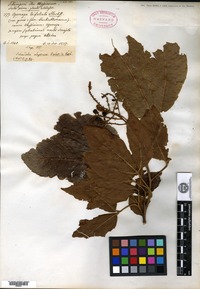
Holotype of Schmidelia abyssinica Hochst. [family SAPINDACEAE]
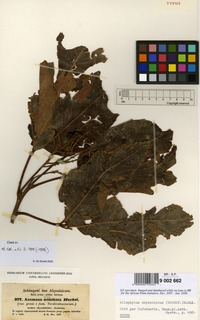
Isotype of Schmidelia abyssinica Hochst. [family SAPINDACEAE]
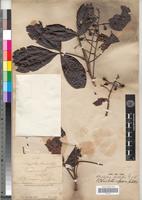
Allophylus abyssinicus (Hochst.) Radlk. [family SAPINDACEAE]
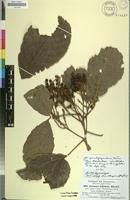
Isotype of Schmidelia abyssinica Hochst. [family SAPINDACEAE]
Type? of Schmidelia abyssinica Hochst. [family SAPINDACEAE]
Isotype of Schmidelia abyssinica Hochst. [family SAPINDACEAE]
Holotype of Schmidelia abyssinica Hochst. [family SAPINDACEAE]
Isotype of Schmidelia abyssinica Hochst. [family SAPINDACEAE]
Holotype of Schmidelia abyssinica Hochst. [family SAPINDACEAE]
Allophylus bullatus Radlk. [family SAPINDACEAE]
Holotype of Schmidelia abyssinica Hochst. [family SAPINDACEAE]
Isotype of Allophylus abyssinicus (Hochst.) Radlk. [family SAPINDACEAE]
Type? of Schmidelia abyssinica Hochstetter [family SAPINDACEAE]
Type? of Allophylus bullatus Radlk. [family SAPINDACEAE]
Previous
Next

Name

Identification
Schmidelia abyssinica Hochstetter [family SAPINDACEAE ] (stored under name); Verified by Hochst., 1843
Related name
  • Allophyllus abyssinicus
  • Allophylus cobbe
  • Azamaza trifoliata
  • Schmidelia africana
  • Allophylus abyssinicus
  • Allophylus bullatus
  • Allophylus trifoliatus
  • Schmidelia abyssinica
  • Allophylus zeylanicus
  • Amaza trifoliata

Flora

Entry for ALLOPHYLUS abyssinicus (Hochst.) Radlk. [family SAPINDACEAE]
Herbarium
Royal Botanic Gardens, Kew (K)
Collection
Flora of Tropical East Africa
Resource Type
Reference Sources
Entry From
Flora of Tropical East Africa, page 1, (1998) Author: DAVIES & B. VERDCOURT
Names
ALLOPHYLUS abyssinicus (Hochst.) Radlk. [family SAPINDACEAE], in E. & P. Pf. III, 5: 313 (1895) & in Sitz. Akad. Wiss. München 38: 223 (1909); Z.A.E.: 476 (1912); Baker f. in J.B. 57: 186 (1919); Radlk. in E.P. IV, 165: 534 (1932); F.P.N.A. 1: 517 (1948); T.T.C.L.: 554 (1949); I.T.U., ed. 2: 375 (1952); Wimbush, Cat. Kenya Timbers, ed. 2: 28 (1957); Hauman in F.C.B. 9: 303 (1960); K.T.S.: 504 (1961); F.F.N.R.: 223 (1962); Exell in F.Z. 2: 498 (1966); Hamilton, Field Guide Uganda For. Trees: 97 (1981); Troupin, Fl. Rwanda 2: 298 (1983); Vollesen in Fl. Ethiopia 3: 499, fig. 125.7 (1990); Beentje, K.T.S.L.: 412, map (1994). Type: Ethiopia, Semien, Addi Dschoa, Schimper I. 377 (P, holo., BM!, C!, K!, iso.)
Schmidelia abyssinica Hochst. [family SAPINDACEAE], in Flora 26: 80 (1843)
Schmidelia africana [family SAPINDACEAE], [sensu Baker in F.T.A. 1: 421 (1868) pro parte, non (P.Beauv.) DC.]
Information
Medium to fairly large tree, rarely shrubby, (4.5–)6–21(–25) m. tall and with slender bole 30–90 cm. diameter, sometimes slightly buttressed at the base (e.g. in Chyulu Hills); crown dark green, open to dense, irregular or rounded; bark grey or greyish white, smooth or slightly rough or granular, sometimes peeling in small to large flakes; slash pale brownish pink or pale orange darkening to reddish brown and smelling of pepper, also described ( Ede 1,T7) as off-white with pinky brown green-edged lines; sapwood white; young branches minutely ferruginous tomentellous and densely lenticellate. Leaves trifoliolate, drying dull and dark above, thinly coriaceous; petiole 2.5–10.5 mm. long, minutely tomentellous or less often more distinctly pubescent; leaflets elliptic to obovate, (2.8–)5.5–21 cm. long, (1.2–)3–11 cm. wide, acute to acuminate at the apex, attenuate to cuneate at the base, shallowly crenulate to toothed, adpressed velvety pilose when very young, later glabrescent or glabrous to minutely puberulous, less often pubescent; tufts of hairs in axils of nerves and veins usually conspicuous beneath. Inflorescences 5–22 cm. long, with 2–10 branches, some again branched, usually finely tomentose; cymules subsessile; pedicels 1–3 mm. long. Flowers said to be lily-scented or scentless; outer sepals elliptic, 1.2–1.5 mm. long, 1 mm. wide, puberulous, inner elliptic to round, 1.5–2 mm. long, 1.5 mm. wide; petals dirty white or yellowish, 1.5 mm. long, 1 mm. wide. Filaments 2–3 mm. long, glabrous. Style 2–3 mm. long, ± glabrous; stigma 1–1.5 mm. long. Fruit red or orange, subglobose, oblong or elliptic, 6–8 mm. long and wide, with very sparse hairs. Seed ellipsoid, 5–5.5 mm. long, 5.5–6 mm. wide. 
Range
DISTR. U 1–4; K 1, 3–5, ?6; T 2, 3, 6 7
Altitude range
(650–)1050–2550(–?2850) m.
Distribution
KENYA Northern Frontier Province Mt. Kulal, 9 June 1960, Oteke 96!KENYA Trans-Nzoia District NE. Elgon, Kisano R., Nov. 1961, Tweedie 2243!KENYA Machakos District Ol Doinyo Sapuk [Ol Donyo Sabuk], 29 Apr. 1980, M.G. Gilbert 5941!TANZANIA Arusha District S. Meru, eastern sawmills, 22 Mar. 1951, McCoy-Hill 6!TANZANIA Lushoto District Mkusu Forest Reserve, 11 Sept. 1969, Shabani 458!TANZANIA Kilosa District Ukaguru Mts., near Mandege Forest Station nursery, 9 Aug. 1972, Mabberley 1434!UGANDA Mt. Ruwenzori, Dec. 1938, Sangster 486!UGANDA Mbale District Sebei, N. Elgon Forest Reserve, Kere, 10 Jan. 1963, Styles 298!UGANDA Mubende District Kasambya, Dec. 1937, Mr. & Mrs. Sitwell in Eggeling 3470!
Distribution (external)
; E. Zaire
Rwanda
S. Sudan
Ethiopia
Malawi
Mozambique
Zimbabwe
Notes
This is one of the more distinctive species. The timber is almost valueless due to lack of durability but has been used for cheap joinery and boxes and doubtless more extensively for local purposes. Exell states that the stigma is 3-fid but in the Flora area it is nearly always 2-fid.

Related Materials

  • Terms and Conditions
  • Privacy Policy
  • Cookie Policy
  • Cookie Settings
  • Accessibility
  • Help
  • Contact Us
  • Facebook
  • Twitter
ITHAKA

JSTOR is part of ITHAKA, a not-for-profit organization helping the academic community use digital technologies to preserve the scholarly record and to advance research and teaching in sustainable ways.

©2000-2026 ITHAKA. All Rights Reserved. JSTOR®, the JSTOR logo, JPASS®, Aluka®, and ITHAKA® are registered trademarks of ITHAKA.

╳