JSTOR Global Plants Home
  • Home
  • Browse
  • About
  • Access
  • Account
    • Saved Items
    • Profile
  • Log in

Global Plants

Skip to Main Content
  • JSTOR Global Plants Home
  • Global Plants

    • Browse
    • About
    • Access
    • Account
      • Saved Items
      • Profile
Log in
  • Browse
  • About
  • Access
  • Account
    • Saved Items
    • Profile
Advanced Search

Compilation
Schizoglossum diversum

12 Images see all

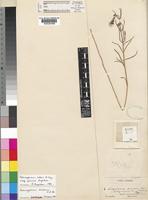
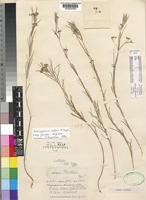
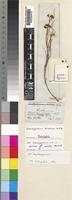
Lectotype of Schizoglossum diversum N.E.Br. [family ASCLEPIADACEAE]
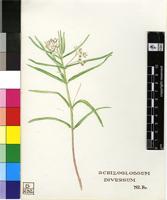
Schizoglossum diversum N.E.Br.
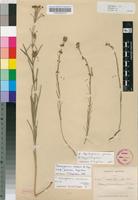
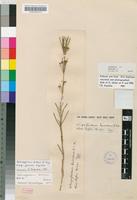
Isolectotype of Schizoglossum diversum N.E.Br. [family APOCYNACEAE]
Lectotype of Schizoglossum diversum N.E.Br. [family ASCLEPIADACEAE]
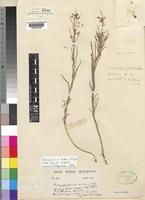
Isolectotype of Schizoglossum diversum N.E.Br. [family APOCYNACEAE]
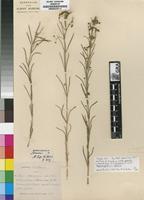
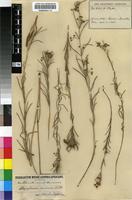
Paratype of Schizoglossum diversum N.E.Br. [family ASCLEPIADACEAE]
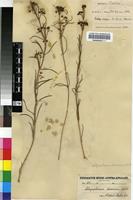
Isolectotype of Schizoglossum diversum N.E.Br. [family APOCYNACEAE]
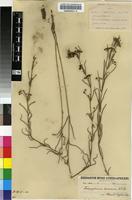
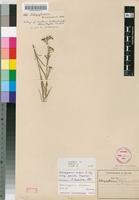
Schizoglossum bidens unrecorded subsp. gracile Kupicha [family ASCLEPIADACEAE]
Isolectotype of Schizoglossum diversum N.E.Br. [family APOCYNACEAE]
Previous
Next

Name

Identification
Schizoglossum diversum N.E.Br. [family APOCYNACEAE ]
Related name
  • Schizoglossum diversum

Flora

Entry for SCHIZOGLOSSUM diversum N. E. Br. [family ASCLEPIADACEAE]
Herbarium
Royal Botanic Gardens, Kew (K)
Collection
Flora Capensis
Resource Type
Reference Sources
Entry From
Flora Capensis, Vol 4, page 518, (1909) Author: By N. E. BROWN.
Names
SCHIZOGLOSSUM diversum N. E. Br. [family ASCLEPIADACEAE]
Information
stems 1–2 ft. high, 1/2– 3/4 lin. thick at the base, simple, pubescent; internodes 3/4–1 3/4 in. long; leaves opposite or 3–4 in a whorl, erect or ascending, 1–2 in. long, 1/3– 3/4 lin. broad, linear or linear-filiform, with revolute margins, acute, cuneately rounded into the very short petiole at the base, scaberulously puberulous; umbels often 2–3 at a node, pedunculate, racemosely arranged, 3–9-flowered; peduncle 1/3–1 in. long, adpressed-puberulous; bracts 3/4–1 2/3 lin. long, filiform, deciduous; pedicels 1 1/2–4 lin. long, adpressed-puberulous; sepals 1–1 1/4 lin. long, 1/4– 1/3 lin. broad, lanceolate, acuminate, thinly pubescent; corolla-lobes campanulately spreading, with incurved tips, 1 1/3–1 1/2 lin. long, 1/2– 7/8 lin. broad, oblong, narrowed to a minutely notched point, with the margins slightly recurved, glabrous on both sides, green (Miss Pegler); corona-lobes white (Miss Pegler), equalling or slightly overtopping the staminal column, 1/2– 3/4 lin. long 1/2– 2/3 lin. broad, rhomboid-ovate, angular on each side slightly below the middle, much narrowed above, bifid or emarginate at the apex, where the sides are somewhat pinched together, just above the middle of the inner face arises a linear-oblong or ovate-oblong, erect appendage, 1/2– 2/5 lin. long, 1/4– 1/3 lin. broad, exceeding the lobe, bifid, bipartite or emarginate at the apex, decurrent in 2 parallel keels at the base; staminal column 2/3 lin. long; anther-appendages reniform, or very broadly ovate, very obtuse, with their tips slightly inflexed over or on the rim of the broad depressed style-apex; caudicles attached at or near the middle of the straight oblong-linear or oblong-lanceolate pollen-masses, which have a pellucid area immediately below the obtuse apex; young follicles fusiform, tapering into a long obtuse beak, puberulous, and beset with rather stiff ascending bristles 3/4–1 1/3 lin. long. null
Distribution
COAST REGION King Williamstown Div.; Keiskamma, Mrs. Hutton!EASTERN REGION at 1000–3000 ft.: Transkei; Kreilis Country, Bowker, 6! valleys near Kentani, Miss Pegler, 661! Pondoland; hills between Umtata and St. Johns, Bolus, 8701!
Notes
Very similar to S. Galpinii, Schlechter, but the leaves are not at all hastate, the flowers are smaller, the corona-lobes more angular at the sides, and the anther-wings smaller and much less prominent, besides a different distribution.

Related Materials

  • Terms and Conditions
  • Privacy Policy
  • Cookie Policy
  • Cookie Settings
  • Accessibility
  • Help
  • Contact Us
  • Facebook
  • Twitter
ITHAKA

JSTOR is part of ITHAKA, a not-for-profit organization helping the academic community use digital technologies to preserve the scholarly record and to advance research and teaching in sustainable ways.

©2000-2026 ITHAKA. All Rights Reserved. JSTOR®, the JSTOR logo, JPASS®, Aluka®, and ITHAKA® are registered trademarks of ITHAKA.

╳