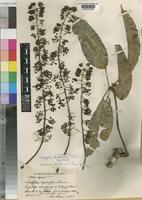
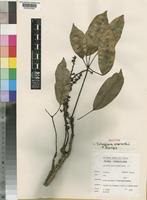
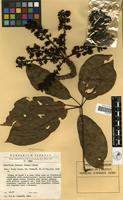
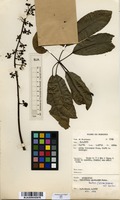
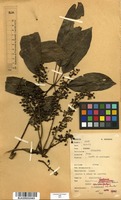
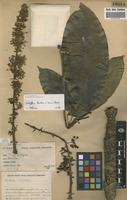
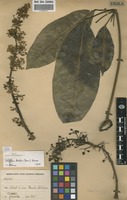
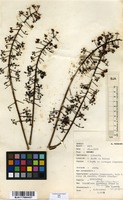
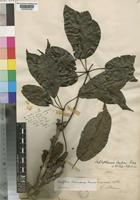
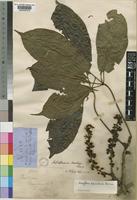
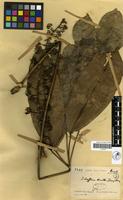
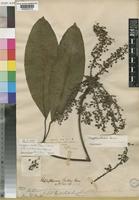
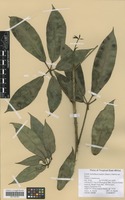
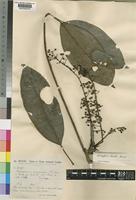
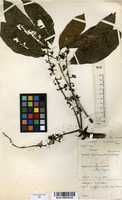
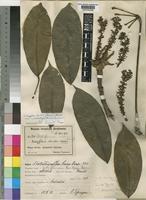
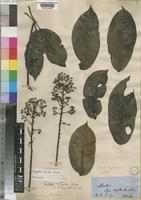
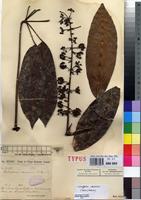
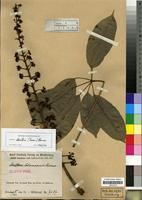
A woody liane to 30 m. or more tall, an erect tree or a large or low scrambling shrub. Petioles up to 57 cm. long by 9 mm. diameter at base, ribbed, glabrous or discontinuously puberulous; leaflets 4–11, chartaceous to coriaceous, narrowly to broadly elliptic, oblanceolate to narrowly obovate, lanceolate to narrowly ovate, sometimes somewhat oblong, up to 25 (–29) cm. long and 10 (–12) cm. wide, apiculate or mucronate to long-acuminate, occasionally with a broad rounded apiculum, with a rounded to obtuse or narrowly cuneate base, subentire to shallowly crenate or serrulate, often obsoletely serrulate towards tip and nearly entire below, with 5–14 pairs of lateral veins; petiolules 0.5–8(–10) cm. long by 0.5–2.5 mm. diameter. Stipules up to (and probably exceeding) 2.7 cm. long, generally partially adnate to petiole. Inflorescence (fig. 5/4) an umbel of 3–10(–20) racemes of umbellules; primary branches 9–45 cm. long, sterile at base, arising from a group of tomentose glabrescent bracts up to 4 cm. long, bearing sessile or pedunculate umbellules of flowers; peduncles of umbellules (secondary branches) where developed 0–3.2 cm. long, racemosely borne along the primaries, typically in the axils of tomentose glabrescent ± deltoid or lanceolate to ovate (occasionally obsolete) bracts up to 7(–12) mm. long; pedicels up to about 24 per peduncle, often less, (2–)4–12 mm. long, subtended by minute or obsolete bracts. Fruits urceolate to hemiellipsoidal, up to 4.5 mm. long by 3.5(–4.5) mm. diameter, sulcate, glabrous to puberulous; stylopodium 0.5–1.0 mm. long; styles 5–8, free for up to 0.7 mm. terminally.