JSTOR Global Plants Home
  • Home
  • Browse
  • About
  • Access
  • Account
    • Saved Items
    • Profile
  • Log in

Global Plants

Skip to Main Content
  • JSTOR Global Plants Home
  • Global Plants

    • Browse
    • About
    • Access
    • Account
      • Saved Items
      • Profile
Log in
  • Browse
  • About
  • Access
  • Account
    • Saved Items
    • Profile
Advanced Search

Compilation
Scaphopetalum mannii

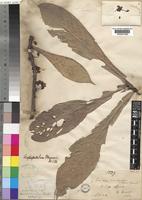
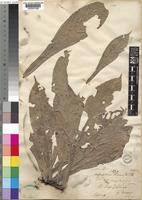
2 Images see all

Scaphopetalum mannii Mast. [family STERCULIACEAE]
Previous
Next

Name

Identification
Scaphopetalum mannii Mast. [family STERCULIACEAE ] (stored under name); Myrodia unrecorded unrecorded [family STERCULIACEAE ]
Related name
  • Myrodia unrecorded
  • Scaphopetalum mannii

Flora

Entry for SCAPHOPETALUM Mannii Mast. [family STERCULIACEAE]
Herbarium
Royal Botanic Gardens, Kew (K)
Collection
Flora of Tropical Africa
Resource Type
Reference Sources
Entry From
Flora of Tropical Africa, Vol 1, page 214, (1868) Author: (by Dr. Maxwell T. Masters).
Names
SCAPHOPETALUM Mannii Mast. [family STERCULIACEAE], l. c. 29. t. 3. fig. 1–7.
Information
A shrub with rugose branches. Petioles 3–4 lines long. Stipules lanceolate, striate, about as long as the petioles. Leaves subcordate, narrow above the base, subpanduriform, oblong-lanceolate, acuminate, glabrous, subcoriaceous, 8–9 in. long, 1–1 1/2 in. wide. Pedicels fasciculate, 1 in. long, springing from the old wood or from the axils of the fallen leaves. Calyx glabrous, ultimately bursting by 2 oblong valves. Petals erect, yellow, hooded, striated, longer than the sepals. Staminal tube and ovary as in the former species.
Distribution
Upper Guinea Mount John, Kongui river, Mann!
Notes
Distinguished from its congeners by the peculiar form of the leaves.

Related Materials

  • Terms and Conditions
  • Privacy Policy
  • Cookie Policy
  • Cookie Settings
  • Accessibility
  • Help
  • Contact Us
  • Facebook
  • Twitter
ITHAKA

JSTOR is part of ITHAKA, a not-for-profit organization helping the academic community use digital technologies to preserve the scholarly record and to advance research and teaching in sustainable ways.

©2000-2026 ITHAKA. All Rights Reserved. JSTOR®, the JSTOR logo, JPASS®, Aluka®, and ITHAKA® are registered trademarks of ITHAKA.

╳