JSTOR Global Plants Home
  • Home
  • Browse
  • About
  • Access
  • Account
    • Saved Items
    • Profile
  • Log in

Global Plants

Skip to Main Content
  • JSTOR Global Plants Home
  • Global Plants

    • Browse
    • About
    • Access
    • Account
      • Saved Items
      • Profile
Log in
  • Browse
  • About
  • Access
  • Account
    • Saved Items
    • Profile
Advanced Search

Compilation
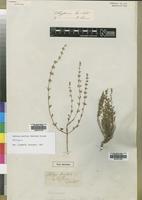
Satureja punctata

9 Images see all

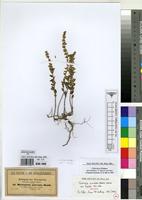
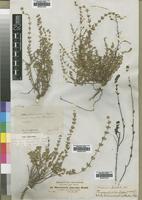
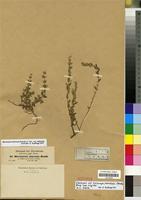
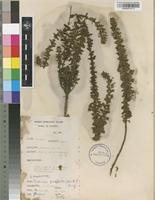
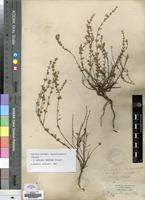
Isotype of Satureja punctata (Benth.) Briq. var. rigida Pic.-Ser. [family LAMIACEAE]
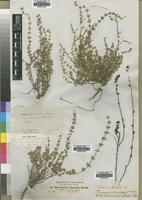
Type of Satureja punctata Pic. Serm. var. rigida [family LAMIACEAE]
Type of Micromeria punctata Benth. var. rigida Pic. Ser. [family LABIATAE]
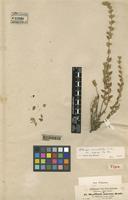
Holotype of Micromeria punctata Benth. [family LAMIACEAE]
Type of Micromeria punctata Benth. [family LAMIACEAE]
Isotype of Satureja punctata (Benth.) Briq. var. rigida Pic. Serm. [family LABIATAE/LAMIACEAE]
Filed as Satureja punctata (Benth.) Briq. [family LAMIACEAE]
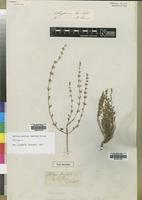
Type of Micromeria schimperi Vatke [family LABIATAE]
Type of Satureja punctata (Benth.) Briq. [family LAMIACEAE]
Previous
Next

Name

Identification
Micromeria punctata Benth. [family LAMIACEAE ] Satureja punctata (Benth.) Briq. [family LAMIACEAE ] (stored under name); Verified by Seybold,S.,
Related name
  • Satureja schimperi
  • Micromeria imbricata
  • Satureja punctata
  • Micromeria punctata
  • Micromeria schimperi
Common name
  • lemon-scented thyme (suggested name, 4)., Burkill, H.M. 1985. The useful plants of west tropical Africa, Vol. 3

Flora

Entry for MICROMERIA imbricata (Forssk.) C. Chr. [family LABIATAE]
Herbarium
Royal Botanic Gardens, Kew (K)
Collection
Flora Somalia
Resource Type
Reference Sources
Entry From
Flora Somalia, (2000) Author: by O. Ryding (Aeollanthus, Basilicum, Clinopodium, Endostemon, Fuerstia, Hoslundia, Lavandula, Leucas, Micromeria, Nepeta, Ocimum, Orthosiphon, Otostegia, Plectranthus, Renschia, Salvia, Scutellaria, Stachys, Teucrium, Tinnea) and M. Thulin (Clerodendrum, Premna, Rotheca, Vitex) [updated by M. Thulin 2008]
Names
MICROMERIA imbricata (Forssk.) C. Chr. [family LABIATAE], (1922);
Thymus imbricatus Forssk. [family LABIATAE], (1775);. [type as above]
Satureja imbricata (Forssk.) Briq. [family LABIATAE], (1896). Fig. 229. [type as above]
Thymus biflorus Ham. ex D. Don [family LABIATAE], (1825);
MICROMERIA biflora (Ham. ex D. Don) Benth. [family LABIATAE], (1834);. [type as above]
Satureja biflora (Ham. ex D. Don) Briq. [family LABIATAE], (1896). [type as above]
MICROMERIA punctata Benth. [family LABIATAE], (1834);
Satureja punctata (Benth.) Briq. [family LABIATAE], (1896). [type as above]
Information
Subshrub, up to 0.2 m tall (in Somalia), aromatic. Leaves sessile or shortly petiolate; blade ± leathery, narrowly ovate or lanceolate, 5–9 × 2–5.5 mm (in Somalia), bristly hairy, apex acute or subacute, base rounded, margin entire, thickened and often revolute. Inflorescence lax to rather dense, with ± spaced verticillasters; cymes 1–7-flowered (in Somalia); pedicels less than 3 mm long. Fruiting calyx almost straight 2.5–5 mm long, 13-ribbed, whitish hairy at the mouth; lobes subequal or slightly unequal, 0.5–1.5 mm long. Corolla 6–10 mm long, rose, violet or white; lips much shorter than the tube. Stamens shortly protruding beyond the mouth of the corolla-tube. Style protruding beyond the mouth of the corolla-tube, with subequal or slightly unequal branches. Nutlets ellipsoid-trigonous, with areole, c. 1 × 0.5 mm, producing mucilage when wet.
Range
N1–3 widespread in tropical Africa and on the Arabian peninsula, and from Afghanistan to India and China.
Altitude range
1260–2100 m.
Distribution
SOMALIA Thulin & al. 9428; Bally & Melville 16004; Newbould 1002.
Notes
Much of the material from N1 and western N2 differs from most other material of the species by having narrower, subglabrous leaves. The material from N3 consists of particularly small and densely hairy plants with very small, densely crowded leaves.

Related Materials

  • Terms and Conditions
  • Privacy Policy
  • Cookie Policy
  • Cookie Settings
  • Accessibility
  • Help
  • Contact Us
  • Facebook
  • Twitter
ITHAKA

JSTOR is part of ITHAKA, a not-for-profit organization helping the academic community use digital technologies to preserve the scholarly record and to advance research and teaching in sustainable ways.

©2000-2026 ITHAKA. All Rights Reserved. JSTOR®, the JSTOR logo, JPASS®, Aluka®, and ITHAKA® are registered trademarks of ITHAKA.

╳