JSTOR Global Plants Home
  • Home
  • Browse
  • About
  • Access
  • Account
    • Saved Items
    • Profile
  • Log in

Global Plants

Skip to Main Content
  • JSTOR Global Plants Home
  • Global Plants

    • Browse
    • About
    • Access
    • Account
      • Saved Items
      • Profile
Log in
  • Browse
  • About
  • Access
  • Account
    • Saved Items
    • Profile
Advanced Search

Compilation
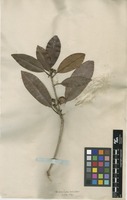
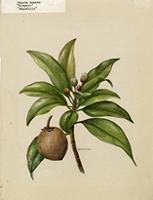
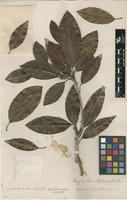
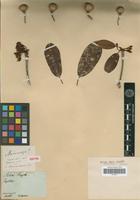
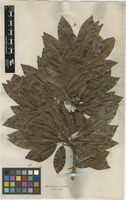
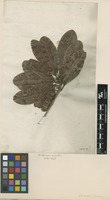
Sapota achras

6 Images see all

Filed as Manilkara zapota (L.) Royen [family SAPOTACEAE]
Sapota achras
Filed as Manilkara zapota (L.) Royen [family SAPOTACEAE]
Isotype of Sapota achras Mill. var. depressa A.DC. [family SAPOTACEAE]
Filed as Manilkara zapota (L.) Royen [family SAPOTACEAE]
Previous
Next

Name

Identification
Sapota achras Mill. [family SAPOTACEAE ]
Related name
  • Sapota achras
Common name
  • Chicle tree, Flora of North America Vol. 8

Flora

Entry for Manilkara zapota (Linnaeus) P. Royen [family SAPOTACEAE]
Herbarium
Flora of North America (FNA)
Collection
Flora of North America
Resource Type
Reference Sources
Entry From
Flora of North America, Vol 8,
Names
Manilkara zapota (Linnaeus) P. Royen [family SAPOTACEAE], Blumea, 7: 410. 1953 ,
Achras zapota Linnaeus [family SAPOTACEAE], Sp. Pl., 2: 1190. 1753
Sapota achras Miller [family SAPOTACEAE]
Treatment Author(s)
Richard P. Wunderlin
R. David Whetstone
Information
Trees, to 18 m. Leaves: petiole 10–30 mm; blade elliptic to oblong-elliptic, 60–140 × 20–50 mm, base cuneate to attenuate, margins sinuate, apex acute to acuminate (often folded on pressed specimens), surfaces brown-tomentose along midrib or glabrous abaxially, glabrous adaxially. Inflorescences solitary flowers. Pedicels 10–20 mm, rufous-tomentose Flowers: sepals ovate to lanceolate, 7–10 mm, apex acute to obtuse, tomentose; petals white, unlobed or irregularly 2–3-lobed, margins entire to irregularly 3-dentate apically, glabrous or sparsely hairy, corolla 7–11 mm, tube 4–6(–7) mm (equaling or exceeding lobes); staminodes petaloid; ovary hairy. Berries ellipsoid or depressed-globose to subglobose, 35–80 mm, surface roughened, scaly; pedicels slightly enlarged distally. Seeds 2–10, 15–25 mm. 2n = 26.
Phenology
Flowering year-round
Altitude range
0–5 m
Distribution
MexicoCentral AmericaUSA Fla.
Discussion
Manilkara zapota is thought to be native to the Atlantic and Pacific coasts of Belize, Guatemala, Mexico, and Nicaragua, and is widely cultivated elsewhere. In southern Florida, it is commonly cultivated and occasionally naturalized. The latex was the primary source of chicle, a major constituent of chewing gum before the substitution of synthetics. Mayans used the wood for lumber, but now the species is protected there in favor of preserving the fruits, which are highly prized.
Native/Introduced
introduced
introduced also in West Indies.

Related Materials

  • Terms and Conditions
  • Privacy Policy
  • Cookie Policy
  • Cookie Settings
  • Accessibility
  • Help
  • Contact Us
  • Facebook
  • Twitter
ITHAKA

JSTOR is part of ITHAKA, a not-for-profit organization helping the academic community use digital technologies to preserve the scholarly record and to advance research and teaching in sustainable ways.

©2000-2026 ITHAKA. All Rights Reserved. JSTOR®, the JSTOR logo, JPASS®, Aluka®, and ITHAKA® are registered trademarks of ITHAKA.

╳