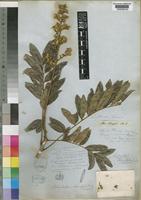
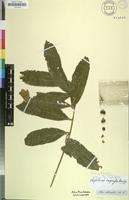
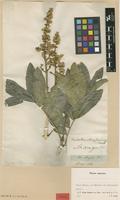
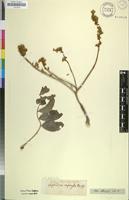
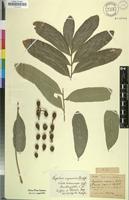
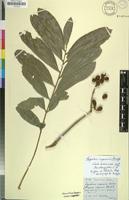
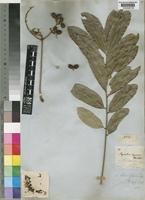
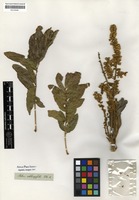
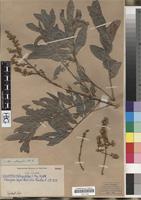
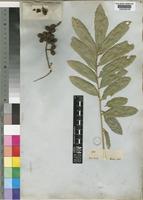
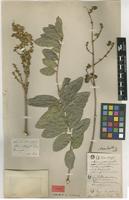
diœcious; leaves petiolate, abruptly or unequally pinnate, leaflets 5–7 pairs, petiolulate, alternate or opposite, oblong, netted with veins, glabrous; panicle axillary, thinly pubescent, the flowers fascicled; stamens 15–16; carpels 3–1, fleshy, sub-globose, one-seeded, the younger yellow-tomentose, the older glabrous. A tree. Leaves 6–12 inches long. Leaflets 2–3 1/2 inches long, 1–1 1/4 inch wide, obtuse, commonly with a short, obtuse mucro, pale below, the lower ones on petiolules 2–3 lines long, the upper sub-sessile. Panicle fulvous-orange, 1/2–1 foot long, its primary branches spreading, branchlets short, and fl. minutely pedicellate. Sepals 5, concave, rounded-obtuse, fringed and ciliate, 1 1/2 line long. Petals 5, shorter than the sepals, obtuse, fringed with woolly hairs, having at the base inside a fringed petaloid scale. Filaments densely hairy, shorter than the oblong, sub-apiculate anthers. Calyx and petals of the female flowers as in the male. Ovary not seen. Style hairy, with a glabrous point, curved. Ripe fruit of 3, 2, 1 carpels, each carpel obovate-globose, smaller than a cherry, indehiscent; seed erect, obovate-globose, exarillate, with leathery coat; cotyledons thick, curved, the outer embracing the transversely plaited inner one; radicle short, acute, inferior.