JSTOR Global Plants Home
  • Home
  • Browse
  • About
  • Access
  • Account
    • Saved Items
    • Profile
  • Log in

Global Plants

Skip to Main Content
  • JSTOR Global Plants Home
  • Global Plants

    • Browse
    • About
    • Access
    • Account
      • Saved Items
      • Profile
Log in
  • Browse
  • About
  • Access
  • Account
    • Saved Items
    • Profile
Advanced Search

Compilation
Sansevieria sordida

3 Images see all

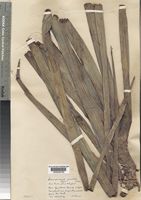
Type of Sansevieria sordida N.E.Br. [family LILIACEAE]
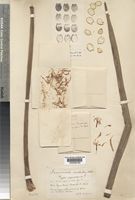
Type of Sansevieria sordida N.E.Brown [family DRACAENACEAE]
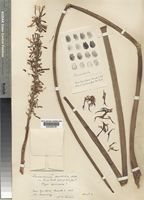
Type of Sansevieria sordida N.E.Br. [family LILIACEAE]
Previous
Next

Name

Identification
Sansevieria sordida N.E.Brown [family DRACAENACEAE ] (stored under name); Verified by Unknown, Sansevieria sordida N.E.Br. [family LILIACEAE ] Verified by Unknown,
Related name
  • Sansevieria sordida

Flora

Entry for Sansevieria sordida N.E.Br. [family DRACAENACEAE]
Herbarium
Royal Botanic Gardens, Kew (K)
Collection
Flora of Tropical East Africa
Resource Type
Reference Sources
Entry From
Flora of Tropical East Africa, page 1, (2007) Author: Geoffrey Mwachala & Paul Mbugua
Names
Sansevieria sordida N.E.Br. [family DRACAENACEAE], in K.B. 1915: 214, fig. 8 (1915); L.E. Newton in Ill. Handbook Succ. Plants 1: 270 (2001). Type: Native country unknown, described from a living plant cultivated at Kew, flowered in March 1910, received from Mr Bull in Chelsea (K!, holo.)
Information
Large rhizomatous herb; stem absent or up to 5 cm long, up to 2.6 cm in diameter, concealed in imbricating leaf-bases. Leaves distichous, 4–12, slightly spreading fanwise, straight to slightly recurved, slightly compressed-cylindric, 65–105≈0.8–1.3 cm, 1.3–1.9(–2.2) cm thick from front to back, very rough, tapering to a sharp whitish or grey spine 0.8–1.3 cm long; leaf channelled down inner surface with acute dark brown edges but becomes shallow towards the base, membrane discontinous dark brown above, but whitish membrane towards the leaf base, with 11–15 or more grooves, dull bluish green with numerous darker longitudinal lines. Inflorescence a spike-like raceme 30–60 cm long, axis pale dull light green, 0.6 cm in diameter, minutely dotted with white; flowers 7–14 per cluster; lower inflorescence bracts 2–3, 1.9–3.8 cm long, tapering to a fine subulate point, produced on lower third of peduncle, distant, membranous; bracteoles subulate, 0.3–0.6 cm long; pedicels 0.4–0.5 cm long, persistent part 0.3–0.6 cm long, slender. Flower erect or ascending, pale dingy greenish in bud to purplish-blue on maturity; tube white to greenish, 0.7–1 cm long, lobes white on the inner face, green with minute dull purplish dots on the outside, linear, 1.2–1.6 cm long, obtuse, revolute, recurved in 3 lobes, but some in 5, becoming horizontal or distinctly drooping when expanded. Fruit a berry, greenish brown on ripening
Range
DISTR. K 7
Distribution
KENYA Teita District between Voi and the Taita Hills, 1905, Grenfell 4!
Distribution (external)
Zambia
South Africa
Notes
USES. No data. CONSERVATION Least concern. The number of flowers per cluster is very high, 7–14, with very prominent and persistent pedicels 0.5–0.6 cm long. This species resembles S. volkensii in its growth habit, but the leaves are much larger, smooth with very distinct longitudinal grooves. It is possible that this is a variant of S. pearsonii N.E.Br. that grows in Southern Africa, but the number of leaves and flowers are too high; S. pearsonii has a spiral-distichous arrangement with a slightly rough surface.

Related Materials

  • Terms and Conditions
  • Privacy Policy
  • Cookie Policy
  • Cookie Settings
  • Accessibility
  • Help
  • Contact Us
  • Facebook
  • Twitter
ITHAKA

JSTOR is part of ITHAKA, a not-for-profit organization helping the academic community use digital technologies to preserve the scholarly record and to advance research and teaching in sustainable ways.

©2000-2026 ITHAKA. All Rights Reserved. JSTOR®, the JSTOR logo, JPASS®, Aluka®, and ITHAKA® are registered trademarks of ITHAKA.

╳