JSTOR Global Plants Home
  • Home
  • Browse
  • About
  • Access
  • Account
    • Saved Items
    • Profile
  • Log in

Global Plants

Skip to Main Content
  • JSTOR Global Plants Home
  • Global Plants

    • Browse
    • About
    • Access
    • Account
      • Saved Items
      • Profile
Log in
  • Browse
  • About
  • Access
  • Account
    • Saved Items
    • Profile
Advanced Search

Compilation
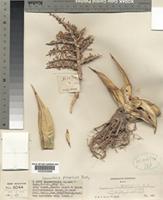
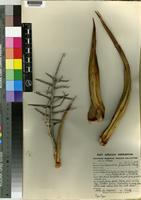
Sansevieria pinguicula

2 Images see all

Type of Sansevieria pinguicula Bally [family DRACAENACEAE]
topotype of Sansevieria pinguicula P.R.O.Bally [family DRACAENACEAE]
Previous
Next

Name

Identification
Sansevieria pinguicula P.R.O.Bally [family DRACAENACEAE ] (stored under name); Verified by Not on sheet,
Related name
  • Sansevieria pinguicula

Flora

Entry for Sansevieria pinguicula Bally [family DRACAENACEAE]
Herbarium
Royal Botanic Gardens, Kew (K)
Collection
Flora of Tropical East Africa
Resource Type
Reference Sources
Entry From
Flora of Tropical East Africa, page 1, (2007) Author: Geoffrey Mwachala & Paul Mbugua
Names
Sansevieria pinguicula Bally [family DRACAENACEAE], in Candollea 19: 145 (1964); L.E. Newton in Ill. Handbook Succ. Plants 1: 269 (2001). Type: Kenya, Northern Frontier District: Tana River region, near Bura, Jan. 1943, Bally 4275 (K!, holo.; EA!, iso.)
Information
Erect short-stemmed herb 30 cm high. Leaves rosulate, 5–7, in cross-section semicircular, 12–30 cm long, 2.8–3.5 cm wide (thickness just below the middle), thickly fleshy, uniformly green, the side facing inwards concave-angular with horny edges, the outer side convex and 2–7-dented, tapering towards the cuspidate, horny, very sharp spine, upper surface deeply channelled, margins of the channel sharp, brown, horny, underside with 2–7 more or less well defined longitudinal grooves, rounded. Inflorescence a subterminal erect panicle 15–32 cm long, axis 5–6 mm diameter at the base, equalling or hardly exceeding the leaves, gradually tapering towards the apex, branched in the upper half; flowers 4–6 per cluster; lower inflorescence bracts 1–2, the upper ones subtending the branchlets; branchlets 6–9, the lowest to 5 cm long, the upper branchlets increasingly shorter, horizontally spreading; bracteoles broadly triangular, acute, membranous; pedicel 1.5–2 mm long. Flower perianth tube cylindrical, 4–5 mm long with a slightly inflated base, lobes 3–4 mm long, 0.7–1 mm wide; stamens equalling the perianth, filaments free from the base of the lobes, anthers 1.6–2 mm long; style slightly exceeding the anthers. Fruit a globose berry, very few reaching maturity.
Range
DISTR. K 1, 7 only known from Bura area
Altitude range
50–250 m
Distribution
KENYA Northern Frontier District Tana River region, near Bura, Jan. 1943, Bally 4275! & 24 km on the Garissa–Liboi road from junction with Mado Gashi road, 28 Jan. 1972, Smith & Bally 14976!KENYA Tana River District Bura, 8 May 1985, Bally 9386!
Notes
USES. No data. CONSERVATION Least concern. This is called the walking Sansevieria because of producing aerial shoots followed by rooting. It is a very stout plant found in one of the most arid areas in Kenya. To date the only wild material has been obtained from Bura near Garissa. It is yet to be established whether it occurs elsewhere.

Related Materials

  • Terms and Conditions
  • Privacy Policy
  • Cookie Policy
  • Cookie Settings
  • Accessibility
  • Help
  • Contact Us
  • Facebook
  • Twitter
ITHAKA

JSTOR is part of ITHAKA, a not-for-profit organization helping the academic community use digital technologies to preserve the scholarly record and to advance research and teaching in sustainable ways.

©2000-2026 ITHAKA. All Rights Reserved. JSTOR®, the JSTOR logo, JPASS®, Aluka®, and ITHAKA® are registered trademarks of ITHAKA.

╳