JSTOR Global Plants Home
  • Home
  • Browse
  • About
  • Access
  • Account
    • Saved Items
    • Profile
  • Log in

Global Plants

Skip to Main Content
  • JSTOR Global Plants Home
  • Global Plants

    • Browse
    • About
    • Access
    • Account
      • Saved Items
      • Profile
Log in
  • Browse
  • About
  • Access
  • Account
    • Saved Items
    • Profile
Advanced Search

Compilation
Sansevieria grandis

9 Images see all

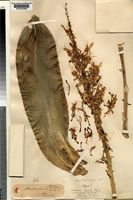
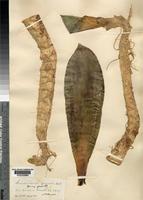
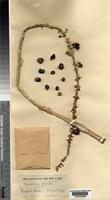
Type of Sansevieria grandis Hook.f. [family DRACAENACEAE]
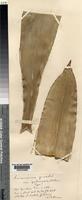
Type of Sansevieria grandis Hook. var. zuluensis N.E.Br. [family DRACAENACEAE]
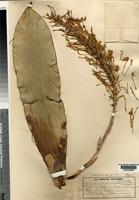
Type of Sansevieria grandis Hook.f. [family DRACAENACEAE]
Type of Sansevieria grandis Hook.f. var. zuluensis N.E.Br. [family DRACAENACEAE]
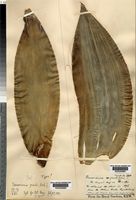
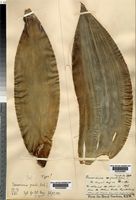
Type of Sansevieria grandis Hook.f. [family DRACAENACEAE]
Type of Sansevieria grandis Hook. var. zuluensis N.E.Br. [family DRACAENACEAE]
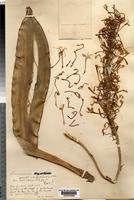
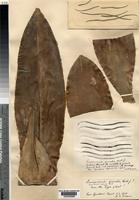
Type of Sansevieria grandis Hook.f. [family DRACAENACEAE]
Sansevieria grandis Hook.f. [family DRACAENACEAE]
Previous
Next

Name

Identification
Sansevieria grandis Hook.f. [family DRACAENACEAE ] (stored under name); Verified by Unknown,
Related name
  • Sansevieria grandis

Flora

Entry for Sansevieria grandis Hook. f. [family DRACAENACEAE]
Herbarium
Royal Botanic Gardens, Kew (K)
Collection
Flora of Tropical East Africa
Resource Type
Reference Sources
Entry From
Flora of Tropical East Africa, page 1, (2007) Author: Geoffrey Mwachala & Paul Mbugua
Names
Sansevieria grandis Hook. f. [family DRACAENACEAE], in Bot. Mag. 129: t. 7877 (1903); N.E. Brown in K.B. 1915: 252 (1915); De Wild., Not. Pl. Utiles Congo: 627, 633 (1903); Holland in K.B. 1907: 369 (1907). Type: Iconotype: t. 7877, Curtis’s Bot. Mag. (1903), drawn from specimen sent to Kew from plants cultivated in Cuba
Sansevieria nobilis God.-Leb. [family DRACAENACEAE], Sansev. Gigant. Afr. Orient.: 12, name only (1901)
Information
Acaulescent herb, 60 cm long; rhizome subterranean, whitish to green, 2.5–3.8 cm thick. Leaves ascending or ascending-spreading, (3–)4–5, elliptic, stiffly coriaceous, oblong or broadly lanceolate, 30–60(–90)≈8.8–15 (–17) cm, 2–3 mm thick at the middle, flat, narrowed and convolute at base, slightly rough, acute, subulate tip 0.4–0.6 cm long, margins 0.1 cm wide, slightly wavy, hardened, narrow membranous edges when young soon disappearing, dull glaucous-green to somewhat bluish green, transverse bars irregular lighter green on both surfaces but more conspicuous on lower surface; slightly petiolate. Inflorescence 41–60 cm high, axis 0.8–1 cm thick near base, upper two-thirds a compact spike-like raceme; lower inflorescence bracts 4–5, ovate, 1.3–1.9≈1.3–1.9 cm, obtuse, distant, membranous; bracteoles membranous, ovate or ovate-lanceolate, 0.3–0.6 cm long, acute; pedicels 0.2–0.4 cm long, jointed at apex, with scarcely any deciduous part. Flowers white to grey-white; tube 1.2–1.6(–1.9) cm long, rounded at base, lobes linear, 1.5–1.9 cm long, obtuse, revolute; filaments 1.6–1.8 cm long, anthers 0.3 cm long; style 3.6–4 cm long. Fruit a globose berry; brownish yellow on ripening.
Range
DISTR. K 4, 5, 7; T 7
Altitude range
50–600 m
Distribution
KENYA Machakos District Kibwezi, 9 Mar. 1982, Bally & Pfennig 88!KENYA District unclear Kericho–Kisumu road ± 10 km from Kapsoit, 23 Mar. 1972, Pfennig 1065!KENYA Kwale District near Samburu Station, 22 Sep. 1961, Verdcourt 3220!TANZANIA Iringa District Livingstone Mts, 100 04’S 340 34’E, 1 Feb. 1991, Gereau & Kayombo 3825!
Distribution (external)
Zimbabwe
South Africa
Notes
USES. No data. CONSERVATION Least concern. This species differs from S. hyacinthoides by its wider leaves, shorter flowers, slightly wavy leaf margins, dull glaucous and dark green-blue colour. It may also be taken for S. conspicua, but its crowded inflorescence, slightly rough undersurface and shorter pedicels help to distinguish it. Common name: “pendulous Sansevieria ”, because of its growth form in cultivation. Our material belongs to var. grandis .

Related Materials

  • Terms and Conditions
  • Privacy Policy
  • Cookie Policy
  • Cookie Settings
  • Accessibility
  • Help
  • Contact Us
  • Facebook
  • Twitter
ITHAKA

JSTOR is part of ITHAKA, a not-for-profit organization helping the academic community use digital technologies to preserve the scholarly record and to advance research and teaching in sustainable ways.

©2000-2026 ITHAKA. All Rights Reserved. JSTOR®, the JSTOR logo, JPASS®, Aluka®, and ITHAKA® are registered trademarks of ITHAKA.

╳