JSTOR Global Plants Home
  • Home
  • Browse
  • About
  • Access
  • Account
    • Saved Items
    • Profile
  • Log in

Global Plants

Skip to Main Content
  • JSTOR Global Plants Home
  • Global Plants

    • Browse
    • About
    • Access
    • Account
      • Saved Items
      • Profile
Log in
  • Browse
  • About
  • Access
  • Account
    • Saved Items
    • Profile
Advanced Search

Compilation
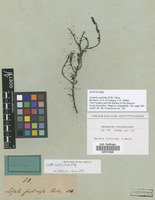
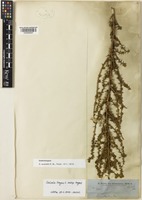
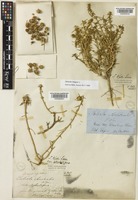
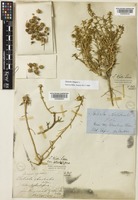
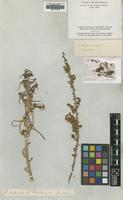
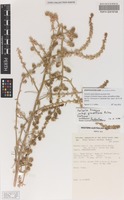
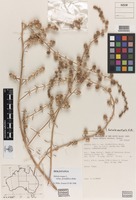
Salsola australis

7 Images see all

Filed as Suaeda australis (R.Br.) Moq. [family CHENOPODIACEAE]
Type of Salsola australis R.Br. [family CHENOPODIACEAE]
Isolectotype of Salsola australis R.Br. [family AMARANTHACEAE]
Salsola kali L. var. strobilifera Benth. [family AMARANTHACEAE]
Isotype of Salsola tragus L. subsp. grandiflora Rilke [family CHENOPODIACEAE]
Holotype of Salsola tragus subsp. grandiflora Rilke [family CHENOPODIACEAE]
Previous
Next

Name

Identification
Salsola australis R.Br. [family CHENOPODIACEAE ] Salsola kali L. [family CHENOPODIACEAE ] (stored under name);
Related name
  • Salsola kali
  • Salsola australis
Common name
  • Russian thistle, Flora of North America Vol. 4
  • tumbleweed, Flora of North America Vol. 4
  • soude roulante, Flora of North America Vol. 4

Flora

Entry for Salsola tragus Linnaeus [family CHENOPODIACEAE]
Herbarium
Flora of North America (FNA)
Collection
Flora of North America
Resource Type
Reference Sources
Entry From
Flora of North America, Vol 4,
Names
Salsola tragus Linnaeus [family CHENOPODIACEAE], Cent. Pl. II, 13. 1756
Salsola australis R. Brown [family CHENOPODIACEAE]
Salsola iberica (Sennen & Pau) Botschantzev ex Czerepanov [family CHENOPODIACEAE]
Salsola kali var. tenuifolia Tausch ex Moquin-Tandon [family CHENOPODIACEAE]
Salsola pestifer A. Nelson [family CHENOPODIACEAE]
Treatment Author(s)
Sergei L. Mosyakin
Information
Herbs, (5–)10–100 cm, sparsely papillose to hispid or glabrous. Stems erect, rarely ascending, profusely branched from or near base (rarely simple in underdeveloped specimens); branches arcuate, proximal ones occasionally ± prostrate. Leaves alternate; blade filiform or narrowly linear, less than 1 mm wide in herbarium specimens, not fleshy, not swollen at base, apex subspinescent (spine less than 1.5 mm). Inflorescences interrupted at maturity (at least proximally), 1-flowered (rarely 2–3-flowered with lateral flowers mostly abortive); bracts alternate at maturity, not imbricate, reflexed, not distinctly swollen at base, ± abruptly narrowing into mucronulate-spinose apex. Flowers: bracteoles distinct or occasionally connate at base in proximal flowers; perianth segments with prominent, membranous wing at maturity (two inner wings usually much smaller than the other three), apex weak, obtuse to weakly acuminate or reflexed, glabrous; fruiting perianth ca. 4–10 mm diam. 2n = 36.
Phenology
jun-aug (summer), sep-nov (fall)
Altitude range
0–2500 m;
Distribution
MexicoEurasianaturalized Central AmericaSouth Americas AfricaAustralia.USA Ala.USA Ariz.USA Ark.USA Calif.USA Colo.USA Conn.USA Del.USA D.C.USA Ga.USA IdahoUSA Ill.USA Ind.USA IowaUSA Kans.USA Ky.USA La.USA MaineUSA Md.USA Mass.USA Mich.USA Minn.USA Miss.USA Mo.USA Mont.USA Nebr.USA Nev.USA N.H.USA N.J.USA N.Mex.USA N.Y.USA N.C.USA N.Dak.USA OhioUSA Okla.USA Oreg.USA Pa.USA R.I.USA S.C.USA S.Dak.USA Tenn.USA Tex.USA UtahUSA Vt.USA Va.USA Wash.USA W.Va.USA Wis.USA Wyo.Canada Alta.Canada B.C.Canada Man.Canada N.B.Canada Nfld. & Labr.Canada N.S.Canada Ont.Canada P.E.I.Canada Que.Canada Sask.
Discussion
Salsola tragus probably was introduced to South Dakota in 1870 or 1874 in flaxseed imported from Russia (J. C. Beatley 1973c; C. W. Crompton and I. J. Bassett 1985; S. L. Mosyakin 1996). Now this noxious weed occupies almost all of its potential range in North America. It seems, however, to be quite rare in the southeastern part of the United States.
Salsola tragus has been known in North American and European botanical literature under numerous names (for detailed synonymy see S. L. Mosyakin 1996 and S. Rilke 1999). Judging from the photographs of the Linnaean specimen of S. tragus (LINN 315.3), which should be regarded as a lectotype, it is the correct name for the widespread, narrow-leaved, weedy representative of the S. kali aggregate (Á. Degen 1936–1938, vol. 2; N. N. Tzvelev 1993; S. L. Mosyakin 1996; S. Rilke 1999).
In the present circumscription, Salsola tragus is an extremely polymorphic species consisting of several more or less distinct races (subspecies or segregate species). Several varieties may be recognized within S. tragus, many of them are just morphological variants of little or no taxonomic value.
Studies using allozymes and DNA-based molecular markers in some North American and Eurasian representatives of Salsola tragus indicate that there are at least two cryptic genetically divergent populations (F. J. Ryan and D. R. Ayres 2000). More studies may clarify distribution, origin, and taxonomic status of these infraspecific taxa (or cryptic species).
In spite of being a noxious weed, Salsola tragus is an additional forage source for livestock in arid rangelands. The mature plant may break off at the stem base to form a tumbleweed.
Native/Introduced
introduced;

Related Materials

  • Terms and Conditions
  • Privacy Policy
  • Cookie Policy
  • Cookie Settings
  • Accessibility
  • Help
  • Contact Us
  • Facebook
  • Twitter
ITHAKA

JSTOR is part of ITHAKA, a not-for-profit organization helping the academic community use digital technologies to preserve the scholarly record and to advance research and teaching in sustainable ways.

©2000-2026 ITHAKA. All Rights Reserved. JSTOR®, the JSTOR logo, JPASS®, Aluka®, and ITHAKA® are registered trademarks of ITHAKA.

╳