JSTOR Global Plants Home
  • Home
  • Browse
  • About
  • Access
  • Account
    • Saved Items
    • Profile
  • Log in

Global Plants

Skip to Main Content
  • JSTOR Global Plants Home
  • Global Plants

    • Browse
    • About
    • Access
    • Account
      • Saved Items
      • Profile
Log in
  • Browse
  • About
  • Access
  • Account
    • Saved Items
    • Profile
Advanced Search

Compilation
Salix vestita

13 Images see all

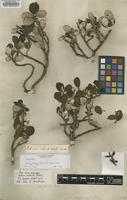
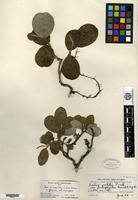
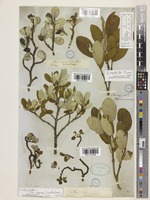
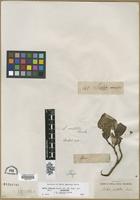
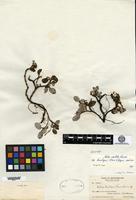
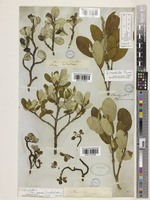
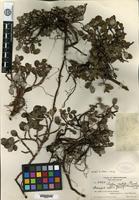
Lectotype of Salix vestita Pursh [family SALICACEAE]
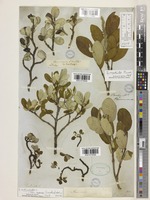
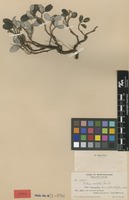
Type of Salix reticulata L. var. nana Andersson [family SALICACEAE]
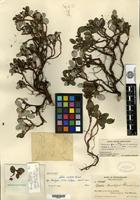
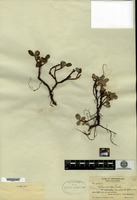
Holotype of Salix leiolepis Fernald [family SALICACEAE]
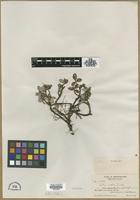
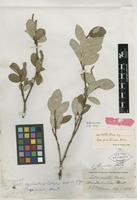
Type? of Salix vestita Pursh f. mensalis Fernald [family SALICACEAE]
Type? of Salix vestita Pursh var. psilophylla Fernald & H. St. John [family SALICACEAE]
Filed as Salix vestita Pursh f. mensalis Fernald [family SALICACEAE]
Type of Salix vestita Pursh f. mensalis Fernald & H. St. John [family SALICACEAE]
Type of Salix fernaldii Blank [family SALICACEAE]
Salix reticulata L. var. nana Andersson [family SALICACEAE]
Type? of Salix vestita Pursh [family SALICACEAE]
Isotype of Salix leiolepis Fernald [family SALICACEAE]
Salix reticulata L. var. nana Andersson [family SALICACEAE]
Type? of Salix vestita Pursh var. mensalis Fernald & H. St. John [family SALICACEAE]
Previous
Next

Name

Identification
Salix vestita Pursh [family SALICACEAE ] (stored under name); Verified by G. W. Argus, Isotype of Salix leiolepis Fernald [family SALICACEAE ] Verified by Fernald, 1914
Related name
  • Salix leiolepis
  • Salix vestita
  • Salix fernaldii
Common name
  • Rock willow, Flora of North America Vol. 7

Flora

Entry for Salix vestita Pursh [family SALICACEAE]
Herbarium
Flora of North America (FNA)
Collection
Flora of North America
Resource Type
Reference Sources
Entry From
Flora of North America, Vol 7,
Names
Salix vestita Pursh [family SALICACEAE], Fl. Amer. Sept., 2: 610. 1813
Salix leiolepis Fernald [family SALICACEAE]
Salix vestita subsp. leiolepis (Fernald) Argus [family SALICACEAE]
Salix vestita var. psilophylla Fernald & H. St. John [family SALICACEAE]
Treatment Author(s)
George W. Argus
Information
Plants 0.2–1.5 m. Stems erect; branches brownish or red-brown, (dull), glabrous, long-silky, or villous to glabrescent; branchlets yellow-brown or gray-brown, long-silky, pilose, or moderately densely villous. Leaves: stipules absent or rudimentary; petiole (shallowly to deeply grooved adaxially), 2–8 mm, (with 2 spherical glands distally, dark brown, sometimes basilaminar, sparsely pubescent or glabrous adaxially); largest medial blade hypostomatous, (veins strongly impressed-reticulate), broadly elliptic, subcircular, or obovate, 18–67 × 10–40 mm, 1.1–2.3 times as long as wide, base rounded, convex, or subcordate, margins strongly revolute, crenate or subentire, apex rounded, convex, retuse, or toothed, abaxial surface sparsely to densely villous or long-silky, veins often with long, straight hairs, adaxial slightly glossy, glabrous or sparsely long-silky; proximal blade margins entire or crenate; juvenile blade (yellowish green), abaxially very densely long-silky. Catkins: staminate 13–48 × 4–6.5(–8) mm, flowering branchlet 3–31(–50) mm; pistillate densely flowered, slender or stout, 18–56 × 4–10 mm, flowering branchlet 3–27(–40) mm; floral bract tawny, 0.8–1.6 mm, apex rounded, entire, abaxially densely hairy, hairs straight. Staminate flowers: abaxial nectary 0.6–0.8 mm, adaxial nectary narrowly oblong, 0.5–1.2 mm, nectaries connate and shallowly cup-shaped, or distinct; filaments distinct, hairy on proximal 1/2; anthers ellipsoid or globose, 0.3–0.5 mm. Pistillate flowers: abaxial nectary (0–)0.8–0.9 mm, adaxial nectary oblong, ovate, or narrowly oblong to almost filiform, 0.7–1.4 mm, shorter to longer than stipe, nectaries distinct or connate and cup-shaped; stipe 0.4–1.2 mm; ovary pyriform or obnapiform, densely short-silky, hairs cylindrical, beak abruptly tapering to styles; ovules 13–15 per ovary; styles connate 1/2 their lengths to almost distinct, 0.2–0.4 mm; stigmas flat, abaxially non-papillate with rounded tip, slenderly cylindrical, or 2 plump lobes, 0.2–0.28–0.36 mm. Capsules 3–5 mm. 2n = 38.
Phenology
jun-jul (summer)
Altitude range
0–2400 m;
Distribution
Asia (China [Xinjiang]).Asia (Mongolia).Asia (Russia).Asia (e).Asia (c Siberia).USA Mont.USA Oreg.USA Wash.Canada Alta.Canada B.C.Canada Man.Canada Nfld. and Labr.Canada N.S.Canada NunavutCanada Ont.Canada Que.
Discussion
Salix vestita is an ancient amphiberingian species. Its distribution includes a series of isolated, disjunct populations in Central Siberia, the northern Rocky Mountains, the west coast of Hudson Bay, and the northeastern arctic and subarctic. Occurrence in Nunavut is on Akpatok Island in Ungava Bay and on the Belcher Islands in Hudson Bay. It may be extirpated in Washington.
The flowering and vegetative branchlets sometimes have relatively short internodes. In subsequent years, branches have the appearance of short shoots similar to those in Alnus. Short shoots do not appear on all branches or in all years. The formation of short shoots may be related to adverse growing conditions.

Related Materials

  • Terms and Conditions
  • Privacy Policy
  • Cookie Policy
  • Cookie Settings
  • Accessibility
  • Help
  • Contact Us
  • Facebook
  • Twitter
ITHAKA

JSTOR is part of ITHAKA, a not-for-profit organization helping the academic community use digital technologies to preserve the scholarly record and to advance research and teaching in sustainable ways.

©2000-2026 ITHAKA. All Rights Reserved. JSTOR®, the JSTOR logo, JPASS®, Aluka®, and ITHAKA® are registered trademarks of ITHAKA.

╳