JSTOR Global Plants Home
  • Home
  • Browse
  • About
  • Access
  • Account
    • Saved Items
    • Profile
  • Log in

Global Plants

Skip to Main Content
  • JSTOR Global Plants Home
  • Global Plants

    • Browse
    • About
    • Access
    • Account
      • Saved Items
      • Profile
Log in
  • Browse
  • About
  • Access
  • Account
    • Saved Items
    • Profile
Advanced Search

Compilation
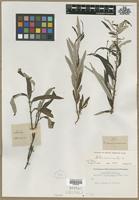
Salix sericea

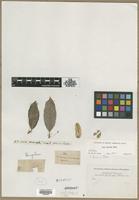
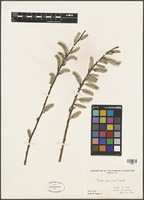
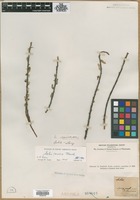
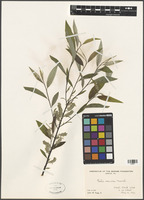
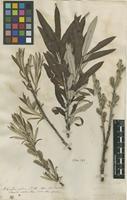
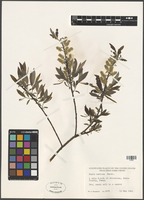
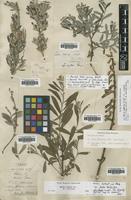
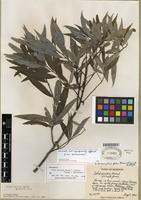
18 Images see all

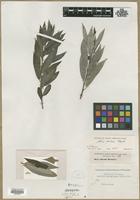
Filed as Salix sericea Marshall [family SALICACEAE]
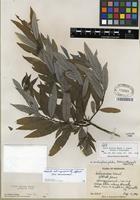
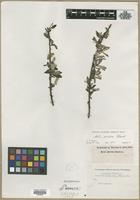
Paratype of Salix sericea Marshall [family SALICACEAE]
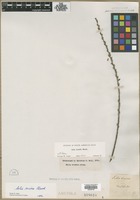
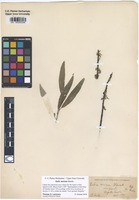
Filed as Salix tristis Aiton [family SALICACEAE]
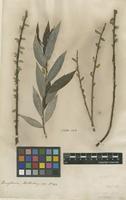
Filed as Salix grisea Willd. [family SALICACEAE]
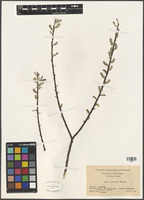
Filed as Salix sericea Marshall [family SALICACEAE]
Filed as Salix sericea Marsh. [family SALICACEAE]
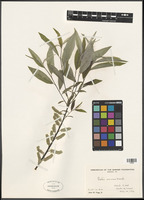
Filed as Salix sericea Marshall [family SALICACEAE]
Filed as Salix candida Flüggé ex Willd. [family SALICACEAE]
Filed as Salix sericea Marshall [family SALICACEAE]
Type? of Salix sericea Marshall [family SALICACEAE]
Holotype of Salix sericea Marshall [family SALICACEAE]
Filed as Salix lapponum L. [family SALICACEAE]
Filed as Salix sericea Marshall [family SALICACEAE]
Previous
Next

Name

Identification
Salix sericea Marshall [family SALICACEAE ] Salix occidentalis J.M.Walter [family SALICACEAE ] (stored under name);
Related name
  • Salix lapponum
  • Salix occidentalis
  • Salix sericea
  • Salix glauca
  • Salix viminalis
  • Salix discolor
  • Salix candida
  • Salix grisea
Common name
  • Silky willow, Flora of North America Vol. 7

Flora

Entry for Salix sericea Marshall [family SALICACEAE]
Herbarium
Flora of North America (FNA)
Collection
Flora of North America
Resource Type
Reference Sources
Entry From
Flora of North America, Vol 7,
Names
Salix sericea Marshall [family SALICACEAE], Arbust Amer., 140. 1785
Salix coactilis Fernald [family SALICACEAE]
Treatment Author(s)
George W. Argus
Information
Plants sometimes forming clones by stem fragmentation. Stems: branches (highly brittle at base), gray-brown or violet, not glaucous, tomentose to glabrescent; branchlets red-brown, violet, or mottled yellow-brown, sparsely to densely velvety. Leaves: stipules absent or rudimentary on early ones, late ones 1.2–4 mm, apex acute or acuminate; petiole convex to flat, or shallowly grooved adaxially, 3.5–12(–21) mm, (sometimes 2 spherical glands distally), velvety adaxially; largest medial blade lorate, narrowly oblong, or narrowly elliptic, (48–)54–82–100(–125) × (7–)9–16.7–25 mm, base cuneate or convex, margins flat, serrulate or crenulate, apex acute, acuminate, or convex, abaxial surface glaucous (sometimes obscured by hairs), densely short-silky, hairs straight, adaxial dull, sparsely pubescent to glabrescent; proximal blade margins entire; juvenile blade reddish or yellowish green, very densely short-silky abaxially, hairs white, sometimes also ferruginous. Catkins flowering as or just before leaves emerge; staminate stout, 13.5–40 × 4–9 mm, flowering branchlet 0–2 mm; pistillate loosely to moderately densely flowered, slender to stout, 18–43 × 5–12 mm, flowering branchlet 1–3 mm; floral bract dark brown, black, or bicolor, 0.8–1.5 mm, apex rounded, abaxially hairy, hairs straight or wavy. Staminate flowers: adaxial nectary ovate to oblong, 0.3–0.8 mm; filaments distinct or connate less than 1/2 their lengths; anthers purple turning yellow, 0.4–0.6 mm. Pistillate flowers: adaxial nectary oblong, ovate, or flask-shaped, 0.4–0.7 mm; ovary ovoid, beak abruptly tapering to styles; ovules 6 per ovary; styles 0.2–0.4 mm. Capsules 2.5–4 mm.
Phenology
mar-may (spring), jun (summer)
Altitude range
5–1300 m;
Distribution
USA Ala.USA Ark.USA Conn.USA Del.USA D.C.USA Ga.USA Ill.USA Ind.USA IowaUSA Ky.USA MaineUSA Md.USA Mass.USA Mich.USA Mo.USA N.H.USA N.J.USA N.Y.USA N.C.USA OhioUSA Pa.USA R.I.USA S.C.USA Tenn.USA Vt.USA Va.USA W.Va.USA Wis.Canada N.B.Canada N.S.Canada Que.
Discussion
Some specimens of Salix sericea are difficult to separate from S. petiolaris (G. W. Argus 1986). Salix sericea can be distinguished from S. petiolaris in having branches highly brittle at base, stipules on early leaves rudimentary or absent, on late leaves usually foliaceous, juvenile blades usually with white hairs, rarely some ferruginous, ovaries ovoid, beaks abruptly tapering to styles, and capsules 2.5–4 mm; S. petiolaris has branches flexible at base, stipules on all leaves absent or rudimentary, juvenile blades usually with conspicuous ferruginous hairs, ovaries pyriform, beaks gradually tapering to styles, and capsules 5–9 mm.
See 68. Salix eriocephala for comments on differences.
Hybrids:
Salix sericea forms natural hybrids with S. eriocephala and S. petiolaris. Reports of hybrids with S. humilis (C. K. Schneider 1921; M. L. Fernald 1950) are not based on convincing specimens.

Related Materials

  • Terms and Conditions
  • Privacy Policy
  • Cookie Policy
  • Cookie Settings
  • Accessibility
  • Help
  • Contact Us
  • Facebook
  • Twitter
ITHAKA

JSTOR is part of ITHAKA, a not-for-profit organization helping the academic community use digital technologies to preserve the scholarly record and to advance research and teaching in sustainable ways.

©2000-2026 ITHAKA. All Rights Reserved. JSTOR®, the JSTOR logo, JPASS®, Aluka®, and ITHAKA® are registered trademarks of ITHAKA.

╳