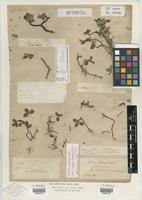
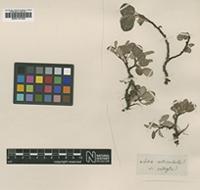
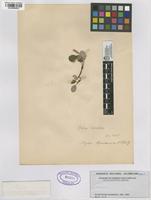
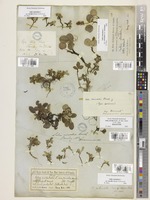
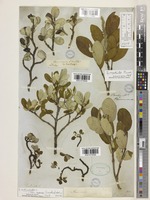
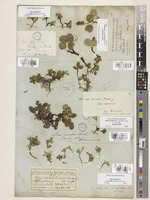
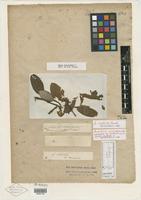
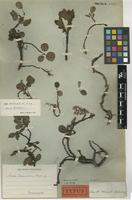
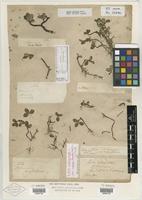
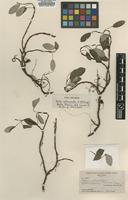
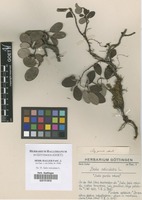
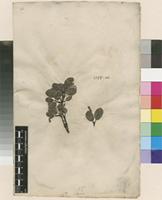
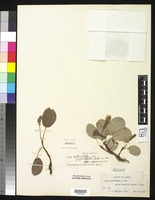
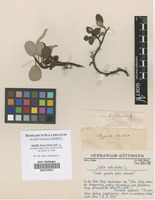
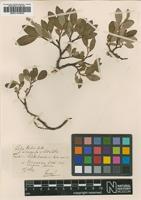
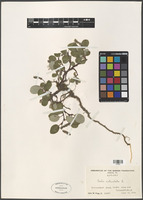
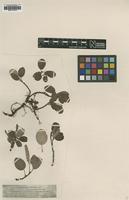
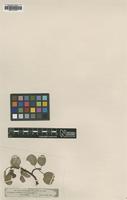
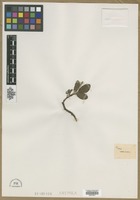
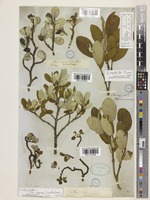
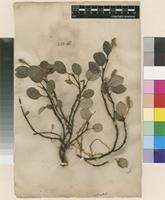
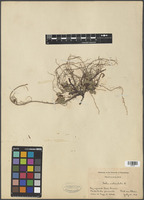
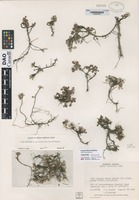
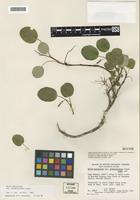
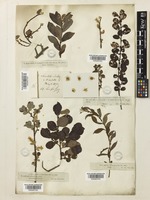
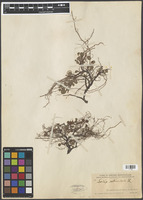
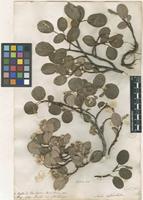
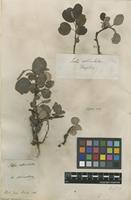
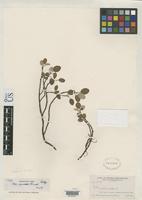
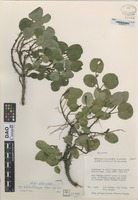
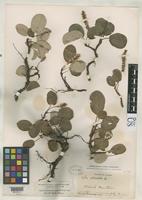
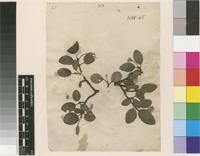
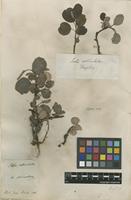
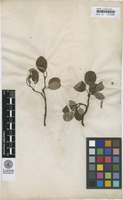
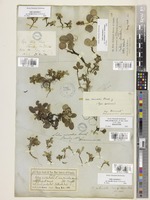
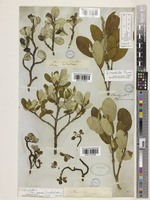
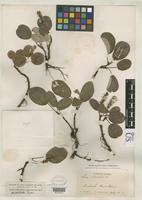
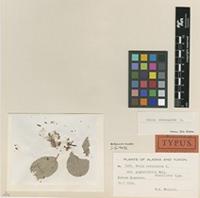
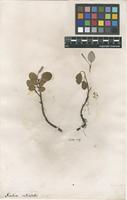
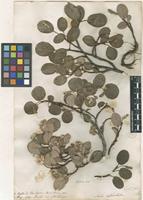
Plants 0.03–0.15 m, (dwarf, forming clones by layering). Stems trailing; branches and branchlets yellow-brown or red-brown, glabrous. Leaves: stipules absent or rudimentary; petiole 3–46 mm, (sometimes glandular distally); largest medial blade amphistomatous or hemiamphistomatous, (2 pairs of secondary veins arising at or close to base, arcing toward apex), oblong, broadly oblong, broadly elliptic, subcircular, or circular, (8–)12–66 × 8–50 mm, 1–1.5 times as long as wide, base convex, rounded, subcordate, or cordate, margins slightly revolute, entire or crenulate (glandular-dotted), apex rounded, convex, or retuse, abaxial surface sparsely long-silky to glabrescent, adaxial (venation deeply impressed), slightly or highly glossy, glabrous or pilose; proximal blade margins entire; juvenile blade glabrous. Catkins: staminate 11–54 × 4–9 mm, flowering branchlet 2–28 mm; pistillate densely flowered (more than 6 flowers), slender or stout, 11–79 × 3–8 mm, flowering branchlet 2–37 mm; floral bract tawny, 0.8–1.8 mm, apex rounded to retuse, entire, abaxially glabrous. Staminate flowers: abaxial nectary 0.5–0.9 mm, adaxial nectary oblong or ovate, 0.5–1 mm, nectaries connate and cup-shaped; filaments distinct, hairy on proximal 1/2 or throughout; anthers ellipsoid or globose, 0.3–0.4 mm. Pistillate flowers: abaxial nectary (0–)0.3–0.5 mm, adaxial nectary narrowly oblong, 0.5–1 mm, equal to or longer than stipe, nectaries distinct or connate and cup-shaped; stipe 0–0.8 mm; ovary pyriform or ovoid, short-silky, hairs flattened, beak abruptly tapering to styles; ovules 8–18 per ovary; styles connate to distinct 1/2 their lengths, 0.2–0.3 mm; stigmas flat, abaxially non-papillate with rounded tip, broadly cylindrical, or 2 plump lobes, 0.2–0.26–0.36 mm. Capsules 4.5–5 mm. 2n = 38.