JSTOR Global Plants Home
  • Home
  • Browse
  • About
  • Access
  • Account
    • Saved Items
    • Profile
  • Log in

Global Plants

Skip to Main Content
  • JSTOR Global Plants Home
  • Global Plants

    • Browse
    • About
    • Access
    • Account
      • Saved Items
      • Profile
Log in
  • Browse
  • About
  • Access
  • Account
    • Saved Items
    • Profile
Advanced Search

Compilation
Salix pseudolapponum

11 Images see all

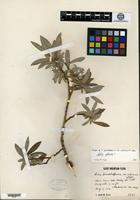
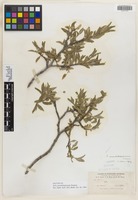
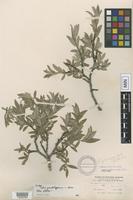
Isotype of Salix pseudolapponum Seemen var. subincurva E. H. Kelso [family SALICACEAE]
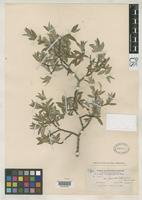
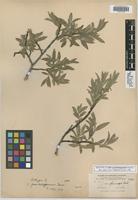
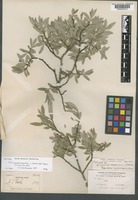
Isotype of Salix pseudolapponum Seemen, K.O. von 1900 [family SALICACEAE]
Salix krylovii E.L.Wolf [family SALICACEAE]
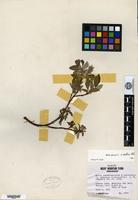
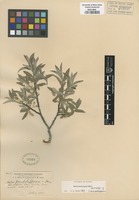
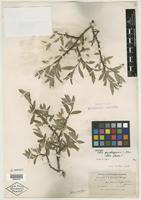
Type of Salix pseudolapponum Seemen var. petrophila Kelso [family SALICACEAE]
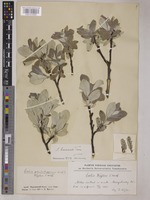
Isotype of Salix pseudolapponum Seemen [family SALICACEAE]
Isotype of Salix brachycarpa Nutt. [family SALICACEAE]
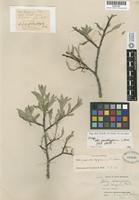
Isotype of Salix pseudolapponum Seemen [family SALICACEAE]
Isotype of Salix pseudolapponum Seeman [family SALICACEAE]
Holotype of Salix pseudolapponum Seemen [family SALICACEAE]
Previous
Next

Name

Identification
Isotype of Salix pseudolapponum Seemen [family SALICACEAE ] (stored under name); Verified by Ball, Carlton Roy, 1933
Related name
  • Salix pseudolapponum

Flora

Entry for Salix glauca Linnaeus var. villosa Andersson [family SALICACEAE]
Herbarium
Flora of North America (FNA)
Collection
Flora of North America
Resource Type
Reference Sources
Entry From
Flora of North America, Vol 7,
Names
Salix glauca Linnaeus var. villosa Andersson [family SALICACEAE], Proc. Amer. Acad. Arts, 4: 68. 1858
Salix villosa D. Don ex Hooker [family SALICACEAE], Fl. Bor.-Amer., 2: 144. 1838,. not Schleicher 1815
Salix glauca var. glabrescens (Andersson) Hultén [family SALICACEAE]
Salix pseudolapponum Seemen [family SALICACEAE]
Salix wolfii Bebb var. pseudolapponum (Seemen) M. E. Jones [family SALICACEAE]
Treatment Author(s)
George W. Argus
Information
Plants 0.3–2 m. Stems: branches yellow-brown or red-brown, villous, soon glabrescent; branchlets sparsely to densely villous or tomentose. Leaves: stipules sometimes marcescent, rudimentary or foliaceous on early ones, foliaceous on late ones, usually inconspicuous, narrowly elliptic to ovate, 0.9–2.8–8 mm, apex acute; petiole 3–14 mm, villous or pilose adaxially; largest medial blade (often amphistomatous), narrowly elliptic, elliptic, oblanceolate, or obovate, 29–80 × 8–24 mm, 2.2–3.9 times as long as wide, base sometimes rounded, apex acuminate, acute, or convex, abaxial surface pilose or moderately densely villous to glabrescent, hairs wavy, adaxial pilose or moderately densely villous to glabrescent; proximal blade margins entire or serrulate; juvenile blade sparsely to densely villous. Catkins: staminate 19–53 × 9–14 mm, flowering branchlet 1.5–20 mm; pistillate slender to stout, 19–56(–60 in fruit) × 7–18 mm, flowering branchlet 2–27 mm; floral bract tawny, greenish, brown, or bicolor, 1–3.4 mm, apex convex to rounded, hairs wavy. Staminate flowers:abaxial nectary 0.1–0.8 mm, adaxial nectary oblong or ovate, 0.6–1.3 mm, filaments distinct, glabrous, or hairy on proximal 1/2. Pistillate flowers: adaxial nectary sometimes flask-shaped, 0.6–1.4 mm;, stipe 0.3–1.5 mm, ovary pyriform, densely villous or tomentose, beak gradually tapering to or slightly bulged below styles, ovules 6–15 per ovary, styles connate to distinct 1/2 their lengths, 0.4–1.4 mm, stigmas flat, abaxially non-papillate with rounded tip, or slenderly to broadly cylindrical, 0.2–0.4–0.64 mm. Capsules 5–8 mm. 2n = 114.,.
Phenology
may (spring), jun-jul (summer)
Altitude range
150–3800 m
Distribution
USA Colo.USA Mont.USA N.Mex.USA Oreg.USA UtahUSA Wash.USA Wyo.Canada Alta.Canada B.C.Canada Man.Canada N.W.T.Canada Sask.Canada Yukon
Discussion
Variety villosa is often confused with Salix orestera in the western United States. See discussion under 55. S. orestera.
Hybrids:
Variety villosa forms natural hybrids with Salix brachycarpa and S. boothii.

Related Materials

  • Terms and Conditions
  • Privacy Policy
  • Cookie Policy
  • Cookie Settings
  • Accessibility
  • Help
  • Contact Us
  • Facebook
  • Twitter
ITHAKA

JSTOR is part of ITHAKA, a not-for-profit organization helping the academic community use digital technologies to preserve the scholarly record and to advance research and teaching in sustainable ways.

©2000-2026 ITHAKA. All Rights Reserved. JSTOR®, the JSTOR logo, JPASS®, Aluka®, and ITHAKA® are registered trademarks of ITHAKA.

╳