JSTOR Global Plants Home
  • Home
  • Browse
  • About
  • Access
  • Account
    • Saved Items
    • Profile
  • Log in

Global Plants

Skip to Main Content
  • JSTOR Global Plants Home
  • Global Plants

    • Browse
    • About
    • Access
    • Account
      • Saved Items
      • Profile
Log in
  • Browse
  • About
  • Access
  • Account
    • Saved Items
    • Profile
Advanced Search

Compilation
Salix nivalis

7 Images see all

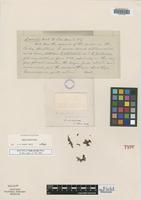
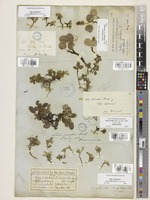
Isotype of Salix nivalis Hook. [family SALICACEAE]
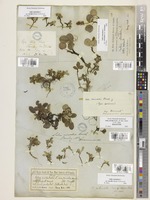
Salix nivalis Hook. [family SALICACEAE]
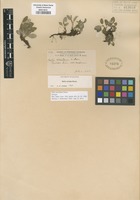
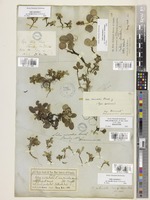
Isotype of Salix aemulans Seem. [family SALICACEAE]
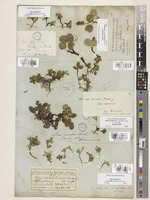
Salix nivalis Hook. [family SALICACEAE]
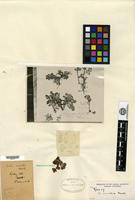
Type of Salix nivalis Hooker [family SALICACEAE]
Previous
Next

Name

Identification
Salix nivalis Hooker [family SALICACEAE ] (stored under name); Verified by Hook., 1838
Related name
  • Salix nivalis
Common name
  • Dwarf snow willow, Flora of North America Vol. 7

Flora

Entry for Salix nivalis Hooker [family SALICACEAE]
Herbarium
Flora of North America (FNA)
Collection
Flora of North America
Resource Type
Reference Sources
Entry From
Flora of North America, Vol 7,
Names
Salix nivalis Hooker [family SALICACEAE], Fl. Bor.-Amer., 2: 152. 1838
Salix nivalis var. saximontana (Rydberg) C. K. Schneider [family SALICACEAE]
Salix reticulata Linnaeus subsp. nivalis (Hooker) Á. Löve, D. Löve & B. M. Kapoor [family SALICACEAE]
Salix reticulata var. saximontana (Rydberg) Kelso [family SALICACEAE]
Treatment Author(s)
George W. Argus
Information
Plants 0.01–0.04 m, (dwarf, forming clonal mats by rhi-zomes). Stems trailing or erect; branches yellow-brown or red-brown, glabrous or pubescent; branchlets yellow-brown or red-brown, glabrous or pilose. Leaves: stipules absent or rudimentary; petiole 1.5–7 mm (sometimes glandular distally or throughout); largest medial blade hypostomatous, (veins impressed-reticulate, 2 pairs of secondary veins arising at or close to base, arcing toward apex,), elliptic to broadly elliptic, 6–22 × 4–15 mm, 1.1–2.8 times as long as wide, base convex, rounded, subcordate, or cuneate, margins slightly revolute, entire (glandular-dotted), apex convex, rounded, or retuse, abaxial surface glabrous or with long-silky hairs, adaxial slightly glossy, glabrous; proximal blade margins entire; juvenile blade glabrous. Catkins: staminate 7–19 × 2.5–6 mm, flowering branchlet 0.5–17 mm; pistillate densely to loosely flowered (4–17 flowers), stout, subglobose or globose, 7–21 × 2–9 mm, flowering branchlet 1–10 mm; floral bract tawny or light rose, 0.8–1.8 mm, apex rounded, entire, abaxially glabrous. Staminate flowers: abaxial nectary 0.5–1.3 mm, adaxial nectary narrowly oblong, oblong, or square, 0.5–1.2 mm, nectaries connate and cup-shaped; filaments distinct, glabrous or hairy basally; anthers ellipsoid or shortly cylindrical, 0.4–0.6 mm. Pistillate flowers: abaxial nectary (0–)0.2–0.5 mm, adaxial nectary oblong, 0.2–1 mm, longer than stipe, nectaries distinct or connate and shallowly cup-shaped; stipe 0–0.8 mm; ovary obturbinate, short-silky, hairs flattened, beak abruptly tapering to styles; ovules 8–10 per ovary; styles distinct to connate 1/2 their lengths, 0.2–0.4 mm; stigmas flat, abaxially non-papillate with rounded tip, 0.2–0.26–0.36 mm. Capsules 3–4 mm. 2n = 38.
Phenology
jun-aug (summer)
Altitude range
1900–4000 m;
Distribution
USA Calif.USA Colo.USA IdahoUSA Mont.USA Nev.USA N.Mex.USA Oreg.USA UtahUSA Wash.USA Wyo.Canada Alta.Canada B.C.
Discussion
Because geographic overlap is small and evidence of intergradation is tenuous, Salix nivalis is best treated as a species separate from S. reticulata; S. nivalis was previously treated as a subspecies of S. reticulata (G. W. Argus 1986b, 1991).

Related Materials

  • Terms and Conditions
  • Privacy Policy
  • Cookie Policy
  • Cookie Settings
  • Accessibility
  • Help
  • Contact Us
  • Facebook
  • Twitter
ITHAKA

JSTOR is part of ITHAKA, a not-for-profit organization helping the academic community use digital technologies to preserve the scholarly record and to advance research and teaching in sustainable ways.

©2000-2026 ITHAKA. All Rights Reserved. JSTOR®, the JSTOR logo, JPASS®, Aluka®, and ITHAKA® are registered trademarks of ITHAKA.

╳