JSTOR Global Plants Home
  • Home
  • Browse
  • About
  • Access
  • Account
    • Saved Items
    • Profile
  • Log in

Global Plants

Skip to Main Content
  • JSTOR Global Plants Home
  • Global Plants

    • Browse
    • About
    • Access
    • Account
      • Saved Items
      • Profile
Log in
  • Browse
  • About
  • Access
  • Account
    • Saved Items
    • Profile
Advanced Search

Compilation
Salix hookeriana

9 Images see all

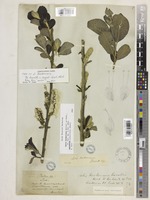
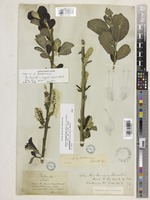
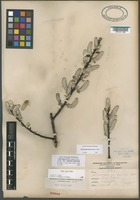
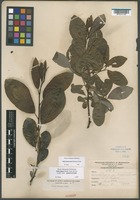
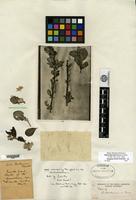
Lectotype of Salix hookeriana Barratt ex Hook. [family SALICACEAE]
Salix hookeriana Barratt ex Hook. [family SALICACEAE]
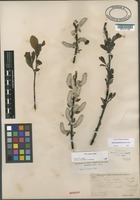
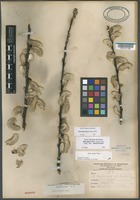
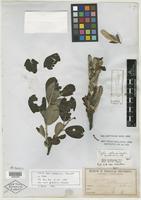
Isosyntype of Salix piperi Bebb [family SALICACEAE]
Type of Salix hookeriana Barratt ex Hook. [family SALICACEAE]
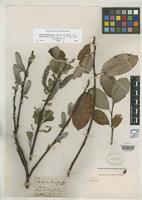
Lectotype of Salix hookeriana var. laurifolia Henry, J.K. 1915 [family SALICACEAE]
Isosyntype of Salix piperi Bebb [family SALICACEAE]
Lectotype of Salix hookeriana Barratt [family SALICACEAE]
Previous
Next

Name

Identification
Salix hookeriana Barratt [family SALICACEAE ] (stored under name); Verified by Barratt, 1838
Related name
  • Salix hookeriana
Common name
  • Coastal or Hooker’s willow, Flora of North America Vol. 7

Flora

Entry for Salix hookeriana Barratt ex Hooker [family SALICACEAE]
Herbarium
Flora of North America (FNA)
Collection
Flora of North America
Resource Type
Reference Sources
Entry From
Flora of North America, Vol 7,
Names
Salix hookeriana Barratt ex Hooker [family SALICACEAE], Fl. Bor.-Amer., 2: 145, plate 180. 1838
Salix amplifolia Coville [family SALICACEAE]
Salix hookeriana var. laurifolia J. K. Henry [family SALICACEAE]
Salix hookeriana var. tomentosa J. K. Henry ex C. K. Schneider [family SALICACEAE]
Salix piperi Bebb [family SALICACEAE]
Treatment Author(s)
George W. Argus
Information
Shrubs or trees, (0.6–)2–8 m, (sometimes forming clones by layering or stem fragmentation). Stems: branches (highly brittle at base), yellow-brown, gray-brown, red-brown, or violet, not or weakly glaucous, glabrous, tomentose, woolly, or sparsely villous to glabrescent (nodes hairy); branchlets gray-brown, red-brown, or yellow-brown (sometimes color obscured by hairs), glabrous, pilose, moderately densely villous, tomentose, or woolly, scale with inner membranaceous layer free, not separating from outer layer). Leaves: stipules rudimentary or absent on early ones, foliaceous (early deciduous) or rudimentary (sometimes obscured) on late ones, (2.5–7.8–18 mm), apex acuminate, acute, or rounded; petiole convex to flat, or shallowly grooved adaxially, 4–29 mm, villous, woolly, pilose, or tomentose adaxially; largest medial blade (sometimes hemiamphistomatous), narrowly to broadly elliptic, oblanceolate, or obovate to broadly obovate, 36–123 × 18–63 mm, 1.5–4.2 times as long as wide, base convex, rounded, subcordate, cordate, or cuneate, margins slightly revolute, crenate, serrate, shallowly serrulate, sinuate, or entire, apex acuminate, acute, or convex, abaxial surface glaucous, pilose, moderately densely tomentose, villous, or woolly, midrib hairy, hairs (white, sometimes also ferruginous), wavy or straight, adaxial highly or slightly glossy, glabrous, pilose, villous, or moderately densely tomentose, midrib and veins hairy (hairs white, sometimes also ferruginous); proximal blade margins entire or shallowly serrulate; juvenile blade yellowish, reddish green (sometimes obscured by hairs), pilose or sparsely to densely long-silky, tomentose, woolly, or villous abaxially, hairs white, sometimes also ferruginous, or yellowish. Catkins flowering before or as leaves emerge; staminate slender or stout, 26–73 × 10–27 mm, flowering branchlet 0–10 mm; pistillate densely flowered, slender or stout, 36–92(–140 in fruit) × 10–25 mm, flowering branchlet 0–20 mm; floral bract brown, black, or bicolor, 1.1–3.6 mm, apex convex, rounded, or acute, abaxially hairy, hairs straight or wavy. Staminate flowers: adaxial nectary oblong, ovate, or narrowly oblong, 0.5–1.4 mm; filaments distinct or slightly basally connate, glabrous or hairy on proximal 1/2 or basally; anthers yellow, cylindrical or ellipsoid, (0.5–)0.7–1 mm. Pistillate flowers: adaxial nectary narrowly oblong, oblong, or square, 0.5–1.4 mm, shorter than stipe; stipe 0.5–1.8(–2.8) mm; ovary obclavate or pyriform, glabrous, tomentose, villous, or woolly (hairs wavy), beak sometimes abruptly tapering to styles; ovules 12–20 per ovary; styles 0.6–2.3 mm; stigmas broadly to slenderly cylindrical, 0.3–0.8 mm. Capsules 5–10 mm. 2n = 114.
Phenology
apr-may (spring), jun (summer)
Altitude range
0–1800 m;
Distribution
USA AlaskaUSA Calif.USA Oreg.USA Wash.Canada B.C.
Discussion
Salix hookeriana is primarily a coastal species occurring from northern California northward to Oregon, Washington, and southern Vancouver Island, with disjunct populations on Queen Charlotte Islands, British Columbia, and northward to Yakatut Bay, Turnagain Arm, and Kodiak, Alaska. It was treated by G. W. Argus (1973) and R. D. Dorn (2000) in a broad sense because of an absence of strong distinguishing characters and intergradation in characters that could be used to divide it. It is highly variable and three very similar taxa have been named: S. amplifolia, S. hookeriana (including vars. tomentosa and laurifolia), and S. piperi. Although extremes of these taxa sometimes are recognizable, the intergradation displayed is so great that even attempts to recognize them as varieties are thwarted. The amplifolia variant in Alaska is characterized by having only white leaf hairs, hairy ovaries, no stipules, and catkins often borne on distinct flowering branchlets, but variation can occur within the same population, and typical S. hookeriana on Vancouver Island sometimes displays the same characteristics. The piperi variant, an inland population in western Oregon and Washington, is usually recognized by local botanists as different from coastal populations. It is characterized by leaves and branchlets soon becoming glabrate and stipules prominent. These characteristics, however, sometimes appear in northern California coastal populations, and some inland populations in Oregon include very hairy individuals that are indistinguishable from coastal variants of S. hookeriana. In general, very hairy populations of S. hookeriana are probably an adaptation to marine coastal environments, but some variation may be due to hybridization and introgression with S. scouleriana. Inland populations suggest the influence of S. lasiolepis. Two hexaploid chromosome numbers reported for S. hookeriana from Vancouver Island (R. L. Taylor and S. Taylor 1977) and Queen Charlotte Islands (R. L. Taylor and G. A. Mulligan 1968), British Columbia, indicate that hybridization has played a role in the evolution of this complex. It is possible that each variant of S. hookeriana has had a different, possibly even recurrent, polyploid origin. Further cytological and genetic study is indicated.
The following comparisons may help to distinguish Salix hookeriana, S. lasiolepis, and S. scouleriana.
Vegetative specimens of Salix hookeriana can be distinguished from S. lasiolepis by having floral buds ellipsoid, beaks distinctly long-tapered, densely long-hairy (villous), red-brown, blades usually pilose, villous, or woolly on abaxial surfaces, usually 18–63 mm wide, and 1.5–4.2 times as long as wide; S. lasiolepis has floral buds ovoid, beaks inconspicuous and blunt, sparsely to moderately densely short-hairy (velvety), yellowish to red-brown, blades usually tomentose on abaxial surfaces, usually 6–32 mm wide, and 3.2–9.6 times as long as wide.
Salix hookeriana is distinguished from S. scouleriana by having branchlets with spreading hairs (woolly or tomentose to glabrate), petioles usually pilose to tomentose, blades typically narrowly elliptic but variable, stigmas 0.3–0.74, short in relation to styles (0.6–2.3 mm), and pistillate nectaries 0.5–1.4 mm, shorter or longer than stipes; S. scouleriana has branchlets usually with short, erect hairs (velutinous), sometimes spreading (villous or tomentose), petioles velvety or villous adaxially, blades typically oblanceolate but variable, stigmas 0.4–1.04 mm, long in relation to styles (0.2–0.6 mm), and pistillate nectaries 0.2–0.8 mm, shorter than stipes.
Hybrids:
Salix hookeriana forms natural hybrids with S. barclayi and S. scouleriana. Variation in some S. hookeriana populations suggests hybridization with S. lasiolepis but no positive identifications have been made. R. D. Dorn (2000) doubted that hybridization in California between these species with different chromosome numbers was possible, but species with different chromosome numbers do hybridize [for example, S. athabascensis (4x) × S. pedicellaris (2x)]; synthetic hybridization studies are indicated.
Salix hookeriana × S. scouleriana: Plants from southern British Columbia with leaves similar to S. hookeriana but with prominent stipules, catkins both erect and recurving, and relatively long stigmas were thought by J. K. Henry (1915) to be this hybrid.

Related Materials

  • Terms and Conditions
  • Privacy Policy
  • Cookie Policy
  • Cookie Settings
  • Accessibility
  • Help
  • Contact Us
  • Facebook
  • Twitter
ITHAKA

JSTOR is part of ITHAKA, a not-for-profit organization helping the academic community use digital technologies to preserve the scholarly record and to advance research and teaching in sustainable ways.

©2000-2026 ITHAKA. All Rights Reserved. JSTOR®, the JSTOR logo, JPASS®, Aluka®, and ITHAKA® are registered trademarks of ITHAKA.

╳