JSTOR Global Plants Home
  • Home
  • Browse
  • About
  • Access
  • Account
    • Saved Items
    • Profile
  • Log in

Global Plants

Skip to Main Content
  • JSTOR Global Plants Home
  • Global Plants

    • Browse
    • About
    • Access
    • Account
      • Saved Items
      • Profile
Log in
  • Browse
  • About
  • Access
  • Account
    • Saved Items
    • Profile
Advanced Search

Compilation
Salix atrocinerea

9 Images see all

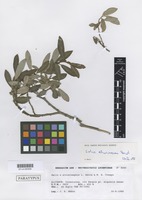
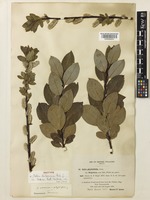
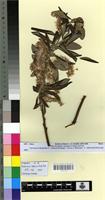
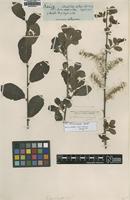
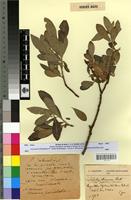
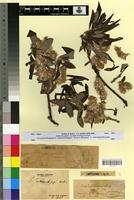
Paratype of Salix x atroeleagnos L. Serra & M.B.Crespo [family SALICACEAE]
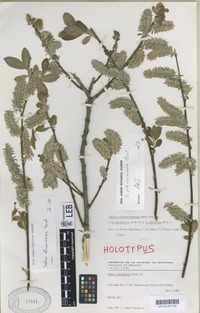
Holotype of Salix x coenocarpetana Rivas Mart. & al. [family SALICACEAE]
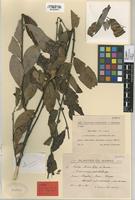
Type of Salix mairei Goerz & Sennen [family SALICACEAE]
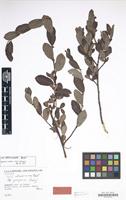
Type of Salix atrocinerea subsp. galegana Rech.f. [family SALICACEAE]
Isotype of Salix hibernica Rech.f. [family SALICACEAE]
Type? of Salix jahandiezii Chass. [family SALICACEAE]
Filed as Salix cinerea L. [family SALICACEAE]
Type of Salix jahandiezii Chass. [family SALICACEAE]
Type? of Salix jahandiezii Chass. [family SALICACEAE]
Previous
Next

Name

Identification
Salix x atroeleagnos L. Serra & M.B.Crespo [family SALICACEAE ] (stored under name); Verified by Not on sheet, Salix atrocinerea Brot. [family SALICACEAE ] Verified by P.Blanco, II-1998,
Related name
  • Salix jahandiezii
  • Salix atrocinerea
  • Salix pedicellata
  • Salix incerta
  • Salix cantabrica
  • Salix x coenocarpetana
  • Salix cinerea
  • Salix x atroeleagnos
  • Salix mairei
Common name
  • Rusty willow, Flora of North America Vol. 7

Flora

Entry for Salix atrocinerea Brotero [family SALICACEAE]
Herbarium
Flora of North America (FNA)
Collection
Flora of North America
Resource Type
Reference Sources
Entry From
Flora of North America, Vol 7,
Names
Salix atrocinerea Brotero [family SALICACEAE], Fl. Lusit., 1: 31. 1804
Salix cinerea Linnaeus var. atrocinerea (Brotero) O. Bolòs & Vigo [family SALICACEAE]
Salix cinerea subsp. oleifolia Macreight [family SALICACEAE]
Past names
atro-cinerea
Treatment Author(s)
George W. Argus
Information
Shrubs, 3–12 m. Stems: branches yellow-brown, gray-brown, or red-brown, not glaucous, pilose or villous to glabrescent, (peeled wood often with many striae, to 45 mm); branchlets gray-brown or yellow-brown, puberulent, pilose, villous, or velvety. Leaves: stipules (sometimes marcescent) foliaceous, apex acute; petiole convex to flat adaxially, 3–15 mm, tomentose, or velvety to glabrescent adaxially; largest medial blade narrowly to broadly elliptic, oblanceolate, obovate, broadly obovate, 29–105 × 14–52 mm, 1.8–4.3 times as long as wide, base cuneate or convex, margins slightly revolute, entire, crenate, or sinuate, (glands submarginal or epilaminal), apex acute, convex, or acuminate, abaxial surface glaucous, tomentose or coarsely villous to glabrescent, hairs (white, sometimes also ferruginous), erect, spreading, or appressed, wavy or curved, adaxial dull or slightly glossy, pubescent or pilose, (hairs white, sometimes also ferruginous); proximal blade margins entire; juvenile blade yellowish green or reddish, glabrous, tomentose, or long-silky abaxially, hairs white, sometimes also ferruginous. Catkins flowering before leaves emerge; staminate stout, 11–16 mm, flowering branchlet 0–5 mm; pistillate densely to loosely flowered, stout, 11–18 mm, flowering branchlet 0–3 mm; floral bract brown, black, or bicolor, 1–3 mm, apex acute, convex, or rounded, abaxially hairy, hairs straight or wavy. Staminate flowers: adaxial nectary narrowly oblong, oblong, or ovate, 0.4–0.9 mm; filaments distinct, glabrous or hairy on proximal 1/2 or basally; anthers yellow, shortly cylindrical or ovoid, 0.6–1 mm. Pistillate flowers: adaxial nectary oblong, square, or obovate, 0.4–0.9 mm, shorter than stipe; stipe 1.2–2.7 mm; ovary pyriform or obclavate, tomentose or short-silky, beak slightly bulged below styles; ovules 12 per ovary; styles 0.2–0.5 mm; stigmas broadly cylindrical, 0.23–0.43–0.63 mm. Capsules 5–7 mm. 2n = 76.
Phenology
mar-may (spring)
Altitude range
0–700 m;
Distribution
Europe.USA Conn.USA MaineUSA Mass.USA Mo.USA Nebr.USA N.J.USA N.Y.USA N.C.USA Pa.USA R.I.USA Wis.Canada Ont.
Discussion
Hairs on abaxial leaf surfaces of Salix atrocinerea often are spreading to erect, and curly as in S. humilis. Usually, S. atrocinerea can be recognized by its closely spaced parallel tertiary venation. See 76. S. discolor and 81. S. cinerea for further comparative descriptions.
Native/Introduced
introduced;

Related Materials

  • Terms and Conditions
  • Privacy Policy
  • Cookie Policy
  • Cookie Settings
  • Accessibility
  • Help
  • Contact Us
  • Facebook
  • Twitter
ITHAKA

JSTOR is part of ITHAKA, a not-for-profit organization helping the academic community use digital technologies to preserve the scholarly record and to advance research and teaching in sustainable ways.

©2000-2026 ITHAKA. All Rights Reserved. JSTOR®, the JSTOR logo, JPASS®, Aluka®, and ITHAKA® are registered trademarks of ITHAKA.

╳