JSTOR Global Plants Home
  • Home
  • Browse
  • About
  • Access
  • Account
    • Saved Items
    • Profile
  • Log in

Global Plants

Skip to Main Content
  • JSTOR Global Plants Home
  • Global Plants

    • Browse
    • About
    • Access
    • Account
      • Saved Items
      • Profile
Log in
  • Browse
  • About
  • Access
  • Account
    • Saved Items
    • Profile
Advanced Search

Compilation
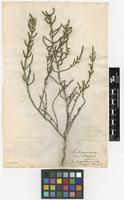
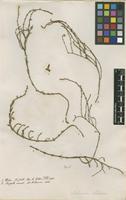
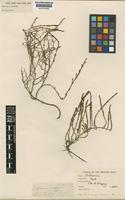
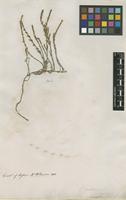
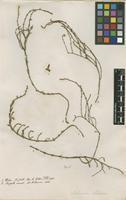
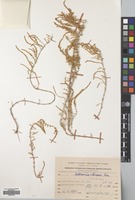
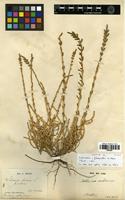
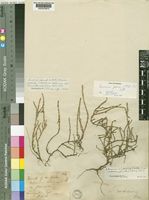
Salicornia radicans

8 Images see all

Filed as Salicornia europaea L. [family CHENOPODIACEAE]
Filed as Salicornia radicans Sm. [family AMARANTHACEAE]
Arthrocnemum perenne (Mill.) Moss radicans [family CHENOPODIACEAE]
Filed as Salicornia radicans Sm. [family AMARANTHACEAE]
Filed as Sarcocornia perennis (Mill.) A.J.Scott [family AMARANTHACEAE]
Syntype? of Salicornia x flahaultii A. Chev. [family CHENOPODIACEAE]
Sarcocornia perennis (Mill.) A.J.Scott [family CHENOPODIACEAE]
Previous
Next

Name

Identification
Salicornia perennis unrecorded [family CHENOPODIACEAE ] Arthrocnemum perenne Miller [family CHENOPODIACEAE ] Sarcocornia perennis (Mill.) A.J.Scott [family CHENOPODIACEAE ] (stored under name); Verified by Brenan, Salicornia radicans unrecorded [family CHENOPODIACEAE ] Salicornia radicans Sm. [family CHENOPODIACEAE ]
Related name
  • Sarcocornia perennis
  • Arthrocnemum perenne
  • Salicornia x flahaultii
  • Salicornia fruticosa
  • Salicornia radicans
  • Salicornia herbacea
  • Salicornia europaea
  • Salicornia indet.
  • Salicornia perennis

Flora

Entry for Sarcocornia perennis Mill. A.J. Scott [family CHENOPODIACEAE]
Herbarium
Royal Botanic Gardens, Kew (K)
Collection
Flora Zambesiaca
Resource Type
Reference Sources
Entry From
FZ, Vol 9, Part 1, page 133, (1988) Author: J. P. M. Brenan
Names
Sarcocornia perennis Mill. A.J. Scott [family CHENOPODIACEAE], in Bot. Journ. Linn. Soc. 75: 367 (1977). Type from England.
Salicornia perennis Mill. [family CHENOPODIACEAE], Gard., ed. 8 (1768).
Arthrocnemum perenne Mill. Moss ex Fourcade [family CHENOPODIACEAE], in Mem. Bot. Surv. S. Afr. 20: 20 (1941).—Moss in Journ. S. Afr. Bot. 14: 40 (1948); in Journ. S. Afr. Bot. 20: 11 (1954).
Arthrocnemum perenne var. radicans Sm. Moss [family CHENOPODIACEAE], in Journ. S. Afr. Bot. 14: 40 (1948); in Journ. S. Afr. Bot. 20: 11 (1954).—Macnae & Kalk, Nat. Hist. Inhaca I., Moçamb. 13, 119: 144 (1958).
Salicornia radicans Sm. [family CHENOPODIACEAE], Engl. Bot. t. 1691 (1807). Type from England.
Information
Prostrate or decumbent herb forming mats 10–25 cm. high. Sterile segments 3–5 mm. in diam., “dull green to shiny green, fading to yellow or reddish-brown” (Tölken, l.c. supra.) Spikes 15–35 (50) mm. long, tapering in flower, cylindrical in fruit. Flowers 3 in a cluster, rarely 4 or 5, not hidden by bract below. Perianth truncate, with a lateral shield in whose centre the perianth opens. Seeds brown; testa clothed with minute hairs recurved or coiled at apex.
Habitat
Muddy salt-marshes by the sea.
Range
Europe, NW. Africa and from Mozambique to S. Africa
Distribution
Mozambique Z mouth of R. Luabo, fl. 16.v.1858, Kirk 16 (K).
Notes
Unfortunately the material of S. perennis from our area is old, limited and inadequate. In particular it is only in flower and it is thus not possible to verify the important character of hairs on the surface of the testa. Kirk 16 is clearly different from S. decumbens by the habit and 3-flowered clusters, and from S. natalensis in the straight upright lateral branches. More material is much needed. Kirk 16 is (apparently) typical S. perennis. However, fruiting material may show that it cannot be maintained separate from S. mossambicensis. For comments on hybridisation with S. decumbens, see note under that species (below).

Related Materials

  • Terms and Conditions
  • Privacy Policy
  • Cookie Policy
  • Cookie Settings
  • Accessibility
  • Help
  • Contact Us
  • Facebook
  • Twitter
ITHAKA

JSTOR is part of ITHAKA, a not-for-profit organization helping the academic community use digital technologies to preserve the scholarly record and to advance research and teaching in sustainable ways.

©2000-2026 ITHAKA. All Rights Reserved. JSTOR®, the JSTOR logo, JPASS®, Aluka®, and ITHAKA® are registered trademarks of ITHAKA.

╳