JSTOR Global Plants Home
  • Home
  • Browse
  • About
  • Access
  • Account
    • Saved Items
    • Profile
  • Log in

Global Plants

Skip to Main Content
  • JSTOR Global Plants Home
  • Global Plants

    • Browse
    • About
    • Access
    • Account
      • Saved Items
      • Profile
Log in
  • Browse
  • About
  • Access
  • Account
    • Saved Items
    • Profile
Advanced Search

Compilation
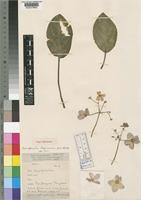
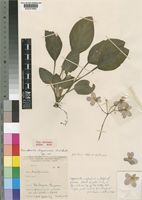
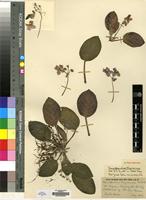
Saintpaulia tongwensis

3 Images see all

Type of Saintpaulia tongwensis B.L.Burtt [family GESNERIACEAE]
Isotype of Saintpaulia tongwensis B.L.Burtt [family GESNERIACEAE]
Previous
Next

Name

Identification
Isotype of Saintpaulia tongwensis B.L.Burtt [family GESNERIACEAE ] Verified by Not on sheet, Saintpaulia ionantha H. Wendl. [family GESNERIACEAE ] (stored under name); Verified by Darbyshire, I., 2006
Related name
  • Saintpaulia ionantha
  • Saintpaulia tongwensis

Flora

Entry for Saintpaulia ionantha var. ionantha [family GESNERIACEAE]
Herbarium
Royal Botanic Gardens, Kew (K)
Collection
Flora of Tropical East Africa
Resource Type
Reference Sources
Entry From
Flora of Tropical East Africa, page 1, (2006) Author: IAIN DARBYSHIRE
Names
Saintpaulia ionantha var. ionantha [family GESNERIACEAE]
Petrocosmea ionantha (H.Wendl.) Rodigas [family GESNERIACEAE], in Ill. Hort. 42: 108 (1895)
Saintpaulia kewensis C.B. Clarke [family GESNERIACEAE], in F.T.A. 4(2): 501 (1906). Type: Tanzania, coll. von Saint-Paul-Illaire, cult in R.B.G. Kew (K!, holo.)
Saintpaulia tongwensis B.L. Burtt [family GESNERIACEAE], in Gard. Chron., ser. 3, 122: 23 (1947) & in Bot. Mag. 165: t. 11 (1948) & in Notes Roy. Bot. Gard. Edinb. 22: 560 (1958); Iversen in Symb. Bot. Upsal. 28: 243 (1988); G.P. Clarke in Bot. Mag. 15: 66 (1998); Watkins et al., Wild Afr. Violet: 46 (2002). Type: Tanzania, Pangani District, Tongwe Mt, coll. Moreau, cult. in R.B.G. Kew (K!, holo.) syn. nov.
Saintpaulia intermedia [family GESNERIACEAE], [ sensu D.R.Johansson in Biol. Cons. 14: 54–57 (1978) quoad spec. ex Sigi Falls]
Saintpaulia “white ionantha” [family GESNERIACEAE], [ sensu J. Smith in Gloxinian 48(2): 44 (1998)]
Saintpaulia sp. nov. “Sigi Falls” [family GESNERIACEAE], [ sensu Eastwood et al. in Bot. Mag. 15: 59 (1998); S. “Sigi Falls” sensu Watkins et al., Wild Afr. Violet: 51 (2002); S. sp. nov. “Sigi Falls” sensu Schulman & Kolehmainen in Scripta Bot. Belg. 29: 168 (2004)]
Saintpaulia sp. nov. “Pangani Falls” [family GESNERIACEAE], [ sensu Schulman & Kolehmainen in Scripta Bot. Belg. 29: 168 (2004)]
Information
Leafmargin shallowly and often inconspicuously (crenate-)serrate, upper surface ± densely pilose. Petiole, peduncle and pedicel hairs spreading.
Range
DISTR. T 3, 6, 7 restricted to the coastal lowlands and lower Udzungwa Mts
Altitude range
0–750 m
Distribution
TANZANIA Tanga District Amboni Caves, Jan. 1992, Raistrick SP/8!TANZANIA Handeni District Gendagenda North Forest, Jan. 1992, Raistrick SP/9!TANZANIA Rufiji District Kiwengoma Forest, Nov. 1989, Frontier-Tanzania 252!
Notes
USES. This taxon forms the basis of the cultivated “African Violet” industry. CONSERVATION Under the broadened circumscription of this taxon presented here, it has been collected from at least 12 sites over a broad distribution. However, the lowland sites around Tanga are known to be severely threatened by habitat degradation and it is likely that several have been lost or will be so in the near future. Populations from the Udzungwa Mts appear less threatened whilst the status of the Kiwengoma population is unconfirmed. This taxon (and the species as a whole) is provisionally assessed as Vulnerable (VU A2c) as it is estimated that more than 30% of the population has been lost in the recent past and that population decline is continuing. S. tongwensis was separated from S. ionantha on the basis of having longer fruits, paler flowers and longer, elliptic leaves with a more acute apex. Fruit length however varies considerably within this taxon and, although plants from the Tanga region assigned to S. ionantha often display the most broadly ovoid fruits, there is considerable overlap. The overall range in length:width ratio of fruits from plants assigned to S. tongwensis (2.4–4.5(–6):1) is barely different to that of those assigned to S. ionantha (1.8–3.5(–5):1). Although most commonly blue-purple, S. ionantha is known to display significant variability in flower colour (see for example Burtt, 1958: 560), including white-flowered variants. The pale violet flowers of S. tongwensis clearly fall within this range. Leaf shape is initially the most striking difference between the two taxa, largely because the most well known populations of S. ionantha from the Tanga region usually have broadly ovate leaves. However, plants from further south in the Kiwengoma Forest, otherwise largely identical to the Tanga material, have more elongate leaves approaching S. tongwensis. Plants from Sigi Falls near Tanga have elongate, elliptic leaves with notably paler lateral nerves above. The flowers are rather deep blue-purple. This population was assigned to S. intermedia by Johannson, largely on account of the shortly caulescent habit of the wild plants. However plants from this population cultivated at Kew are rosulate in habit, thus the habit of the wild plants is likely a phenotypic character. With the elongate leaves and blue-purple flowers, it appears to be intermediate between S. ionantha and S. tongwensis ;all three entities are here considered to belong to a single variable taxon. Plants from the Udzungwa Mts (T7), at or near Sanje Falls, growing in lowland rainforest appear very close to this taxon. Photographs of fruiting material recently collected there (W.R.Q. Luke, pers. comm.) clearly place it within the subsp. ionantha - subsp. pendula group, the fruits being squat and ovoid. The first collection from this region (Sanje Falls, Polhill & Lovett 5130!) has spreading hairs on the leaves and petioles and is largely inseparable from subsp. ionantha. However, a later collection (Sanje–Mwanihana route, P.A. & W.R.Q. Luke 5004!) has ascending hairs on the petiole, thus likely having similarly angled hairs on the upper leaf surface. This would tend to place that specimen closer to subsp. pendula, yet the obscurely serrate margin and obtuse apex to the leaves are consistent with subsp. ionantha. This material is therefore provisionally placed in the latter but requires further investigation. The cultivated material at R.B.G. Kew labelled as originating from the Polhill & Lovett collection (accession number 1983-8132) is clearly different to the herbarium specimen of the wild material and is believed to have been mislabelled (it is referable to subsp. pendula).

Related Materials

  • Terms and Conditions
  • Privacy Policy
  • Cookie Policy
  • Cookie Settings
  • Accessibility
  • Help
  • Contact Us
  • Facebook
  • Twitter
ITHAKA

JSTOR is part of ITHAKA, a not-for-profit organization helping the academic community use digital technologies to preserve the scholarly record and to advance research and teaching in sustainable ways.

©2000-2026 ITHAKA. All Rights Reserved. JSTOR®, the JSTOR logo, JPASS®, Aluka®, and ITHAKA® are registered trademarks of ITHAKA.

╳