JSTOR Global Plants Home
  • Home
  • Browse
  • About
  • Access
  • Account
    • Saved Items
    • Profile
  • Log in

Global Plants

Skip to Main Content
  • JSTOR Global Plants Home
  • Global Plants

    • Browse
    • About
    • Access
    • Account
      • Saved Items
      • Profile
Log in
  • Browse
  • About
  • Access
  • Account
    • Saved Items
    • Profile
Advanced Search

Compilation
Saintpaulia shumensis

5 Images see all

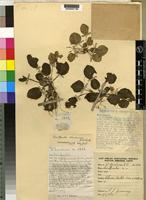
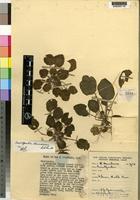
Type of Saintpaulia shumensis B.L.Burtt [family GESNERIACEAE]
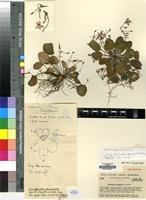
Isotype of Saintpaulia shumensis B.L.Burtt [family GESNERIACEAE]
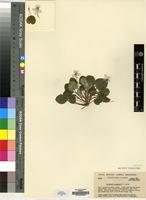
Saintpaulia shumensis B.L.Burtt [family GESNERIACEAE]
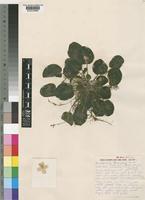
Type of Saintpaulia shumensis B.L.Burtt [family GESNERIACEAE]
Previous
Next

Name

Identification
Isotype of Saintpaulia shumensis B.L.Burtt [family GESNERIACEAE ] (stored under name); Verified by Not on sheet,
Related name
  • Saintpaulia shumensis

Flora

Entry for Saintpaulia shumensis B.L. Burtt [family GESNERIACEAE]
Herbarium
Royal Botanic Gardens, Kew (K)
Collection
Flora of Tropical East Africa
Resource Type
Reference Sources
Entry From
Flora of Tropical East Africa, page 1, (2006) Author: IAIN DARBYSHIRE
Names
Saintpaulia shumensis B.L. Burtt [family GESNERIACEAE], in Notes Roy. Bot. Gard. Edinb. 21: 238 (1955) & in Notes Roy. Bot. Gard. Edinb. 22: 558 (1958); Iversen in Symb. Bot. Upsal. 28: 241 (1988); Watkins et al., Wild Afr. Violet: 44 (2002). Type: Tanzania, Lushoto District, W Usambara Mts, Shume, World’s View, coll. Greenway 7934, cult. in R.B.G. Kew (K, holo., missing; E!, iso.)
Saintpaulia pusilla [family GESNERIACEAE], [ sensu Lindqvist & Albert in K.B. 54: 371 (1999), pro parte quoad Pócs et al. 87015/F, non Engl.]
Information
Compact rosulate herb. Stem stout, to 7 cm long but often much shorter and sometimes largely absent. Leaves dark green and shining above, pale green to whitish or sometimes purplish beneath; blade broadly ovate to orbicular, 2–5 cm long, 1.5–4.5 cm wide, base rounded to cordate, margin crenate(-serrate), apex rounded to broadly obtuse, upper surface with rather sparse long erect or arched hairs, the margin with more dense mixed long and short hairs; lateral nerves (4–)5–6 pairs, conspicuous beneath; petiole 1–7.5(–11) cm long, pilose and with shorter subappressed hairs. Inflorescences 1–4(–6)-flowered; peduncles 1–6 cm long; pedicels 7–19 mm long, both spreading- to antrorse-pilose and with numerous shorter hairs, these spreading to subappressed; bracts linear, 1–5 mm long, pilose. Calyx lobes lanceolate, 2–4.5 mm long in flower, extending to 2.5–6 mm in fruit, outer surface with ascending hairs of variable length. Corolla pale lilac to almost white with a darker purple spot towards the base of the upper lip or blue-purple throughout, shortly pubescent and with occasional longer hairs on the limb outside, with short glandular and/or eglandular hairs along the margin of the lobes; tube 1.5–3 mm long; limb (8–)15–25 mm long; upper lip (3.5–)5.5–9.5 mm long, lobes (rounded-)elliptic or somewhat obovate, (2.5–)4.5–7.5 mm long, (2–)4–7.5 mm wide; lower lip (4.5–)9–14.5 mm long, lobes (oblong-)elliptic or somewhat obovate, (3.5–)5.5–10.5 mm long, (3–)4.5–9.5 mm wide. Filaments slender, (2–)3–4.5 mm long; anther thecae 1–1.5 mm long; staminodes 3, minute. Ovary conical, 1.5–3 mm long, densely appressed-pubescent, narrowed into the style, 2.5–4.5 mm long; stigma ± bilobed, (0.3–)0.6–1.3 mm diameter, papillose. Capsule conical to cylindric, 7–16(–20) mm long, 1.2–2.5(–3.5) mm diameter, sometimes asymmetric, apex tapered, surface shortly pubescent, style ± persistent. Seeds 0.45–0.5 mm long, verruculose with longitudinal ridges. Fig. 7: 14 (leaf indumentum), p. 58.
Range
DISTR. T 3, 6 restricted to the Usambara and Nguru Mts
Altitude range
(?1300–)1500–2000 m
Distribution
TANZANIA Lushoto District Shume, World’s View, Jan. 1953, Eggeling 6488! & Sungwi Forest Reserve, Aug. 1955, Semsei 2200!TANZANIA Morogoro District Nguru Mts, E edge of Mafulumla, W of Kombola village, Pócs et al. 87015/F!
Notes
USES. Cultivated as an ornamental. CONSERVATION In the W Usambara Mts this species was recorded as “very common” at Sungwi (Semsei 2200) in the 1950s but its current status is unknown there. The type locality, World’s View, Shume, has experienced significant loss of forest through conversion to agriculture and settlement, thus this population is likely to be severely depleted. Its status in the Nguru Mts is uncertain, but it is likely to experience only limited disturbance there due to its preference for high elevations. Its presence in the E Usambara Mts remains unconfirmed (see ). This species is thus assessed as Data Deficient (DD) at present but is likely to qualify as Vulnerable. Dr. Burtt (1958) first recognised the possible occurrence of this species in the Nguru Mts, based upon a specimen from Kinbola (Schlieben 4112, B†) but suggested that the collector’s failure to the flowers as bicoloured negated against their affinity. However, uniformly coloured flowers have since been recorded in the Usambara populations of S. shumensis (Sungwi Forest Reserve, Semsei 2200!). Several additional specimens have become available from the Nguru Mts, but unfortunately mature flowers are absent. Several differences occur in the Nguru material, including the leaves sometimes being purplish beneath, not green-white, the shorter calyx lobes and filaments and the less conspicuously bilobed stigma. This latter character is a particularly notable feature of the Shume plants, although its taxonomic significance is currently unclear. Pending further analysis of living material, the Usambara and Nguru plants are here treated as conspecific. A fruiting specimen from the E Usambara Mts, labelled only “Tanga” (Skarpe 55!) is almost certainly of this species; further details on the collecting locality of this population are required. It is perhaps from the Nilo Peak, Lutindi Forest Reserve, where S. shumensis has been recorded from a sterile specimen (Iversen et al. 87471!). The leaves of the E Usambara material (particularly in the latter collection) are however rather atypical in being very shallowly crenate or subentire when mature. Flowering material is therefore required to confirm the placement of these populations within S. shumensis. S. shumensis appears rather intermediate between the smaller Uluguru-Nguru Saintpaulia taxa, most notably S. pusilla (small plants from the Ngurus often mistaken for that taxon) and the S. ionantha complex (S. ionantha subsp. velutina being particularly close). In view of the postulated high elevation ancestry and evolution of the genus (Lindqvist & Albert in Syst. Geogr. Pl. 71: 42–43 (2002)), it is quite possible that this montane species provides the link between the basal taxa and the S. ionantha complex.

Related Materials

  • Terms and Conditions
  • Privacy Policy
  • Cookie Policy
  • Cookie Settings
  • Accessibility
  • Help
  • Contact Us
  • Facebook
  • Twitter
ITHAKA

JSTOR is part of ITHAKA, a not-for-profit organization helping the academic community use digital technologies to preserve the scholarly record and to advance research and teaching in sustainable ways.

©2000-2026 ITHAKA. All Rights Reserved. JSTOR®, the JSTOR logo, JPASS®, Aluka®, and ITHAKA® are registered trademarks of ITHAKA.

╳