JSTOR Global Plants Home
  • Home
  • Browse
  • About
  • Access
  • Account
    • Saved Items
    • Profile
  • Log in

Global Plants

Skip to Main Content
  • JSTOR Global Plants Home
  • Global Plants

    • Browse
    • About
    • Access
    • Account
      • Saved Items
      • Profile
Log in
  • Browse
  • About
  • Access
  • Account
    • Saved Items
    • Profile
Advanced Search

Compilation
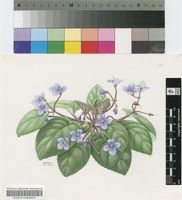
Saintpaulia rupicola

4 Images see all

Saintpaulia rupicola B.L.Burtt
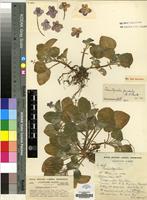
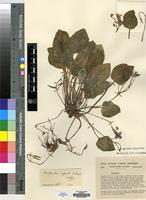
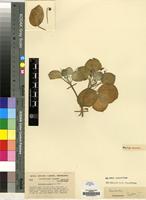
Holotype of Saintpaulia pendula B.L.Burtt [family GESNERIACEAE]
Holotype of Saintpaulia rupicola B.L.Burtt [family GESNERIACEAE]
Holotype of Saintpaulia pendula B.L.Burtt [family GESNERIACEAE]
Previous
Next

Name

Identification
Saintpaulia rupicola B.L.Burtt [family GESNERIACEAE ]
Related name
  • Saintpaulia rupicola

Flora

Entry for Saintpaulia ionantha (B.L.Burtt) I.Darbysh. subsp. rupicola [family GESNERIACEAE]
Herbarium
Royal Botanic Gardens, Kew (K)
Collection
Flora of Tropical East Africa
Resource Type
Reference Sources
Entry From
Flora of Tropical East Africa, page 1, (2006) Author: IAIN DARBYSHIRE
Names
Saintpaulia ionantha (B.L.Burtt) I.Darbysh. subsp. rupicola [family GESNERIACEAE], stat. nov. Type: Kenya, Kilifi District, Kaloleni, road from Mariakani to Kilifi 40 km NW of Mombasa, coll. Bayliss, comm. Punter ref. 8 of Oct. 1958, cult. in R.B.G. Edinb., C.3065 (E!, holo.)
Saintpaulia rupicola B.L.Burtt [family GESNERIACEAE], in Notes Roy. Bot. Gard. Edinb. 25: 193 (1964) & in Fl. Pl. Afr. 43: t. 1720 (1976); Watkins et al., Wild Afr. Violet: 43 (2002)
Saintpaulia sp. nov. [family GESNERIACEAE], [ sensu Macharia et al. in Maesen et al. (eds.), Biodiv. Afr. Pl.: proceedings XIVth AETFAT congress: 329 (1996)]
Saintpaulia “Robertson” [family GESNERIACEAE], [sensu J. Smith in Gloxinian 48(2): 44 (1998)]
Saintpaulia sp. nov. “Kacharoroni” [family GESNERIACEAE], [ sensu Eastwood et al. in Bot. Mag. 15: 56, 59 (1998); S. “Kacharoroni” sensu Lindqvist & Albert in K.B. 54: 366, 369 & 373 (1999) & in Syst. Geogr. Pl. 71: 39–41 (2001); S. “Kacharoni” sensu Watkins et al., Wild Afr. Violet: 48 (2002); S. sp. nov. “Kacharoni” sensu Schulman & Kolehmainen in Scripta Bot. Belg. 29: 168 (2004)]
Saintpaulia sp. nov. “Mwachi” [family GESNERIACEAE], [ sensu Eastwood et al. in Bot. Mag. 15: 59 (1998); S. “Mwache” sensu Lindqvist & Albert in K.B. 54: 366, 369 & 373 (1999) & in Syst. Geogr. Pl. 71: 40 (2001); S. “Mwachi” sensu Watkins et al., Wild Afr. Violet: 50 (2002); S. sp. nov. “Mwachi” sensu Schulman & Kolehmainen in Scripta Bot. Belg. 29: 168 (2004)]
Information
Plants rosulate, fleshy throughout. Leaves often held partially erect particularly towards the centre of the rosette, pale green to whitish beneath; blade ovate or more rarely elliptic, 3.5–12.5 cm long, margin shallowly to coarsely crenate-serrate, apex obtuse to acute, upper surface with (sub-)erect hairs of equal length, the density and length varying between specimens. Petioles, peduncles and pedicels with (sub-)spreading hairs, the length varying between specimens. Corolla pale blue to mauve, margin with predominantly glandular hairs. Capsule (12.5–)16–30 mm long, 1.5–3(–4) mm diameter.
Range
DISTR. K 7 not known elsewhere
Altitude range
50–250 m
Distribution
KENYA Kilifi District Cha Simba, 8 km NE of Kaloleni on Kilifi Road, Feb. 1971, Mabberley 718! & Mwarakaya, 5.3 km S of turnoff on Kilifi-Kaloleni Road, May 1985, Faden & Beentje 85/30! & Kacharoroni gorge, Vitengeni River, Feb. 1988, Robertson & Luke 5126!
Notes
USES. Cultivated as an ornamental, though not as widely as subsp. ionantha. CONSERVATION This subspecies is restricted to a very few sites in coastal Kenya. The Mwachi population is believed to be extinct (S.A. Robertson, pers. comm.) and there has been continued tree cover loss and habitat degradation in the remaining sites (Eastwood et al. in Bot. Mag. 15: 56(1998)). The current populations may not regenerate due to lack of suitable habitat (S. Simiyu, pers. comm.). It is therefore currently considered Endangered (EN B1ab(iii)+2ab(iii)) but may qualify as Critically Endangered under different criteria following more complete assessment of the populations. Subsp. rupicola is unusual in growing (or at least persisting) on rather exposed limestone outcrops where it is likely to experience periodic drought; indeed the plants are often associated with a variety of succulents and other drought-tolerant taxa. Such plants have developed long fleshy petioles, large thick leaves and stout fleshy stems, all of which may be an adaptation to this environment. However, it is notable that cultivated plants derived from these populations retain these characters. Plants collected from deeper shade, at the Mwachi Forest Reserve (Robertson & Luke 6248!) and Sokoke Forest (Campbell ,cult., R.B.G. Kew) have smaller leaves and shorter petioles. Specimens from the isolated population at Kacharoroni gorge have previously been considered a separate species, collectors having pointed principally to the large size of these plants. The more vigorous growth habit is possibly a response to high soil nutrient content due to the abundance of guano from the associated bat colony (S.A. Robertson, ms.). Furthermore, similarly robust plants have been collected from the colony of S. rupicola at Cha Simba to the south (Robertson 5461!). The Kacharoroni plants certainly have longer hairs throughout, a character linking this population with those from the Mwachi and Sokoke forests. These latter colonies have more elliptic leaves than typical in the subspecies. However, these variations in leaf shape and indumentum appear insignificant when compared to the variability recorded within the S. ionantha complex as a whole; they are therefore treated here as a single entity. The plants with a pilose indumentum provide a clear link between subsp. rupicola andsubsp. ionantha var. ionantha. Although they are usually readily separable by the differing capsules (those of the coastal plants in the ionantha complex being much shorter and more ovoid), there is a slight overlap at the extremes of the range in fruit sizes. Plants from the Pangani Falls, Tanga District (Simiyu et al. H56!), appear rather intermediate between the two taxa. Genetic data (e.g. Linqvist & Albert in Syst. Geogr. Pl. 71: 40 (2001)) also indicates that the rupicola group is phylogenetically embedded within the ionantha complex; it is thus reduced to subspecific status here.

Related Materials

  • Terms and Conditions
  • Privacy Policy
  • Cookie Policy
  • Cookie Settings
  • Accessibility
  • Help
  • Contact Us
  • Facebook
  • Twitter
ITHAKA

JSTOR is part of ITHAKA, a not-for-profit organization helping the academic community use digital technologies to preserve the scholarly record and to advance research and teaching in sustainable ways.

©2000-2026 ITHAKA. All Rights Reserved. JSTOR®, the JSTOR logo, JPASS®, Aluka®, and ITHAKA® are registered trademarks of ITHAKA.

╳