JSTOR Global Plants Home
  • Home
  • Browse
  • About
  • Access
  • Account
    • Saved Items
    • Profile
  • Log in

Global Plants

Skip to Main Content
  • JSTOR Global Plants Home
  • Global Plants

    • Browse
    • About
    • Access
    • Account
      • Saved Items
      • Profile
Log in
  • Browse
  • About
  • Access
  • Account
    • Saved Items
    • Profile
Advanced Search

Compilation
Saintpaulia pendula

7 Images see all

Saintpaulia pendula B.L.Burtt [family GESNERIACEAE]
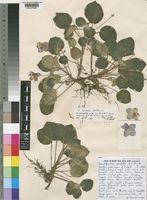
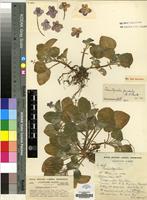
Holotype of Saintpaulia pendula B.L.Burtt [family GESNERIACEAE]
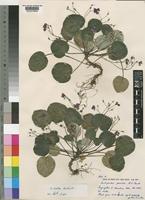
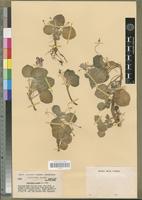
Holotype of Saintpaulia pendula B.L.Burtt var. kizarae B.L.Burtt [family GESNERIACEAE]
Type of Saintpaulia pendula B.L.Burtt var. kizarae B.L.Burtt [family GESNERIACEAE]
Holotype of Saintpaulia pendula B.L.Burtt [family GESNERIACEAE]
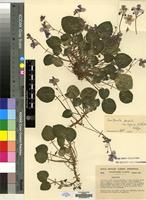
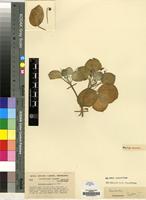
Isotype of Saintpaulia pendula B.L. Burtt [family GESNERIACEAE]
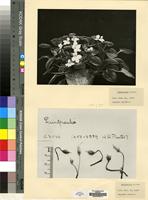
Holotype of Saintpaulia pendula B.L.Burtt [family GESNERIACEAE]
Previous
Next

Name

Identification
Saintpaulia pendula B.L.Burtt [family GESNERIACEAE ] Verified by Not on sheet, Saintpaulia ionantha H. Wendl. [family GESNERIACEAE ] (stored under name); Verified by Darbyshire, I., 2006
Related name
  • Saintpaulia
  • Saintpaulia ionantha
  • Saintpaulia rupicola
  • Saintpaulia nitida
  • Saintpaulia pendula

Flora

Entry for Saintpaulia ionantha (B.L.Burtt) I.Darbysh. subsp. pendula [family GESNERIACEAE]
Herbarium
Royal Botanic Gardens, Kew (K)
Collection
Flora of Tropical East Africa
Resource Type
Reference Sources
Entry From
Flora of Tropical East Africa, page 1, (2006) Author: IAIN DARBYSHIRE
Names
Saintpaulia ionantha (B.L.Burtt) I.Darbysh. subsp. pendula [family GESNERIACEAE], stat. nov. Type: Tanzania, Lushoto District, E Usambara Mts, Mt Mtai, comm. Punter ref. U, cult in R.B.G. Edinb., C.1686 (E!, holo.)
Saintpaulia pendula B.L.Burtt [family GESNERIACEAE], in Notes Roy. Bot Gard. Edinb. 22: 561 (1958); Iversen in Symb. Bot. Upsal. 28: 243 (1988); Watkins et al., Wild Afr. Violet: 40 (2002)
Saintpaulia intermedia B.L.Burtt [family GESNERIACEAE], in Notes Roy. Bot. Gard. Edinb. 25: 193 (1964); Iversen in Symb. Bot. Upsal. 28: 243 (1988); Watkins et al., Wild Afr. Violet: 24 (2002). Type: Tanzania, Lushoto District, E Usambara Mts, Kigongoi, comm. Punter ref. V, cult in R.B.G. Edinb., C.2007 (E!, holo.), syn. nov.
Saintpaulia pendula B.L.Burtt var. kizarae [family GESNERIACEAE], in Notes Roy. Bot Gard. Edinb. 25: 193 (1964); Iversen in Symb. Bot. Upsal. 28: 243 (1988); Watkins et al., Wild Afr. Violet: 41 (2002). Type: Tanzania, Lushoto District, NE Usambara Mts, Kizara, comm. Punter ref. X58/3589, cult. in R.B.G. Edinb., C.3066 (E!, holo.), syn. nov.
Information
Plants caulescent or rosulate, the stems sometimes branched in the former. Leaves pale green or tinged red-purple beneath; blade ovate to suborbicular, 3–6(–8.5) cm long, margin (crenate-)serrate, apex acute, subattenuate or more rarely obtuse, upper surface erect- to antrorse-pilose. Petioles, peduncles and pedicels spreading- to antrorse-pilose. Corolla usually deep blue-violet, margin with predominantly glandular hairs. Capsule 8–12.5 mm long, 2.3–5.5 mm diameter.
Range
DISTR. T 3 restricted to the northern E Usambara Mts
Altitude range
400–1100 m
Distribution
TANZANIA Lushoto District Bulwa, Dec. 1944, Greenway 7042! & Mtai Forest Reserve, main ridge and summit of Mtai Peak, Nov. 1986, Borhidi et al. 86736! & Mtai Forest Reserve, Sept. 1996, Kisena 1643!
Notes
USES. None recorded on herbarium specimens. CONSERVATION This subspecies is currently restricted to very few submontane rainforest sites in the northern East Usambara Mts, with approximately 6 sites confirmed from herbarium data. Significant forest losses over recent decades are likely to have had an impact upon populations outside protected areas, particularly at the lower end of its altitudinal range. It is therefore assessed as Vulnerable (VU B1ab(iii)+2ab(iii)). The separation of this subspecies from subsp. ionantha var. ionantha can be difficult. In living material, the leaves are considerably less fleshy, but this character is likely phenotypic. Although plants of this subspecies sometimes develop long creeping stems, the leaves are often crowded and subrosulate in wild specimens; the trailing stems likely develop with age but plants appear able to flower when young. In cultivated material, the lateral nerves are highly conspicuous beneath, either being pale against a red-purple underside in those with anthocyanin or darker against a pale underside where this is lacking; this character can however be less conspicuous in the wild material, at least when dried. S. intermedia was previously separated from S. pendula on account of it being only “reluctantly caulescent” rather than strongly so, in the leaves being red-purple, not pale green, beneath, the hairs of the leaves being antrorse rather than erect, and the inflorescences being several-flowered, not single-flowered. Dr. Burtt however later described a variety of S. pendula, var. kizarae, which had slightly darker leaves and red-tinged petioles, 2–several-flowered inflorescences and was less strongly caulescent. This variety is clearly intermediate between S. pendula and S. intermedia. Subsequent wild collections have become available which demonstrate that stem development, degree of anthocyanin in the leaves and number of flowers per inflorescence are all variable across a continuum and are thus best considered a single entity. Var. kizarae was additionally separated from S. pendula by having more narrowly lanceolate calyx lobes. This can be discounted as there is significant overlap in this character between var. kizarae and plants previously attributed to both S. pendula and S. intermedia .

Related Materials

  • Terms and Conditions
  • Privacy Policy
  • Cookie Policy
  • Cookie Settings
  • Accessibility
  • Help
  • Contact Us
  • Facebook
  • Twitter
ITHAKA

JSTOR is part of ITHAKA, a not-for-profit organization helping the academic community use digital technologies to preserve the scholarly record and to advance research and teaching in sustainable ways.

©2000-2026 ITHAKA. All Rights Reserved. JSTOR®, the JSTOR logo, JPASS®, Aluka®, and ITHAKA® are registered trademarks of ITHAKA.

╳