JSTOR Global Plants Home
  • Home
  • Browse
  • About
  • Access
  • Account
    • Saved Items
    • Profile
  • Log in

Global Plants

Skip to Main Content
  • JSTOR Global Plants Home
  • Global Plants

    • Browse
    • About
    • Access
    • Account
      • Saved Items
      • Profile
Log in
  • Browse
  • About
  • Access
  • Account
    • Saved Items
    • Profile
Advanced Search

Compilation
Saintpaulia nitida

7 Images see all

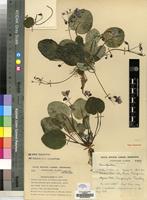
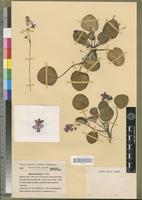
Holotype of Saintpaulia nitida B.L.Burtt [family GESNERIACEAE]
Type of Saintpaulia nitida B.L.Burtt [family GESNERIACEAE]
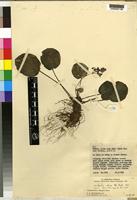
Holotype of Saintpaulia nitida B.L.Burtt [family GESNERIACEAE]
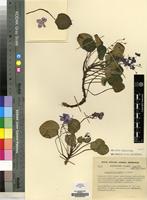
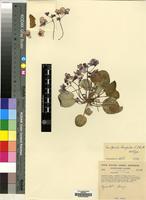
Holotype of Saintpaulia pendula B.L.Burtt [family GESNERIACEAE]
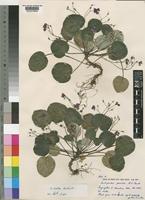
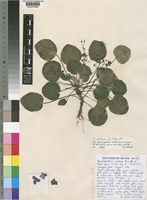
Isotype of Saintpaulia nitida B.L. Burtt [family GESNERIACEAE]
Saintpaulia nitida B.L.Burtt [family GESNERIACEAE]
Holotype of Saintpaulia brevipilosa B.L.Burtt [family GESNERIACEAE]
Previous
Next

Name

Identification
Saintpaulia nitida B.L.Burtt [family GESNERIACEAE ] Verified by Not on sheet, Saintpaulia ionantha H. Wendl. [family GESNERIACEAE ] (stored under name); Verified by Darbyshire, I., 2006
Related name
  • Saintpaulia ionantha
  • Saintpaulia pendula
  • Saintpaulia nitida

Flora

Entry for Saintpaulia ionantha (B.L.Burtt) I.Darbysh. subsp. nitida [family GESNERIACEAE]
Herbarium
Royal Botanic Gardens, Kew (K)
Collection
Flora of Tropical East Africa
Resource Type
Reference Sources
Entry From
Flora of Tropical East Africa, page 1, (2006) Author: IAIN DARBYSHIRE
Names
Saintpaulia ionantha (B.L.Burtt) I.Darbysh. subsp. nitida [family GESNERIACEAE], stat. nov. Type: Tanzania, Morogoro District, Nguru Mts, near Morogoro, comm. Cox ref. A, cult. in R.B.G. Edinb., C.1557 (E!, holo.)
Saintpaulia nitida B.L.Burtt [family GESNERIACEAE], in Notes Roy. Bot. Gard. Edinb. 22: 564 (1958); Watkins et al., Wild Afr. Violet: 37 (2002)
Saintpaulia pusilla [family GESNERIACEAE], [ sensu Lindqvist & Albert in K.B. 54: 371 (1999) pro parte quoad Congdon 205, non Engl.]
Information
Plants rosulate. Leaves pale green to purplish beneath; blade broadly ovate to suborbicular, 2–7.5 cm long, margin subentire to shallowly crenate(-serrate), apex rounded or obtuse, upper surface densely appressed-pubescent, the hairs short and rather even. Petioles, peduncles and pedicels with (sub)appressed hairs. Inflorescences 1–8-flowered. Corolla deep blue-purple, margin with predominantly eglandular hairs. Capsule 16–22 mm long, 2–2.5 mm diameter.
Range
DISTR. T 6 restricted to the Nguru Mts
Altitude range
800–1200(–1500) m
Distribution
TANZANIA Morogoro District Nguru Mts, Mkobwe, NW side, near Turiani, Mar. 1953, Drummond & Hemsley 1862! & [Koluhamba] Ruhamba, near Turiani, Dec. 1953, Eggeling 6776! & Nguru S Forest Reserve, head of valley behind Mhonda Mission, Feb. 1971, Mabberley & Pócs 695!
Notes
USES. None recorded on herbarium specimens. CONSERVATION This taxon has been d as locally common both near Mhonda Mission (Mabberley & Pócs 695) and at Ruhamba (Semsei 1463) in the Nguru Mts, and may not be threatened here. Mid-altitude forests in these mountains are however threatened by human encroachment, with some areas cleared or degraded. The extent to which this impacts upon subsp. nitida is unclear; it is therefore assesed as Data Deficient (DD). This subspecies is the southern Nguru Mts equivalent of subsp. velutina, sharing a similar leaf shape and margin, corolla indumentum and capsule shape to the lower altitude Nguru populations of that taxon. They are distinguishable by the very different vegetative indumentum and the thin, less fleshy, shiny leaves. One collection from Kanga Mt (Haston 77!) however appears intermediate between the two, having dense subapressed short hairs and suberect long hairs on the leaves. Subsp. nitida can also appear very similar to densely pubescent variants of subsp. grotei although the capsules are generally longer. It is also close to subsp. occidentalis, particularly in capsule shape; the latter however has a less dense indumentum and a caulescent habit.

Related Materials

  • Terms and Conditions
  • Privacy Policy
  • Cookie Policy
  • Cookie Settings
  • Accessibility
  • Help
  • Contact Us
  • Facebook
  • Twitter
ITHAKA

JSTOR is part of ITHAKA, a not-for-profit organization helping the academic community use digital technologies to preserve the scholarly record and to advance research and teaching in sustainable ways.

©2000-2026 ITHAKA. All Rights Reserved. JSTOR®, the JSTOR logo, JPASS®, Aluka®, and ITHAKA® are registered trademarks of ITHAKA.

╳