JSTOR Global Plants Home
  • Home
  • Browse
  • About
  • Access
  • Account
    • Saved Items
    • Profile
  • Log in

Global Plants

Skip to Main Content
  • JSTOR Global Plants Home
  • Global Plants

    • Browse
    • About
    • Access
    • Account
      • Saved Items
      • Profile
Log in
  • Browse
  • About
  • Access
  • Account
    • Saved Items
    • Profile
Advanced Search

Compilation
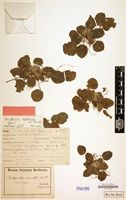
Saintpaulia diplotricha

5 Images see all

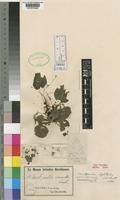
Type of Saintpaulia diplotricha B.L.Burtt [family GESNERIACEAE]
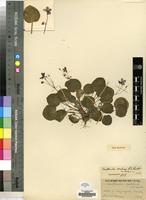
Holotype of Saintpaulia confusa B.L.Burtt [family GESNERIACEAE]
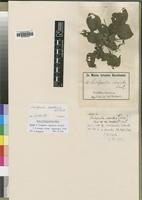
Isotype of Saintpaulia diplotricha B.L.Burtt [family GESNERIACEAE]
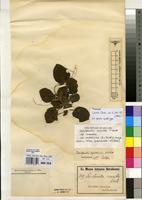
Type of Saintpaulia ionantha J.C.Wendl. [family GESNERIACEAE]
Previous
Next

Name

Identification
Saintpaulia ionantha J.C.Wendl. [family GESNERIACEAE ] Verified by Not on sheet., Saintpaulia diplotricha B.L.Burtt [family GESNERIACEAE ] (stored under name); Verified by Not on sheet.,
Related name
  • Saintpaulia ionantha
  • Saintpaulia diplotricha

Flora

Entry for Saintpaulia ionantha (B.L.Burtt) I.Darbysh. var. diplotricha [family GESNERIACEAE]
Herbarium
Royal Botanic Gardens, Kew (K)
Collection
Flora of Tropical East Africa
Resource Type
Reference Sources
Entry From
Flora of Tropical East Africa, page 1, (2006) Author: IAIN DARBYSHIRE
Names
Saintpaulia ionantha (B.L.Burtt) I.Darbysh. var. diplotricha [family GESNERIACEAE], stat. nov. Type: Tanzania, Lushoto District, Usambara Mts, Buchwald 149 (K!, holo.; BM!, BR, iso.)
Saintpaulia diplotricha B.L.Burtt [family GESNERIACEAE], in Gard. Chron., ser. 3, 122: 23 (1947) pro parte quoad type, & in Baileya 4: 163–164 (1956) & in Notes Roy. Bot. Gard. Edinb. 22: 563 (1958); Iversen in Symb. Bot. Upsal. 28: 235, t. 1B (1988); Watkins et al., Wild Afr. Violet: 27 (2002)
Saintpaulia ionantha [family GESNERIACEAE], [ sensu C.B. Clarke in F.T.A. 4(2): 500 (1906), non H.Wendl.]
Saintpaulia sp. [family GESNERIACEAE], [ sensu Kolehmainen in Afr. Violet Mag. 58: 28, fig. 2 (2005) quoad spec. ex Handei village forest]
Information
Leaf margin shallowly to conspicuously crenate-serrate, upper surface diplotrichous. Petioles, peduncles and pedicels with at least the shorter hairs ascending.
Range
DISTR. T 3 restricted to the coastal lowlands and foothills of the lower altitude E Usambara Mts
Altitude range
0–400(?–1000) m
Distribution
TANZANIA Lushoto District Sigi Sigoma, Dec. 1943, Moreau in AH 9839!TANZANIA Tanga District Kange gorge, Nov. 1956, Milne-Redhead & Taylor 7287! & E Usambara Mts, Marimba Forest Reserve, ± 3 km N of Kiwanda village E of Sigi River, Nov. 1986, Iversen et al. 86373!
Notes
USES. Cultivated as an ornamental, though not as widely as var. ionantha. CONSERVATION This variety suffers from the same habitat threats as the typical variety in the Tanga region and is likely to have experienced significant population declines both over past decades and at present. It is also known from less than 10 localities at present. It is thus assessed as Vulnerable (VU A2c, B1ab(iii)+2ab(iii)). Var . diplotricha superficially appears distinct from var. ionantha on account of the striking diplotrichous leaf indumentum, but in other respects (capsule shape and size, corolla indumentum and leaf shape and thickness) is very close to that taxon. As diplotrichy appears to have evolved on several occasions within the species it is not likely to be of great taxonomic significance, but the apparent consistency of indumentum type within populations permits the recognition of diplotricha at the varietal level. The type is a rather scant specimen; the fruits are atypically slender for subsp. ionantha but the leaf shape and indumentum are close to plants from Sigi Segoma and from an isolated population in the Handei Village Forest, E Usambaras (e.g. Simiyu et al. H48!), which are referable to var. diplotricha. Collections from Kwamgumi in the E Usambaras vary from typical var. diplotricha (Iversen 86607! & Borhidi et al. 86647!) to caulescent plants with a predominantly puberulent leaf indumentum with only scattered longer hairs, the hairs appearing somewhat appressed at least on the petioles (Frontier Tanzania 3157! & Simiyu et al. H9–15!). Similar plants to the latter are also recorded from Kwamtili (e.g. Simiyu et al. Kwamtili 8!). These gatherings appear intermediate with subsp. grotei; fruiting material is required to further elucidate their identity.

Related Materials

  • Terms and Conditions
  • Privacy Policy
  • Cookie Policy
  • Cookie Settings
  • Accessibility
  • Help
  • Contact Us
  • Facebook
  • Twitter
ITHAKA

JSTOR is part of ITHAKA, a not-for-profit organization helping the academic community use digital technologies to preserve the scholarly record and to advance research and teaching in sustainable ways.

©2000-2026 ITHAKA. All Rights Reserved. JSTOR®, the JSTOR logo, JPASS®, Aluka®, and ITHAKA® are registered trademarks of ITHAKA.

╳