JSTOR Global Plants Home
  • Home
  • Browse
  • About
  • Access
  • Account
    • Saved Items
    • Profile
  • Log in

Global Plants

Skip to Main Content
  • JSTOR Global Plants Home
  • Global Plants

    • Browse
    • About
    • Access
    • Account
      • Saved Items
      • Profile
Log in
  • Browse
  • About
  • Access
  • Account
    • Saved Items
    • Profile
Advanced Search

Compilation
Sagina caespitosa

4 Images see all

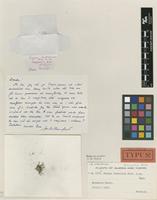
Type of Sagina hudsonica A.E.Porsild [family CARYOPHYLLACEAE]
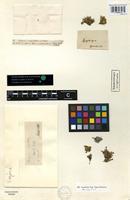
Syntype of Sagina caespitosa (J. Vahl) Lange [family CARYOPHYLLACEAE]
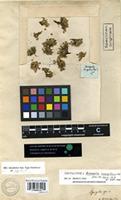
Lectotype of Sagina caespitosa (J. Vahl) Lange [family CARYOPHYLLACEAE]
Type? of Sagina nivalis (Lindblom) Fr. [family CARYOPHYLLACEAE]
Previous
Next

Name

Identification
Sagina caespitosa (J. Vahl) Lange [family CARYOPHYLLACEAE ] (stored under name); Verified by Not on Sheet, Arenaria caespitosa J. Vahl [family CARYOPHYLLACEAE ] Verified by Crow, G.E., Spergula saginoides L. [family CARYOPHYLLACEAE ] Verified by Not on Sheet,
Related name
  • Spergula saginoides
  • Spergula caespitosa
  • Sagina caespitosa
  • Sagina nivalis
  • Sagina procumbens
  • Arenaria caespitosa
  • Sagina hudsonica
Common name
  • Sagine cespiteuse, Flora of North America Vol. 5

Flora

Entry for Sagina caespitosa (J. Vahl) Lange [family CARYOPHYLLACEAE]
Herbarium
Flora of North America (FNA)
Collection
Flora of North America
Resource Type
Reference Sources
Entry From
Flora of North America, Vol 5,
Names
Sagina caespitosa (J. Vahl) Lange [family CARYOPHYLLACEAE], in H. J. Rink, Grønland, 2: 133. 1857
Arenaria caespitosa J. Vahl [family CARYOPHYLLACEAE], in G. C. Oeder et al., Fl. Dan., 13(39): 4. 1840
Sagina nivalis (Lindblom) Fries var. caespitosa (J. Vahl) B. Boivin [family CARYOPHYLLACEAE]
Spergella caespitosa (J. Vahl) Á. Löve & D. Löve [family ]
Treatment Author(s)
Garrett E. Crow
Information
Plants perennial, cespitose, forming small mats or cushions, glandular-pubescent or glabrous. Stems ascending to spreading, frequently purple tinged, many-branched, not filiform. Leaves: axillary fascicles absent; basal not in primary rosettes, secondary rosettes usually present, blade linear to linear-subulate, 2–13 mm, not fleshy, apex apiculate to acute, glabrous; cauline connate basally, forming shallow, often purplish, scarious cup, blade with frequently conspicuous midvein, subulate, 3–9(–12) mm, becoming shorter toward apex, not fleshy, apex apiculate to acute, glabrous. Pedicels filiform, glandular-pubescent, rarely glabrous. Flowers terminal, 5-merous or 4- and 5-merous; calyx base glandular-pubescent or glabrous; sepals broadly ovate to lanceolate, 2–2.5 mm, hyaline margins usually purple tinged, at least at apex, apex obtuse to somewhat acute, glandular-pubescent or glabrous, remaining appressed after capsule dehiscence; petals elliptic to narrowly obovate, 2.5–3 mm, longer than or seldom equaling sepals; stamens 8 or 10. Capsules 3–3.5 mm, exceeding sepals, dehiscing to base. Seeds brown, obliquely triangular with abaxial groove, 0.5 mm, lateral surfaces frequently with elongate ridges, abaxial surface appearing smooth to pebbled.
Altitude range
0–1300 m;
Distribution
Greenlandarctic Europe.Canada Man.Canada Nfld. and Labr.Canada NunavutCanada Que.

Related Materials

  • Terms and Conditions
  • Privacy Policy
  • Cookie Policy
  • Cookie Settings
  • Accessibility
  • Help
  • Contact Us
  • Facebook
  • Twitter
ITHAKA

JSTOR is part of ITHAKA, a not-for-profit organization helping the academic community use digital technologies to preserve the scholarly record and to advance research and teaching in sustainable ways.

©2000-2026 ITHAKA. All Rights Reserved. JSTOR®, the JSTOR logo, JPASS®, Aluka®, and ITHAKA® are registered trademarks of ITHAKA.

╳